



The Greenback and the Blockchain: How BlackRock plans to turn a $40 million crypto footprint into a $500 million juggernaut by 2030
By Senior Financial Correspondent
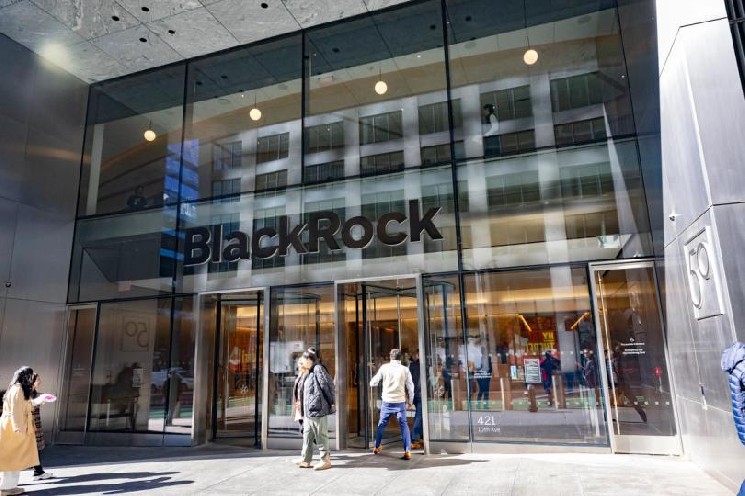
An unmistakable shift is occurring in the marble halls of traditional finance, where the line separating legacy asset management from the frontier of digital currency is fading fast. Nowhere is this evolution more visible than at BlackRock, the world’s largest asset manager. The New York-based financial powerhouse recently posted blockbuster quarterly results, capturing headlines with a staggering $15.3 trillion in record assets under management (AUM) after pulling in $192 billion in net inflows. This massive capital influx helped the firm comfortably beat Wall Street consensus estimates, delivering adjusted earnings per share of $13.91 on $7.08 billion in revenue. In the immediate wake of the earnings release, investors signaled their resounding approval, sending BlackRock (NASDAQ: BLK) shares climbing 4.15% to trade at £1,068 in pre-market action. Yet, beneath the eye-popping scale of its traditional index funds and fixed-income portfolios, the real story of BlackRock’s future trajectory lies in a highly strategic, rapidly expanding digital asset division that is quietly preparing to redefine the company’s revenue architecture over the next decade.
Despite the firm’s historic $15.3 trillion footprint, its current cryptocurrency-related revenue remains a modest fraction of its overall business. Today, BlackRock generates approximately $40 million annually from base fees and securities lending linked to its digital asset products—accounting for less than 1% of the firm’s total fee revenue. However, during its latest earnings call, executive leadership unveiled an audacious blue-chip blueprint: a target of $500 million in annual crypto-related revenue by the year 2030. This ambitious target represents a more than tenfold increase in less than six years. To bridge this gap, BlackRock is moving aggressively beyond simple, passive investment vehicles, constructing an institutional-grade ecosystem designed to capture every facet of the digital asset lifecycle, from retail exchange-traded funds (ETFs) to international stablecoin reserves.
BLACKROCK’S 2030 FINTECH VISION
Current Crypto Revenue: [$$] $40 Million (Less than 1% of fees)
Target Crypto Revenue: [$$$$$$$$$$$$$$$$$$$$] $500 Million (By 2030)
Growth Multiplier: 12.5x Projected Revenue Increase
Strategic Pillars: • Complex Derivatives & Yield ETFs (e.g., BITY)
• Stablecoin Reserve Management (Circle/USDC)
• Direct Web3 Distribution (5 Billion Crypto Wallets)
The foundation of this multi-pronged strategy rests on the phenomenal success of BlackRock’s initial digital asset products. Following the historic regulatory approvals of 2024, the firm captured massive market share with its flagship spot bitcoin fund, the iShares Bitcoin Trust (IBIT), and its corresponding spot ether vehicle, the iShares Ethereum Trust (ETHA). However, Wall Street’s interest is rapidly evolving past simple spot exposure. Recognizing a growing demand for yield-producing assets in the digital space, BlackRock recently expanded its lineup with the introduction of the iShares Bitcoin Income ETF (BITY). By employing a sophisticated investment strategy that writes covered call options on bitcoin exposure, BITY allows investors to generate active stream-based income while mitigating some of the digital currency’s trademark volatility. By offering these derivative-based, risk-managed products, BlackRock is successfully repackaging high-risk, volatile digital assets into familiar, institutional-grade structures that fit seamlessly into traditional retirement portfolios.
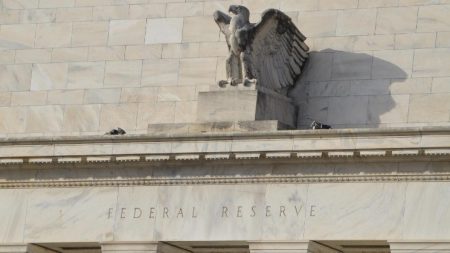
Beyond the retail and institutional ETF space, BlackRock is quietly positioning itself as the critical infrastructure provider for the global digital economy. The asset manager now oversees roughly $60 billion of the reserves backing Circle’s USD Coin (USDC), securing a commanding one-quarter share of the broader $300 billion global stablecoin market. During the earnings call, executives made their intentions clear: BlackRock aims to become the premier, trusted reserve manager of choice for the entire stablecoin industry. By backing private digital dollars with highly liquid, short-duration U.S. Treasury portfolios, the firm is effectively bridging the gap between the Federal Reserve and decentralized finance (DeFi). This partnership not only provides BlackRock with a stable, highly predictable stream of management fees but also cements its reputation as the ultimate institutional custodian in the decentralized arena.
Perhaps the most forward-looking aspect of BlackRock’s long-term plan is how the company intends to reshape its distribution channels. Rather than waiting for retail investors to open standard brokerage accounts, the asset manager highlighted the global network of 5 billion active crypto wallets as a direct pipeline for its traditional financial products. By tokenizing real-world assets (RWAs)—such as money market funds and sovereign debt—and distributing them directly onto public and private blockchains, BlackRock can bypass traditional, slow-moving financial intermediaries. This vision transforms the crypto wallet from a speculative tool into a mainstream financial portal, allowing a frictionless, global user base to purchase institutional-grade, yield-bearing products with the click of a button.
Ultimately, BlackRock’s digital transformation represents a major validation of the entire blockchain sector. Under the leadership of CEO Larry Fink, the firm has moved past the era of viewing cryptocurrency as a speculative fad, choosing instead to treat it as a fundamental upgrade to global financial infrastructure. By pursuing a aggressive ten-fold revenue expansion, pioneering derivative-linked crypto products, and positioning itself as the institutional custodian of the stablecoin market, BlackRock is constructing a future where traditional and decentralized finance operate as a single, unified system. For Wall Street and Silicon Valley alike, the message is clear: the modernization of global asset management is well underway, and the world’s largest custodian intends to lead the charge.