


Crypto Markets Show Signs of Life as Bitcoin Surpasses $92,000 Amid Fed Rate Cut Anticipation
Bitcoin Rebounds Above Key Threshold While Broader Altcoin Market Still Seeks Direction
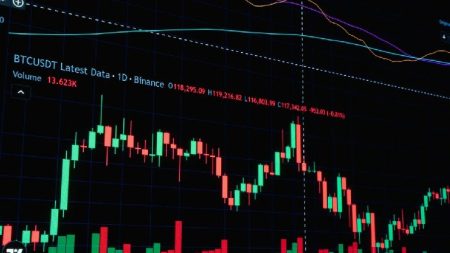
In a notable shift from recent market patterns, cryptocurrency markets displayed promising signs of recovery during Monday’s Asian trading session, with flagship digital asset Bitcoin breaking through the significant $92,000 threshold. This upward movement comes after a weekend of constrained trading activity where the world’s largest cryptocurrency had remained stubbornly below the $90,000 mark.
The resurgence represents a complete reversal of Friday’s market sell-off, positioning Bitcoin within striking distance of last week’s impressive high of $94,200. Market analysts suggest this renewed momentum coincides with broader positive sentiment in traditional financial markets, as U.S. equity index futures also registered gains of approximately 0.2% from Sunday evening’s opening bell. This coordinated upswing appears largely driven by widespread anticipation surrounding the Federal Reserve’s upcoming interest rate decision, scheduled for Wednesday, with market data from CME indicating an approximately 87% probability of a 25 basis point reduction.
While market leaders Bitcoin and Ethereum demonstrated robust performance with 24-hour gains between 3% and 4%, the broader alternative cryptocurrency market continues to struggle in finding substantial traction. Industry observers note a conspicuous absence of speculative catalysts that typically drive altcoin rallies, reflecting a more cautious approach from investors who remain primarily focused on established digital assets with proven market resilience.
Derivatives Market Signals: Cautious Optimism Amid Lingering Concerns
The derivatives landscape provides additional context for understanding current market dynamics, with several key indicators suggesting a complex mix of cautious optimism and underlying apprehension among institutional and retail investors alike. Bitcoin’s 30-day implied volatility index (BVIV) has maintained stability around the 50% mark, demonstrating a relative absence of panic in the market despite the looming Federal Reserve decision that traditionally introduces volatility into both traditional and cryptocurrency markets.
Open interest growth in futures contracts has been particularly strong for emerging tokens ASTER and ENA, while perpetual funding rates for major cryptocurrencies including Bitcoin and Ethereum continue to register in positive territory – typically indicative of a preference for bullish leveraged positions among traders. Market analysts caution, however, that this positive bias may partially reflect the unwinding of cash-and-carry arbitrage strategies’ short futures positions rather than pure directional sentiment. Options market activity on platforms like Deribit reveals that put options for both Bitcoin and Ethereum continue trading at premium prices compared to calls, suggesting lingering concerns about potential downside risks despite the recent price appreciation. Particularly notable is the significant popularity of the $20,000 put option in Bitcoin’s June 2026 expiry, indicating some institutional hedging against substantial price deterioration over the longer term.
Block trading activity has featured strong demand for Bitcoin call spreads and strangles – strategies that typically indicate expectations for significant price movement without necessarily committing to a directional bias. For Ethereum, call calendar spreads have dominated recent trading flows, suggesting optimism about Ethereum’s price potential over specific time horizons while managing risk exposure.
Altcoin Winter Persists as Investor Preferences Shift Dramatically
The broader alternative cryptocurrency market continues to face significant challenges, with the “altcoin season” indicator plummeting to a historic low of 19/100 on Monday. This technical metric underscores the ongoing reluctance of investors to allocate capital to speculative tokens beyond established market leaders, following months of punishing sell-offs across many alternative digital assets. This pronounced shift in investor behavior becomes even more apparent when comparing performance between different market segments.
The CoinDesk 20 index, which tracks performance of the largest and most established digital assets, has managed a modest 1.34% increase since December 1st, while the broader CoinDesk 80 index has registered a 1.37% decline over the same period. This divergence highlights the market’s current preference for established cryptocurrencies with stronger fundamentals and institutional adoption over speculative alternatives. Particularly hard-hit have been the memecoin and metaverse sectors, which have experienced devastating declines of 53% and 62% respectively since the beginning of the year. This dramatic underperformance suggests the market has largely moved beyond the speculative enthusiasm for viral memes and cartoon-based non-fungible tokens (NFTs) that characterized previous bull cycles.
Privacy Coins Buck the Trend as Sector-Specific Dynamics Emerge
Despite the generally challenging environment for alternative cryptocurrencies, certain niche sectors continue to demonstrate remarkable resilience and even substantial growth. Privacy-focused cryptocurrencies represent perhaps the most striking exception to the broader market downturn, with Zcash emerging as the top performer among the 100 largest digital assets over the past 24 hours. The privacy-centric token registered an impressive 17% gain, building upon an extraordinary year-to-date rally that has seen its value increase by approximately 600%.
This exceptional performance stands in stark contrast to the struggles faced by once-promising projects like Celestia, whose native TIA token has suffered catastrophic losses exceeding 87% of its value since January. Market analysts attribute Celestia’s dramatic decline to a combination of diminishing network activity and recent organizational restructuring that included significant workforce reductions. This divergence in performance between different cryptocurrency sectors highlights the increasingly nuanced and sophisticated nature of the digital asset marketplace, where broad market trends can mask significant sector-specific dynamics influenced by technological developments, regulatory considerations, and evolving user preferences.
Market Outlook: Fed Decision Looms Large as Crypto Braces for Potential Volatility
As cryptocurrency markets navigate this complex landscape of mixed signals and sector-specific performance disparities, attention increasingly focuses on Wednesday’s Federal Reserve interest rate decision as a potential catalyst for the next significant market movement. The widely anticipated 25 basis point reduction would represent the first interest rate cut following an extended period of monetary tightening, potentially injecting additional liquidity into financial markets that could flow into risk assets including cryptocurrencies.
Financial analysts emphasize that the rate decision itself may prove less impactful than accompanying commentary from Federal Reserve Chairman Jerome Powell regarding future monetary policy directions and economic outlook assessments. With Bitcoin now positioned within striking distance of its recent all-time highs, market participants remain vigilant for signals that could either propel digital assets to new record valuations or trigger a more substantial corrective movement. As traditional and cryptocurrency markets continue their complex dance of correlation and divergence, investors increasingly recognize the importance of considering both macro-economic factors and asset-specific fundamentals when navigating this rapidly evolving financial landscape. The coming days may prove decisive in determining whether the current recovery represents a sustainable trend or merely a temporary respite in a more challenging market environment.