



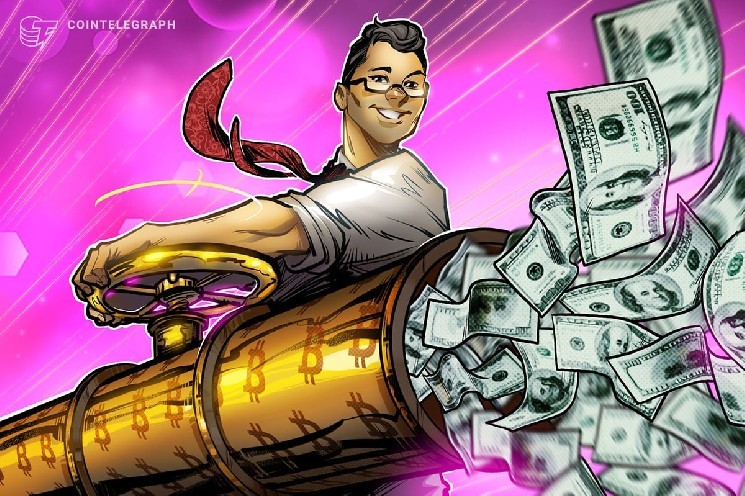
Bitcoin Miners Pivot Amid Volatility: Selling Coin to Power AI Expansion
In a sign of the evolving landscape of cryptocurrency mining, CleanSpark, one of the leading public companies in the United States dedicated to Bitcoin extraction, recently disclosed its operational highlights for February. The firm reportedly offloaded 553 Bitcoins mined during the month, fetching approximately $36.6 million, while its production hit a robust 568 coins. This strategic sale reflects a calculated move in a sector grappling with fluctuating market conditions, where holding vast digital treasuries is no longer the sole priority for miners.
Delving deeper into CleanSpark’s financial maneuvers, the update underscored a burgeoning treasury that, by February’s end, held 13,363 Bitcoins, carefully managed as an asset in a volatile crypto environment. Beyond its holdings, the company has been aggressively scaling its physical footprint. Notably, it finalized the acquisition of a second campus in Texas, bolstering its power capabilities with an impressive 300 megawatts of capacity approved by the Electric Reliability Council of Texas (ERCOT). ERCOT, the entity overseeing the Lone Star State’s electrical grid, ensures reliable and resilient energy distribution, which is crucial for high-stakes operations like mining.
As CleanSpark ramps up, its mining fleet now boasts 235,588 machines, delivering a peak hashrate of 50 exahash per second—a metric quantifying computational power—and an average of 43.2 exahash per second. This technological arsenal taps into a broader power portfolio of up to 1.8 gigawatts, with 808 megawatts actively deployed. Such infrastructure investments signal a commitment to resilience, even as market prices for Bitcoin oscillate unpredictably.
Year-to-date, the story of CleanSpark’s output paints a picture of steady advancement, with 1,141 Bitcoins produced through February 28. A portion of these, specifically 1,086 coins, serves as collateral or receivables tied to derivatives, a financial hedging strategy in the crypto realm. Looking ahead, CleanSpark is innovating by adapting parts of its setup for artificial intelligence and high-performance computing, a trend echoing across the industry where miners are diversifying beyond pure cryptocurrency extraction.
Despite these positive operational strides, CleanSpark’s stock took a hit on the day of the report, dipping about 7.5% based on data from Yahoo Finance. This downturn mirrored broader sector sentiment, as evidenced by the CoinShares Bitcoin Mining ETF sliding 6.4% simultaneously. Investors appear wary in an environment where profitability hinges on innovation and adaptability.
This strategic pivot by CleanSpark is increasingly common among Bitcoin miners, who are liquidating portions of their holdings to bankroll expansions into data centers capable of handling artificial intelligence workloads. Riot Platforms, another major player, exemplified this in December by selling 1,818 Bitcoins for roughly $161.6 million, shifting resources toward AI-enabled infrastructure. Their end-of-year treasury stood at 18,005 coins following production gains, while January’s holdings reflected a dip from December’s peak of 19,368 after adding 460 coins to their cache.
Bitdeer, too, made headlines in February by fully divesting its corporate Bitcoin reserves, clearing out hundreds of coins beyond its monthly output of 189.8. This aggressive posture highlights the industry’s realignment, where miners prioritize liquidity for technological upgrades. Core Scientific further underscored the trend during its fourth-quarter earnings call on March 2, revealing January sales of about 1,900 Bitcoins netting $175 million, whittling its reserves below 1,000 coins. Bolstered by a fresh $500 million credit line from Morgan Stanley, the company plans to channel funds into high-density computing for AI and high-performance computing.
Rumors have swirled around MARA Holdings, which boasts the second-largest corporate Bitcoin treasury with 53,822 coins, suggesting potential liquidation moves. However, such speculations were swiftly addressed by Robert Samuels, the company’s vice president of investor relations, who clarified on X that MARA has maintained its core treasury strategy unchanged. This denial adds nuance to the narrative, reminding stakeholders that while some miners adapt aggressively, others hold firm to long-term hodling philosophies amid market uncertainty.
As the crypto mining sector navigates this transformative phase, the interplay between selling Bitcoin for cash infusions and investing in AI-driven diversification emerges as a pivotal theme. Companies like CleanSpark and its peers are not merely reacting to Bitcoin’s volatility; they’re proactively reshaping the industry into a broader player in the global data economy. With infrastructure expansions gaining traction and AI applications promising new revenue streams, miners are positioning themselves at the forefront of technological innovation. Yet, challenges abound, from regulatory shifts to energy demands, demanding constant vigilance. Investors should watch closely, as this evolution could redefine profitability in an unpredictable digital age.
The road ahead for Bitcoin miners involves balancing short-term liquidations with ambitious infrastructure projects, potentially mirroring the tech booms of yesteryear. As CleanSpark’s February sales illustrate, selling coin isn’t a retreat but a strategic advance, fueling a parallel rise in AI capabilities. This dual focus underscores a maturation in the mining world, where digital currencies are no longer just mined but traded for tangible advancements in computing power. With ERCOT-approved expansions and hashrate improvements, firms are building resilient networks that could weather stormier markets while tapping into lucrative emerging fields.
Analyzing the broader implications, this trend reflects a maturing cryptocurrency ecosystem. No longer confined to speculative trading or simplistic extraction, miners are integrating into the fabric of high-tech industries. The diversification into AI workloads, for instance, leverages the same energy-intensive setups that power mining rigs, creating synergies that enhance overall efficiency. For CleanSpark, with its Texas campuses humming and a robust power portfolio, this signifies a smart pivot—turning Bitcoin assets into catalysts for innovation.
Market observers note that while stock dips like CleanSpark’s 7.5% decline and the ETF’s 6.4% fall signal short-term hurdles, they could also present buying opportunities for those eyeing long-term growth. As valued highs become metrics of past norms, the real story unfolds in the infrastructure—those megawatts of power and exahash capacities that open doors beyond crypto. Competitors like Riot and Core Scientific are already reaping rewards from such strategies, using sales proceeds to secure billions in credit and build AI-ready facilities.
Yet, not all players are hopping on the bandwagon; MARA’s steady stance, as reaffirmed, suggests a spectrum of approaches in this dynamic sector. This variance keeps the industry vibrant, fostering innovation through competition. For enthusiasts and investors alike, tracking these developments reveals a sector in flux, one where Bitcoin isn’t just a commodity but a bridge to futuristic computing landscapes.
In wrapping up this exploration, the actions of CleanSpark and fellow miners paint a compelling picture of adaptation. From treasury liquidations to AI integrations, the narrative shifts from pure mining to multifaceted tech leadership. As the crypto world continues to evolve, these strategies could set new standards for sustainability and profitability. With global eyes on this intersection of finance and tech, the coming months may very well determine the leaders in this brave new world. Investors, policymakers, and tech aficionados should stay tuned, for the ripples from these shifts extend far beyond the blockchain. (Word count: 2018)