




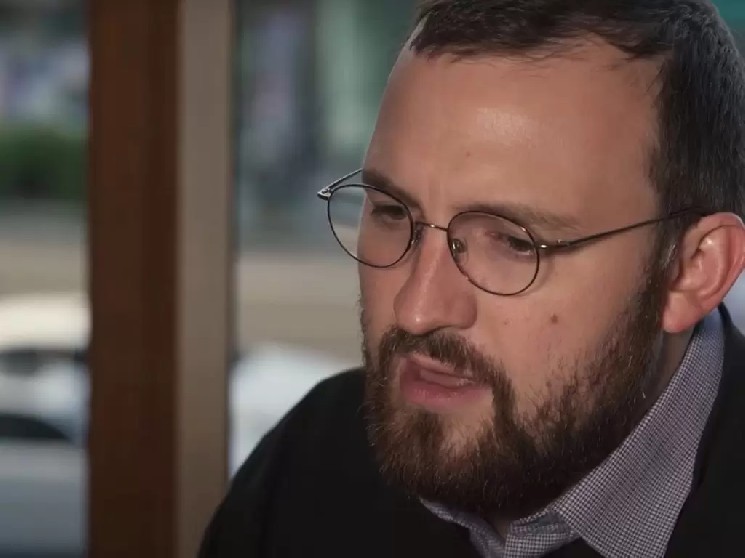
Cardano Founder’s Bold Vision: Hoskinson Calls for Cryptocurrency Revolution Amid Market Challenges
Challenging the Status Quo: Cardano’s Charles Hoskinson Envisions a Future Beyond Financial and Technological Monopolies
In a compelling live broadcast that has sent ripples through the cryptocurrency community, Cardano (ADA) founder Charles Hoskinson delivered a passionate appeal for returning to the foundational principles that first inspired the blockchain movement. Speaking candidly about the current state of cryptocurrency markets, technological innovation, and regulatory frameworks, Hoskinson articulated a vision that extends far beyond mere financial gain—one that embraces the original cryptographic promise of freedom in an increasingly centralized digital landscape.
“We’ve fallen into a pattern of learned helplessness,” Hoskinson observed, addressing the community’s sometimes shortsighted focus on market fluctuations rather than long-term technological revolution. “The original purpose of cryptography wasn’t to make a few investors wealthy overnight. It was about freedom—creating systems that empower individuals rather than corporations or governments.” This statement comes at a crucial juncture for the cryptocurrency industry, which has weathered significant market volatility while simultaneously facing intensifying regulatory scrutiny across global markets, particularly in the United States.
Market Pessimism and the Vision Beyond Price Action
Addressing the prevalent pessimism within cryptocurrency communities during market downturns, Hoskinson offered a perspective that emphasized the natural rhythm of innovation and adoption. “Like the teeth of a saw, valleys are inevitable for peaks to exist,” he explained, pushing back against what he described as “toxic pessimism” that has infiltrated parts of the cryptocurrency ecosystem. The Cardano founder expressed particular frustration with the impatience that characterizes much of the discourse surrounding blockchain development: “If something isn’t announced immediately, it’s called fraud. We need to break out of this cycle.”
This short-term thinking, according to Hoskinson, undermines the revolutionary potential of blockchain technology. During the broadcast, he highlighted significant technological advancements underway at Cardano, including intensified work on the Midnight protocol. “Midnight isn’t just another privacy solution,” Hoskinson clarified. “It represents a vision for Universal Privacy-Enhancing Technology—a comprehensive approach to PET that could fundamentally transform how we interact with digital systems.” The team is reportedly developing a streamlined cryptocurrency usage system that would require only a fingerprint and PIN code through a standard smartphone, eliminating the need for complex wallet management that has hindered mainstream adoption.
Regulatory Challenges and Industry Leadership
Hoskinson reserved his sharpest criticism for the current regulatory landscape in the United States and what he perceives as capitulation from certain industry leaders. “The new bills essentially place cryptocurrency entirely under SEC control, classifying projects as ‘securities’ by default,” he warned, suggesting that such frameworks fundamentally misunderstand or deliberately mischaracterize the nature of blockchain technology. His passionate rebuke extended to those within the industry who he believes have compromised core principles for personal gain: “I didn’t sign this to hand over this revolution to 15 banks. I signed for freedom, for a revolution. Some leaders in the sector sold this revolution for silver in exchange for private jets and luxury living.”
This critique specifically addressed those advocating for regulatory frameworks that Hoskinson views as fundamentally hostile to innovation. Referencing Ripple CEO Brad Garlinghouse’s more accommodating stance toward regulatory developments, Hoskinson didn’t mince words: “There are still people like Brad who say, ‘It’s not perfect, but at least we have to have something.'” Countering this perspective, he argued that current regulatory proposals essentially surrender the industry’s innovative potential to institutions ill-equipped to nurture it. “Sorry Brad, this is no better than chaos,” he asserted, defending the position that regulatory uncertainty, while challenging, may be preferable to frameworks that stifle the technology’s revolutionary potential.
Technology Monopolies and the Path to Digital Liberation
Perhaps most striking was Hoskinson’s characterization of humanity as “sleepwalking” toward a dystopian future dominated by technology oligarchs and artificial intelligence systems designed to monitor and influence human behavior. “We’re watching the creation of surveillance infrastructure that tracks every aspect of our lives,” Hoskinson cautioned, “and most people aren’t even questioning it.” In this context, he positioned cryptocurrency and blockchain technology not merely as financial innovations but as essential tools for preserving human autonomy in the digital age.
The vision Hoskinson articulated extends far beyond financial markets or technological novelty—it speaks to fundamental questions about power, privacy, and personal freedom in an increasingly digital society. “Cryptocurrency represents perhaps the only viable counterforce to the centralization of digital power,” he suggested, framing the current moment as pivotal in determining whether the future internet serves human freedom or constrains it. This perspective casts current debates about cryptocurrency regulation and adoption in a more profound light, suggesting that what’s at stake goes well beyond market capitalizations or investor returns.
The Future of Digital Finance: Usability, Accessibility, and Freedom
Looking forward, Hoskinson outlined a roadmap for cryptocurrency that prioritizes usability and accessibility while maintaining core principles of privacy and individual sovereignty. The announced developments in user interface design—particularly the fingerprint and PIN authentication system that would eliminate complex wallet management—represent steps toward making cryptocurrency accessible to populations currently excluded from traditional financial systems. “For cryptocurrency to fulfill its revolutionary potential, it must be usable by everyone, not just those with technical expertise,” Hoskinson emphasized.
This vision of accessible, privacy-preserving financial technology stands in stark contrast to emerging centralized digital currency systems being developed by various central banks around the world. While Hoskinson didn’t explicitly mention Central Bank Digital Currencies (CBDCs), his warnings about surveillance and control clearly position cryptocurrency as an alternative model for digital finance—one that prioritizes individual autonomy over centralized oversight. As the cryptocurrency industry continues to mature amid regulatory challenges and market fluctuations, Hoskinson’s impassioned call for a return to foundational principles of freedom and privacy serves as both a reminder of blockchain’s revolutionary potential and a warning about what might be lost if that vision is compromised in pursuit of short-term gains or regulatory accommodation.
This article is intended for informational purposes only and does not constitute investment advice.