






The Titan’s Gambit: Larry Fink’s BlackRock Targets a $5 Billion Slice of the Historic SpaceX Debut
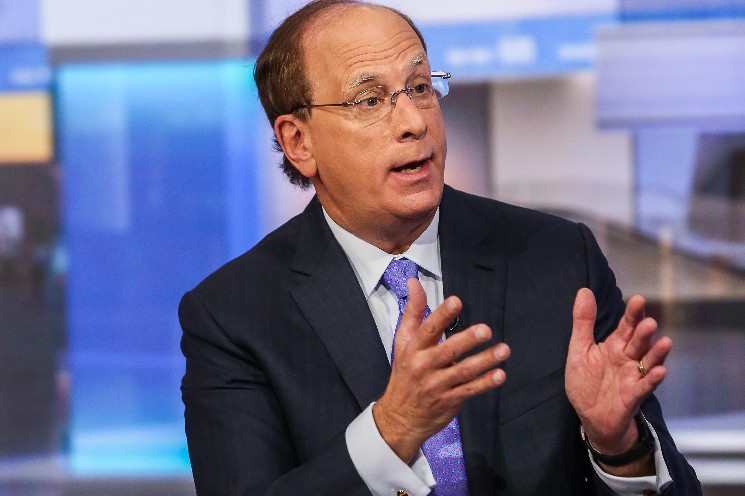
In what is rapidly shaping up to be the most consequential financial event of the decade, Larry Fink’s BlackRock (NYSE: BLK) is orchestrating an audacious, multi-billion-dollar play to secure at least $5 billion of SpaceX stock on the immediate eve of its public debut. This massive maneuver by the world’s largest asset manager puts the financial powerhouse directly at the epicenter of a historic stock market frenzy, signaling a profound shift in how institutional titans view late-stage aerospace and telecommunications monopolies. To put the sheer magnitude of BlackRock’s $5 billion request into perspective, one only has to look at the broader IPO landscape of the past year; prior to SpaceX’s highly anticipated debut, the year’s largest initial public offering belonged to the advanced semiconductor pioneer Cerebras, which raised an impressive but comparatively modest $5.55 billion. For a single private asset manager to demand a block of shares nearly equivalent to the entire proceeds of the year’s most celebrated tech debut is virtually unheard of in the history of capital markets, rewriting the rulebook for institutional allocation. While major financial conglomerates frequently request oversized capital allocations during highly sought-after market listings to ensure they are not shut out during the final pricing, the astronomical scale of BlackRock’s demand represents an unprecedented institutional vote of confidence in Elon Musk’s extraterrestrial empire. This high-stakes bid is not merely a speculative play on satellite launches; it is a calculated, strategic move by Larry Fink to anchor BlackRock’s portfolios within the core infrastructure of the 21st-century global economy, which is increasingly being built in low-Earth orbit.
Inside the Trillion-Dollar Order Book: The Epic Battle for Allocations and the $70 Billion Retail Avalanche
The demand metrics emerging from the underwriters indicate that Wall Street has rarely, if ever, witnessed capital aggregation on this scale, culminating in SpaceX successfully selling out its maximum allocation of 555,555,555 shares. Priced at a non-negotiable $135 per share, this historic capital raises the rocket manufacturer’s baseline valuation to an astonishing $1.77 trillion, a figure that places it comfortably alongside the most dominant defense, tech, and energy conglomerates on Earth. Yet, the supply of available shares was utterly swamped by an unprecedented tidal wave of investor interest, with retail traders alone submitting requests for more than $70 billion worth of SpaceX stock—an aggregate demand figure that would comfortably fully fund several of the largest IPOs in history combined. The institutional books were similarly overwhelmed, highlighted by a single, jaw-dropping order from a private family office that requested more than $1 billion in shares—a private capital allocation request that would normally dominate financial headlines for weeks but is here relegated to a mere footnote in a mounting pile of institutional buy orders. Following the passing of the formal order cutoff deadline, high-level investment syndicates and lead bookrunners are laboring behind closed doors to determine the final, heavily audited allocations for both institutional and individual bidders. In heavily oversubscribed offerings of this nature, allocation “haircuts” are a mathematical certainty, meaning that even elite players like BlackRock and sovereign wealth funds will likely receive only a fraction of their multi-billion-dollar requests, driving a tremendous amount of unsatisfied cash directly into the secondary market the physical second trading commences.
The Musk Way: Dismantling Traditional Underwriting and the Battle Over Corporate Governance
As has become standard throughout his paradigm-shifting career, Elon Musk has systematically dismantled traditional investment banking methodologies in orchestrating this public rollout, choosing instead to dictate his own terms to the gatekeepers of global finance. Rather than utilizing the traditional, bank-sanctioned price-discovery range—a delicate process where underwriters spend weeks quietly canvassing institutional clients to discover the optimal market clearing price—Musk bypassed the bureaucracy entirely, presenting Wall Street with an uncompromising, take-it-or-leave-it valuation of $135 per share. Furthermore, Musk has actively championed a radical democratization of the allocation process, lobbying aggressively for retail investors to secure roughly 30% of the issued equity, a threshold that is vastly higher than the single-digit legacy allocations typically reserved for the general public in major Wall Street offerings. This populist capital distribution model represents a direct challenge to the cozy relationship between investment banks and their preferred institutional clients, allowing everyday retail investors an unprecedented seat at the table. However, Musk’s total control over the pricing and structure of this offering has reignited fierce debates among corporate governance watchdogs and systemic risk experts, many of whom express growing alarm over the complete absence of traditional check-and-balance mechanisms within SpaceX’s leadership. The worry among governance purists is that public shareholders, captivated by the promise of Mars and the undeniable dominance of Starlink, are willingly entering a corporate ecosystem where a single individual wields absolute, unchecked executive authority, completely insulated from standard public shareholder oversight.
The Speculative Arena: Polymarket Dynamics, Market Maker Math, and the Road to a $2 Trillion Valuation
As the global trading community braces for the opening bell, alternative financial ecosystems and decentralized prediction markets are offering a highly liquid, real-time window into peer-to-peer sentiment surrounding the stock’s debut trajectory. On the decentralized prediction platform Polymarket, high-volume traders are wagering millions on where the rocket company’s market capitalization will settle once the initial wave of trading stabilization concludes, with the smart money banking heavily on an explosive upward trajectory. Specifically, prediction market traders currently assign an overwhelming 84% probability that SpaceX will rapidly surge past an active market capitalization of $1.8 trillion within its initial trading window, with a highly confident 69% probability pointing toward a swift entry into the ultra-exclusive $2 trillion market cap club. These probabilities only begin to taper off as the theoretical market cap threshold approaches $2.2 trillion, suggesting that the broader market is primed for an aggressive post-listing rally fueled by those who had their pre-IPO allocations aggressively cut by underwriters. For market makers and quantitative trading desks, this massive influx of secondary market capital represents a structural volatility event of the highest order, as billions of dollars in off-book liquidity scramble to build baseline positions. The underlying consensus among these speculative venues is that the initial $135 listing price is merely a launchpad, with the true market-clearing equilibrium likely to be established much higher as institutional index-trackers are forced to buy the stock to match their benchmark index weightings.
Rewriting the Global Corporate Registry: SpaceX’s Ascent Past Tesla and into the Five-Member Megacap Pantheon
Should SpaceX successfully capture and sustain a $2 trillion valuation in the public markets, it will ascend into an incredibly rarefied air, standing shoulder-to-shoulder with only five other corporate behemoths in United States history: Nvidia, Apple, Alphabet, Microsoft, and Amazon. This valuation milestone would propel the aerospace pioneer past semiconductor powerhouse Broadcom, which currently sits at approximately $1.85 trillion, and would firmly establish SpaceX as a far more valuable enterprise than Musk’s own electric vehicle crown jewel, Tesla, which currently hovers around a $1.72 trillion valuation. The psychological and operational implications of SpaceX eclipsing Tesla are profound; it marks the official transition of Musk’s primary valuation engine from earthbound automotive manufacturing to the limitless frontier of orbital communication and deep-space logistics. Unlike traditional tech giants whose valuations are built primarily on software-as-a-service multiples and digital advertising real estate, SpaceX’s valuation is anchored in hard, physical infrastructure—specifically, an absolute monopoly on heavy satellite launch capability and a rapidly expanding global satellite broadband constellation. By merging the strategic defensibility of a national defense contractor with the compounding growth architecture of a global telecom monopoly, SpaceX is creating a entirely new asset class, forcing traditional equity analysts to completely recalibrate how they value industrial-scale technological hegemony on a global scale.
The Defense Monopoly and the Iron Veil of Risk: National Security and the Geopolitical Fate of Public Capital
Yet, behind the astronomical valuation figures and the euphoric institutional bidding wars lies a complex, highly regulated web of operational risks that public investors must navigate, all of which are thoroughly detailed in SpaceX’s proprietary regulatory filings. As the company’s operational footprint expands, its financial destiny becomes increasingly, inextricably bound to the defense, military, and civilian apparatus of the United States government, exposing shareholders to unique geopolitical and regulatory vulnerabilities. The company must continuously manage high-stakes federal procurement protocols, rigorous cybersecurity mandates, international ITAR compliance, and sensitive national security classifications that govern its revolutionary Starshield military communication network. Because SpaceX is now the sole reliable logistical bridge to the International Space Station, the primary deployment mechanism for the Pentagon’s orbital hardware, and the provider of critical connectivity in active global conflict zones, its corporate actions are subject to intense, bipartisan governmental scrutiny. Any future cyberattack, technical launch failure, or executive geopolitical misalignment could trigger catastrophic operational disruptions, reminding public investors that when you buy into SpaceX, you are not just purchasing a share of a commercial enterprise—you are buying a direct financial stake in the primary national security asset of the Western world.