


The Geography of Risk: How Global Markets Are Decoupling Domestic Politics from the Threat of Total War
The Illusion of Instability and the New Normal of Geopolitical Risk
For decades, the global financial complex operated under a predictable, if stressful, set of rules: when geopolitical tensions in the Middle East flared, the collective pulse of the market spiked in tandem. Yet, as the sun set on the latest round of escalating hostilities in the Persian Gulf, a strange, almost eerie quiet settled over the world’s trading desks. When Iranian forces moved to close the Strait of Hormuz—the world’s most critical maritime chokepoint—the historical playbook suggested an immediate, catastrophic flight to safety. Instead, the modern financial system responded with what can only be described as a collective, calculated yawn. To seasoned market analysts, this muted reaction is no longer an anomaly; it is the established pattern of a mature, desensitized global economy. It reflects a growing skepticism among institutional investors who have grown weary of structural brinkmanship, viewing empty political threats not as systemic triggers, but as background noise. This evolving defense mechanism suggests that while the headlines remain explosive, the actual capital flows powering our globalized economy have built up a resilient immunity to the rhetoric of endless conflict.
THE STRAIT OF HORMUZ CHOKEPOINT[ Persian Gulf ] [ Gulf of Oman ]
│ ▲
└───► [ Strait of Hormuz ] ────────────────────┘
│ ▲
▼ │
20% of Global Seaborne Oil
(Disruption threat vs. Market reality)
Digital First Responders and the Midnight Liquidity Trap
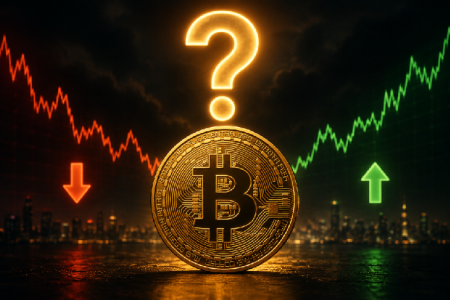
To truly understand how modern asset classes process systemic shocks, one must look at the structural mechanics of twenty-first-century trading. Because geopolitics does not adhere to a standard five-day banking week, crises almost invariably erupt during the weekend, leaving traditional equity and bond markets frozen in time. In this regulatory vacuum, cryptocurrency—specifically Bitcoin—has emerged as the world’s only real-time financial barometer. When news of the Strait’s closure first flashed across wire services on a Saturday, Bitcoin became the immediate outlet for global anxiety, executing a sharp, algorithmic sell-off as automated trading systems rushed to liquidate risk-on assets. However, this immediate downside volatility proved to be short-lived. Within hours, the digital asset stabilized, treating the military posturing as a non-event rather than the harbinger of a broader economic collapse. This sequence highlights a fascinating paradox: the very market designed to be the ultimate hedge against sovereign instability is now acting as a rapid-reaction lightning rod, absorbing the initial wave of panic and neutralizing it before traditional stock exchanges even have the chance to ring their opening bells.
                   WEEKEND LIQUIDITY PATHWAY

      Traditional Markets (Closed)      Crypto Markets (Open 24/7)
            [Equities & Bonds]                [Bitcoin / USDT]
                    │                                │
                    ▼                                ▼
          No Real-Time Pricing              First-Responder Panic
         (Orders queue for Monday)         (Rapid sell-off & stabilization)
The Anatomy of Hormuz: Why the World’s Vital Artery Still Matters
Despite the quiet on the screen, the physical reality of the threat cannot be completely intellectualized away by clever algorithms. The Strait of Hormuz is not simply a geographic feature; it is the jugular vein of the global energy sector, a narrow strip of water through which roughly twenty percent of the world’s seaborne petroleum flows daily. Long before the physical blockades were put in place, international shipping lanes had already begun to register the strain, with tanker traffic through the canal dropping well below historical averages. This structural drag had already baked a permanent “risk premium” into the price of Brent crude, keeping oil valuations artificially elevated during the run-up to the crisis. For industrial economies dependent on reliable energy imports, a prolonged disruption here remains the ultimate nightmare scenario, capable of reigniting systemic inflation and forcing central banks to keep interest rates higher for longer. The key question gripping energy analysts is whether this existing risk premium has already fully priced in the worst-case scenario, or if the market is dangerously underestimating the logistical fallout of a protracted, physical blockade of the Persian Gulf.
                     OIL SUPPLY METRICS

    [████████████████████] 100% Total Seaborne Oil
    [████░░░░░░░░░░░░░░░░]  20% Passes through Hormuz

    * Tanker traffic below normal levels prior to closure
    * High risk premium already integrated into Brent crude pricing
The Monday Morning Reckoning for Crude Oil and Global Equities
The ultimate test of market resilience always comes on Monday morning, when the vast machinery of institutional finance grinds back to life. If global commodity markets open with a dramatic upward gap in oil prices while Bitcoin continues to hold its ground, it will signal a deep, fundamental divergence between physical supply chains and digital sentiment. Such a split would prove that while financial speculators are content to dismiss geopolitical grandstanding, the physical consumers of energy—from industrial refineries to commercial airline fleets—cannot afford the luxury of complacency. Conversely, if Brent crude opens flat or experiences only a minor bump before retreating, it will serve as definitive evidence that the market views Tehran’s actions through a highly cynical lens. In this scenario, the closure of the Strait is read not as an act of war, but as a well-worn diplomatic card that has been played, countered, and walked back many times before, striping the maneuver of its economic leverage.
| Market Type | Core Assets | Response to Crisis | Underlying Driver |
|---|---|---|---|
| Traditional (Physical) | Brent Crude, Bonds, Equities | Delayed (Monday open), structural risk premiums | Physical supply chain logistics, transport costs |
| Digital (Speculative) | Bitcoin, Stablecoins, Crypto | Real-time (24/7), high initial volatility, rapid recovery | Algorithmic trading, immediate retail liquidity |
The Exhaustion of Geopolitical Leverage in a Fragmented World
This structural resilience points to a larger, more profound shift in the mechanics of global deterrence. For decades, regional powers could reliably count on the threat of oil supply disruptions to force Western consensus and extract diplomatic concessions. However, the efficacy of this geopolitical leverage is rapidly deteriorating. In an era defined by domestic energy abundance in the Western Hemisphere—driven by the sustained rise of North American shale production—and the rapid diversification of global supply routes, the threat of closing a single strait no longer carries the existential weight it once did. Furthermore, major importing nations, particularly those in Asia, have spent the last decade building massive strategic petroleum reserves specifically designed to cushion the blow of localized maritime blockades. As these structural defenses have strengthened, the ability of any single nation to hold the global economy hostage has diminished, turning what once would have been a global economic earthquake into a manageable, regional disruption.
                  GLOBAL RESILIENCE FACTORS

┌─────────────────────────┐     ┌─────────────────────────┐
│     U.S. & Western      │     │    Strategic Reserve    │
│    Shale Production     │     │      Accumulation       │
└────────────┬────────────┘     └────────────┬────────────┘
             │                               │
             └───────────────┬───────────────┘
                             ▼
                 Reduced Vulnerability to
                Strait of Hormuz Disruptions
Navigating the New Playbook of 21st-Century Market Volatility
Ultimately, the muted market response to the Strait of Hormuz blockade is a stark reminder that the financial world has fundamentally rewired its relationship with risk. Today’s global economy is characterized by a sophisticated, highly decentralized network of capital that is increasingly capable of pricing in political chaos in real time. For institutional allocators and retail investors alike, the old rules of panic-selling at the first sign of international friction are being replaced by a highly disciplined patience. As we watch the geopolitical chess match play out in the Middle East, the true metric of stability is no longer found in the empty declarations of political leaders, but in the quiet, unemotional data points scrolling across our trading terminals. The world has not become a safer place; rather, the systems we have built to trade within it have learned how to absorb the shocks of an unstable world without losing their footing.