



Navigating the Quantum Threat: How Bitcoin Can Defy the Next Era of Supercomputing
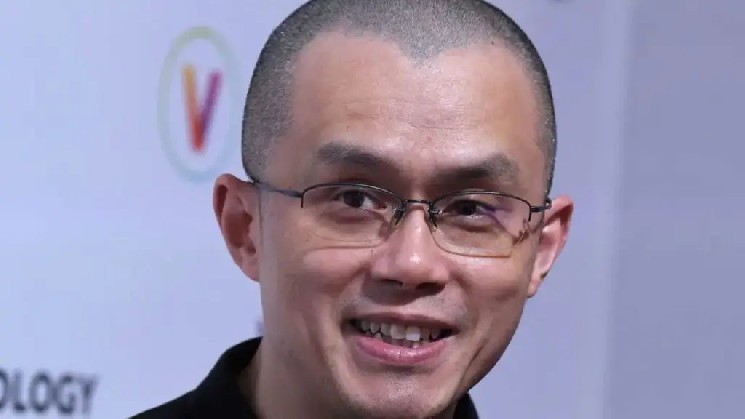
The rapid evolution of quantum computing has long cast a speculative shadow over the proof-of-work security model of Bitcoin ($BTC), prompting intense debate among cryptographers, developers, and institutional investors about the long-term viability of decentralized ledgers. Recently, during an in-depth conversation on the Galaxy Brains podcast hosted by Galaxy Research President Alex Thorn, Binance founder Changpeng Zhao—widely known as CZ—provided a reassuring yet highly pragmatic perspective on this technological horizon, arguing that quantum computing does not represent an insurmountable existential crisis for the world’s premier cryptocurrency. CZ pointed out that the global cryptography community has already designed and tested highly sophisticated quantum-resistant encryption algorithms capable of neutralizing the immense processing power of future quantum supercomputers, which theoretically threaten the elliptic curve cryptography that currently secures Bitcoin private keys. According to the veteran executive, the primary challenge facing the network is not a lack of mathematical defenses, but rather the logistical and sociological hurdle of coordinating a massive, global software upgrade across an entirely decentralized ecosystem without causing structural fragmentation. Because Bitcoin lacks a centralized authority or corporate hierarchy to mandate system overhauls, the transition to quantum-safe signature schemes will require an unprecedented level of alignment among miners, node operators, developers, and exchanges, making the coming migration a test of human diplomacy and social consensus far more than one of pure computer science.
The Satoshi Dilemma: Protecting Inactive Wealth from Quantum Exploitation
Perhaps one of the most provocative proposals raised by the Binance founder during his podcast appearance was his prescription for handling the estimated 1 million inactive bitcoins attributed to the network’s pseudonymous creator, Satoshi Nakamoto, as well as other long-dormant legacy addresses from the early days of the blockchain. CZ warned that adopting a passive “do-nothing” approach to these ancient, unspent wallets represents a critical vulnerability, as these early addresses rely on older cryptographic formats that would be highly susceptible to brute-force attacks by the first generation of viable quantum computers. To prevent malicious actors or state-sponsored entities from unlocking Satoshi’s vast fortune and trigger-warning an catastrophic market dump, CZ suggested that the Bitcoin community should establish a proactive protocol-level migration window, lasting perhaps six to twelve months, during which all active users must transition their holdings to updated, quantum-resistant addresses. If the private keys to the legendary 1 million $BTC remain unmoving and unresponsive throughout this specified grace period—confirming that the original keys are either lost or permanently out of reach of their creator—the community should implement a hard fork to permanently freeze those specific inactive addresses under the new protocol, effectively rendering them unspendable and preventing them from falling into the hands of quantum-enabled thieves. While such a move would represent a historic departure from Bitcoin’s strict ethos of absolute, untouchable property rights, CZ argued that permanently removing these inactive assets from circulation is infinitely fairer and economically healthier than allowing bad actors to seize them through advanced computing power, as a sudden influx of a million stolen bitcoins would completely hollow out the asset’s scarcity and devastate market confidence.
Democratic Consensus and the Geopolitical Realities of Blockchain Governance
Despite proposing this radical protocol-level intervention, CZ was quick to emphasize that he has no personal authority to dictate Bitcoin’s future path, asserting that any monumental decision regarding asset freezes or cryptographic overhauls must be determined entirely by the organic consensus of the global Bitcoin community. This decentralized decision-making process presents both the ultimate strength and the greatest operational bottleneck of the network, as implementing changes of this magnitude requires navigating complex signaling mechanisms, developer debates, and miner voting protocols. Philosophically, the prospect of freezing Satoshi Nakamoto’s long-dormant treasury touches upon deep ideological divides within the Web3 community, pitting purists who believe that a blockchain ledger must remain entirely immutable and indifferent to ownership against pragmatists who argue that defensive upgrades are necessary to preserve the economic security of the entire ecosystem. If the network successfully coordinates a defense against the quantum threat, it will establish a historic precedent for how decentralized public networks can collaboratively govern themselves in times of systemic crisis, demonstrating that community-driven consensus can adapt to defend digital wealth without sacrificing the fundamental censorship resistance that makes cryptocurrency valuable in the first place.
Beyond the Exchange: CZ’s New Chapter and the Architectural Evolution of BNB Chain
Shifting focus from industry-wide systemic security to his personal professional endeavors, CZ also opened up about his life after stepping down from his day-to-day managerial duties at Binance, revealing that his departure from the high-stress crucible of exchange operations has injected new energy into his passion for foundational software engineering. Unburdened by the relentless demands of regulatory compliance and corporate administrative fires, the founder is dedicating a significant portion of his time to working directly alongside Web3 developers, expressing intense enthusiasm for the technological updates currently being deployed on the BNB Chain ($BNB) ecosystem. The upcoming iterations of the BNB Chain are engineered to address the classic trilemma of blockchain technology by delivering significantly faster processing speeds, dramatically reduced transaction costs, and sophisticated, built-in privacy controls designed to appeal to both retail users and institutional enterprises. Passing along timeless wisdom to the broader software development community, CZ remarked that major technical migrations and foundational upgrades are far more effectively planned and executed during the quiet, deliberate atmosphere of bear markets, which allow engineering teams to rigorously test code free from the high-stakes pressure, frenzied congestion, and speculative distractions that inevitably define bull market cycles.
From Skepticism to Adoption: The Unstoppable Ascent of Real-World Asset Tokenization
In another striking moment of introspection during the interview, the former Binance CEO candidly admitted to a profound shift in his perspective regarding the tokenization of Real-World Assets (RWAs), a sector about which he harbored deep skepticism as recently as eighteen months ago. Historically, CZ doubted whether highly regulated, tangible off-chain physical assets—such as real estate, energy contracts, commodities, and traditional equities—could be seamlessly integrated into public blockchains without running into insurmountable legal bottlenecks, liquidity issues, and institutional resistance. Today, however, he acknowledges that the explosive growth and rapid market acceptance of RWAs, ranging from highly liquid USD-denominated stablecoins to tokenized oil futures and synthetic AI stock portfolios, have completely defied his initial skepticism and proven that international investors are hungry for borderless, 24/7 access to traditional financial exposure. The rapid capital flow into yield-bearing operational assets on-chain demonstrates that tokenization is not merely a passing cyclical trend, but a fundamental paradigm shift that democratizes global wealth distribution, allowing a smartphone user in an emerging market to acquire fractional exposure to premier global assets with the same ease as purchasing a native digital token.
The Demystified Ledger: Integrating Cryptocurrency into the Fabric of Global Finance
Ultimately, CZ’s wide-ranging insights converge on a singular, sophisticated thesis: cryptocurrency must no longer be viewed as an isolated, speculative sandbox or an anti-establishment counterculture, but rather as an essential technological upgrade to the plumbing of the global financial system. By stripping away originalist dogmas and viewing blockspace as a high-efficiency utility, the Binance founder frames blockchain technology as a tool designed to increase the velocity of capital, lower administrative frictions, and introduce unprecedented cryptographic transparency to global commerce. As cross-border payment systems lag under legacy banking systems characterized by multi-day settlement delays and prohibitive intermediary fees, the decentralized ledger offers an elegant, open-source alternative that streamlines value transfer much like the internet streamlined the dissemination of information. As public networks prepare to immunize themselves against future computation threats like quantum computing, and as mainstream assets increasingly migrate to digital rails, the boundary between traditional finance and cryptocurrency is set to dissolve entirely, leaving behind a modernized, global economic engine that is cheaper, faster, and accessible to all.