



Arthur Hayes’ Bullish Stance on Hyperliquid: A Deeper Dive into Cryptocurrency’s Rising Star
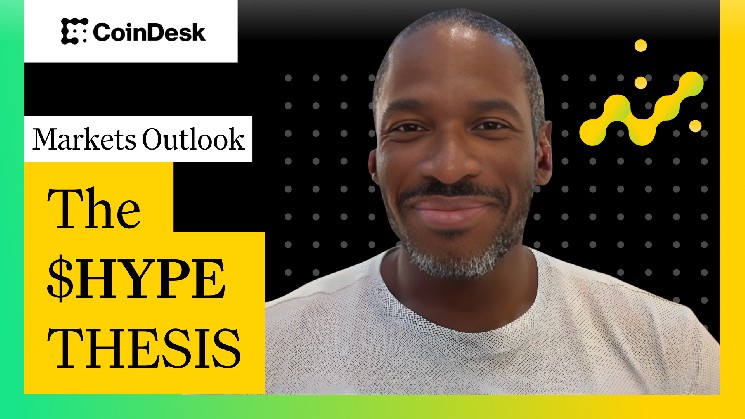
In the volatile world of cryptocurrency, where fortunes can evaporate as quickly as they appear, few voices carry the weight of Arthur Hayes. The former BitMEX CEO, known for his bullish rants and unfiltered takes on the crypto market, recently shared his insights in a candid interview with CoinDesk’s Jennifer Sanasie. During their Markets Outlook discussion, Hayes revealed why he’s betting big on Hyperliquid, a decentralized exchange (DEX) that’s positioning itself as a game-changer in the perpetual futures space. Far from the incentive-laden hype that plagues many rivals, Hyperliquid, according to Hayes, boasts real, tangible usage that’s driving its success. This isn’t just another exchange chasing artificial volume; it’s one rooted in genuine market activity, making Hayes’ enthusiasm contagious for those navigating the crypto labyrinth.
Hayes’ journey with Hyperliquid’s native token, $HYPE, has been anything but linear. In the interview, he admitted to offloading his firm’s holdings around the $50–$55 mark, anticipating the usual token unlock pressures that often tank prices. But something shifted his perspective. The team’s decision not to flood the market with monthly allocations rekindled his optimism. Now, he’s back in the bullish camp, with Hyperliquid clocking in an impressive close to $1 billion in annualized revenue based on recent 30-day fee data. What’s more, the platform’s innovative HIP-3 permissionless listing system has broadened its horizons, allowing traders to dive into diverse assets beyond crypto. Imagine trading oil futures or equity indices directly on the blockchain—Hayes painted a picture of a platform that’s evolving, not just surviving.
This expansion isn’t arbitrary; it’s fueled by real demand. Hayes explained how Hyperliquid is becoming a go-to for retail traders seeking access to markets that traditional platforms can’t—or won’t—offer. With the ability to trade assets like oil or Nasdaq proxies 24/7 using stablecoins and crypto wallets, it’s democratizing finance in ways that echo the original promises of decentralization. Leverage is a key draw too: while everyday investors on brokerage platforms might squeeze out a meager 2x–3x, Hyperliquid regularly offers 10x–20x, empowering traders to maximize potential. And in a world shaken by unexpected events, like sudden geopolitical flare-ups over weekends, Hyperliquid shines when traditional markets shutter their doors. These factors aren’t just perks; they’re the backbone of a thriving ecosystem, as Hayes articulated with his signature clarity.
Yet, Hayes doesn’t shy from acknowledging what sets Hyperliquid apart in a crowded field. In an industry rife with smoke and mirrors, where many DEXs inflate volumes through wash trading or lavish token incentives, Hyperliquid stands out with metrics that scream authenticity. Hayes assesses exchanges through the lens of trading volume to open interest ratios—a shrewd metric for separating wheat from chaff when it comes to real demand. By his reckoning, Hyperliquid sports the lowest such ratio among major perpetual DEXs, pointing to bona fide trading activity rather than fabricated buzz. For large-scale trades, like Bitcoin perpetuals ranging from $100,000 to $10 million, the platform delivers the lowest slippage, ensuring minimal price distortion. It’s this blend of liquidity and efficiency that has Hayes bullish, especially when contrasted against competitors prone to artifice.
Of course, no thesis is impervious to cracks. Hayes cautioned that escalating hype around $HYPE could be a red flag, signaling it’s time to exit. A skyrocketing price-to-earnings ratio amid rampant bullish sentiment would make him rethink his stance. Competition looms too, with rivals potentially undercutting Hyperliquid’s fees and chipping away at its roughly 70% share of perpetual DEX revenue. For Hayes, the bull case hinges on sustained revenue flows and the team’s disciplined approach to token distribution—without that restraint, the dream could quickly sour. It’s a reminder that in crypto, where narratives shift like the wind, vigilance is as crucial as vision.
Beyond Hyperliquid, Hayes is eyeing a broader narrative unfolding in the crypto space: privacy-focused coins as a bulwark against mounting surveillance. Zcash, in particular, catches his eye. With concerns over blockchain tracking and AI-enhanced analysis of transactions growing, projects like Zcash offer a shield through their advanced cryptography. Hayes prefers Zcash over counterparts like Monero, citing its robust privacy model and ongoing upgrades as superior. Meanwhile, on the Bitcoin front, Hayes remains aggressively optimistic, prophesying a $250,000 price by year’s end, undeterred by past misses. In a market that’s equal parts chaos and opportunity, Hayes’ insights provide a roadmap for the savvy investor, blending pragmatism with unbridled ambition. As cryptocurrency continues its march toward mainstream acceptance, figures like Hayes remind us why the journey is as exciting as the destination.
In wrapping up his thoughts, Hayes encapsulates a philosophy that’s both prescient and provocative. Hyperliquid’s real usage, he argues, isn’t just a metric—it’s a testament to blockchains’ potential to revolutionize trading. From 24/7 access to leveraged bets on global assets, the platform empowers users in ways that traditional finance struggles to match. And while bulls like Hayes push for privacy coins and sky-high Bitcoin targets, they also underscore the need for caution in an arena where innovation walks hand-in-hand with risk. As the crypto saga unfolds, staying informed through voices like his could mean the difference between riding the wave or getting wiped out by it. So, as markets ebb and flow, Hayes’ bullish bets offer a compelling narrative for those daring enough to look ahead. Ultimately, in the decentralized ether, platforms like Hyperliquid might just be paving the way for a new financial paradigm—one where traders, not intermediaries, call the shots.