





Cuomo Warns U.S. Crypto Industry Faces ‘Rules of the Game’ Crisis Without Federal Action
Former New York Governor Calls for Legislative Certainty as Digital Asset Markets Reach Crossroads
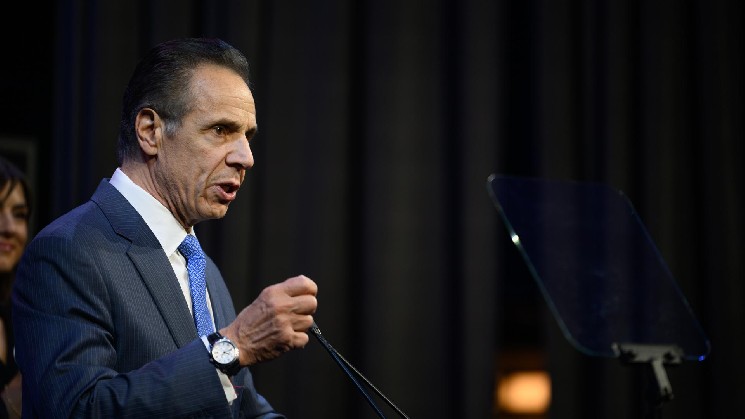
The United States stands at a critical inflection point in the development of its cryptocurrency industry, with the absence of clear federal legislation threatening to drive innovation and capital to overseas markets, according to former New York Governor Andrew Cuomo. In a candid assessment of the current regulatory landscape, Cuomo emphasized that years of legal ambiguity have created an environment where companies struggle to build products domestically while guessing where regulators might draw the next boundary line.
“For any company to operate effectively, you have to know the rules of the game,” Cuomo stated, drawing a sports metaphor to illustrate the fundamental challenge facing digital asset firms. “What’s fair and what’s foul?” This uncertainty, he argued, has paralyzed decision-making across the sector, preventing businesses from making long-term investments in American infrastructure and stalling the kind of innovation that could position the United States as a global leader in financial technology.
The former governor’s remarks come at a time when the cryptocurrency market has seen renewed institutional interest, with traditional financial players increasingly seeking exposure to digital assets. Yet the regulatory environment remains fragmented, with multiple federal agencies claiming overlapping jurisdiction while state regulators enforce their own disparate rules. This patchwork approach has created compliance nightmares for businesses operating across state lines and has made it extraordinarily difficult for startups to scale operations without substantial legal counsel.
Cuomo drew sharp contrast between the American approach and that of Europe, where the European Union has implemented a comprehensive, bloc-wide framework for cryptocurrency regulation through its Markets in Crypto-Assets regulation, known as MiCA. This unified approach provides European businesses with clear guidelines for everything from stablecoin issuance to exchange operations, creating what many industry observers consider a competitive advantage for the continent’s financial sector.
The European Advantage and America’s Competitive Risk
The EU’s proactive stance on digital asset regulation represents more than just administrative efficiency; it signals to global investors that Europe is open for business in the new economy. By establishing clear rules that apply across all member states, European regulators have created a predictable environment that encourages both domestic entrepreneurs and international firms to establish operations within their jurisdiction. American companies and foreign firms alike are increasingly looking across the Atlantic with envy at this regulatory clarity.
Without similar federal legislation in the United States, Cuomo warned, the country risks losing not only business but also the substantial investment capital that flows with it. “When markets are uncertain, capital goes elsewhere,” he noted, pointing to the growing trend of cryptocurrency companies choosing to establish headquarters in jurisdictions with clearer regulatory frameworks. Switzerland, Singapore, and the United Arab Emirates have all positioned themselves as crypto-friendly destinations, actively courting American companies frustrated by domestic ambiguity.
The stakes extend beyond the cryptocurrency sector itself, touching on broader questions of American competitiveness in financial technology, digital infrastructure, and the future of money. As other nations move forward with digital currency initiatives and blockchain-based financial systems, the United States risks falling behind in a race that will define the next generation of global finance.
The Politics of Legislative Stalemate
Navigating the complex political landscape necessary to pass comprehensive legislation will require meaningful compromise from all parties involved, Cuomo acknowledged. He pushed back forcefully against attempts to assign blame to either Democrats or Republicans for the legislative impasse, arguing that the challenges facing the crypto industry transcend partisan politics. The former governor pointed to disagreements over ethics provisions and other ancillary components of pending legislation that should not be allowed to derail the entire effort.
“We cannot let perfect become the enemy of good,” Cuomo emphasized, suggesting that lawmakers should focus on the core regulatory questions that matter most to industry participants while leaving more contentious side issues for future consideration. This pragmatic approach, he argued, represents the only realistic path forward in a politically divided Congress where comprehensive legislation requires bipartisan support to advance.
The legislative landscape has grown increasingly complicated in recent months as various congressional committees have staked claims to different aspects of cryptocurrency regulation. Multiple bills have been introduced addressing everything from stablecoin oversight to the classification of digital assets as securities or commodities. While this flurry of legislative activity demonstrates growing awareness of the issues, it also creates confusion about which approach will ultimately prevail, making it harder for businesses to plan for regulatory compliance.
The Consequences of Inaction and Regulatory Drift
Should Congress fail to act, Cuomo warned that regulators will inevitably step in to fill the void, creating an even more unpredictable environment that could hamstring industry development for years to come. This regulatory drift carries profound implications, as the absence of legislative guidance means federal agencies must operate using laws enacted long before digital assets existed. The result has been a confusing series of enforcement actions, contradictory guidance documents, and court decisions that have left even sophisticated legal minds unsure of how to proceed.
Perhaps most troubling, Cuomo suggested, is that this vacuum means rules could change dramatically each time political power shifts in Washington. Democratic administrations might pursue aggressive enforcement, while Republican administrations could favor a lighter touch, creating a regulatory whipsaw effect that makes long-term planning nearly impossible for crypto and financial firms. This political dependence of regulatory approach stands in stark contrast to the stability European firms enjoy under MiCA’s comprehensive framework.
The current situation has created an unfortunate dynamic where enforcement agencies like the Securities and Exchange Commission and the Commodity Futures Trading Commission have engaged in turf battles over jurisdiction. The SEC has pursued aggressive actions against major exchanges, while the CFTC has claimed certain digital assets fall within its purview. This interagency conflict has only added to the uncertainty facing market participants who often find themselves subject to contradictory guidance from different federal agencies.
A Personal Stake in Regulatory Outcomes
Cuomo’s perspective on these issues is not merely academic. The former governor has a direct and personal stake in how these regulations develop, currently serving as the head of a joint venture between OKX, one of the world’s largest cryptocurrency exchanges, and Intercontinental Exchange, the company that owns the New York Stock Exchange. The venture is focused on building infrastructure to connect the cryptocurrency ecosystem with traditional financial markets, creating bridges between these two previously separate worlds.
This unique position gives Cuomo insight into the practical challenges facing both established financial institutions and emerging crypto companies. The venture aims to create institutional-grade infrastructure that could eventually allow mainstream investors to access digital assets through familiar channels, potentially bringing billions in new capital into the cryptocurrency space. However, the success of such initiatives depends heavily on regulatory clarity that currently does not exist at the federal level.
The involvement of Intercontinental Exchange in crypto infrastructure signals growing convergence between traditional finance and the digital asset ecosystem. This integration could fundamentally reshape how financial markets operate, creating new opportunities for ordinary investors while presenting novel challenges for regulators. Without clear rules governing this convergence, Cuomo suggests, the United States may miss the opportunity to lead in this emerging field.
Looking Forward: The Path Toward Regulatory Clarity
The coming months will prove crucial in determining whether the United States can establish the regulatory framework necessary to maintain its competitive position in global financial markets. Industry advocates continue to push for legislation that would provide comprehensive rules for digital asset markets, while regulators increasingly acknowledge the limitations of applying outdated laws to innovative technologies.
Cuomo’s warnings highlight a growing consensus among industry leaders that the current approach cannot continue indefinitely. The choice facing Washington is not whether to regulate cryptocurrency but how to do so in a way that protects consumers while encouraging innovation. As other jurisdictions establish clear frameworks, the pressure on American policymakers will only intensify, making inaction increasingly untenable.
For the cryptocurrency industry, the stakes could not be higher. With institutional investors waiting on the sidelines for clearer rules and innovative companies considering relocation to friendlier jurisdictions, the window of opportunity for American leadership is narrowing. As Cuomo’s sports metaphor suggests, you cannot play the game if you do not know the rules. The question remains whether Congress will finally provide those rules or continue to leave American competitors playing without a playbook.