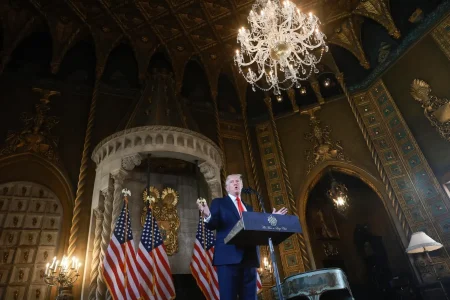




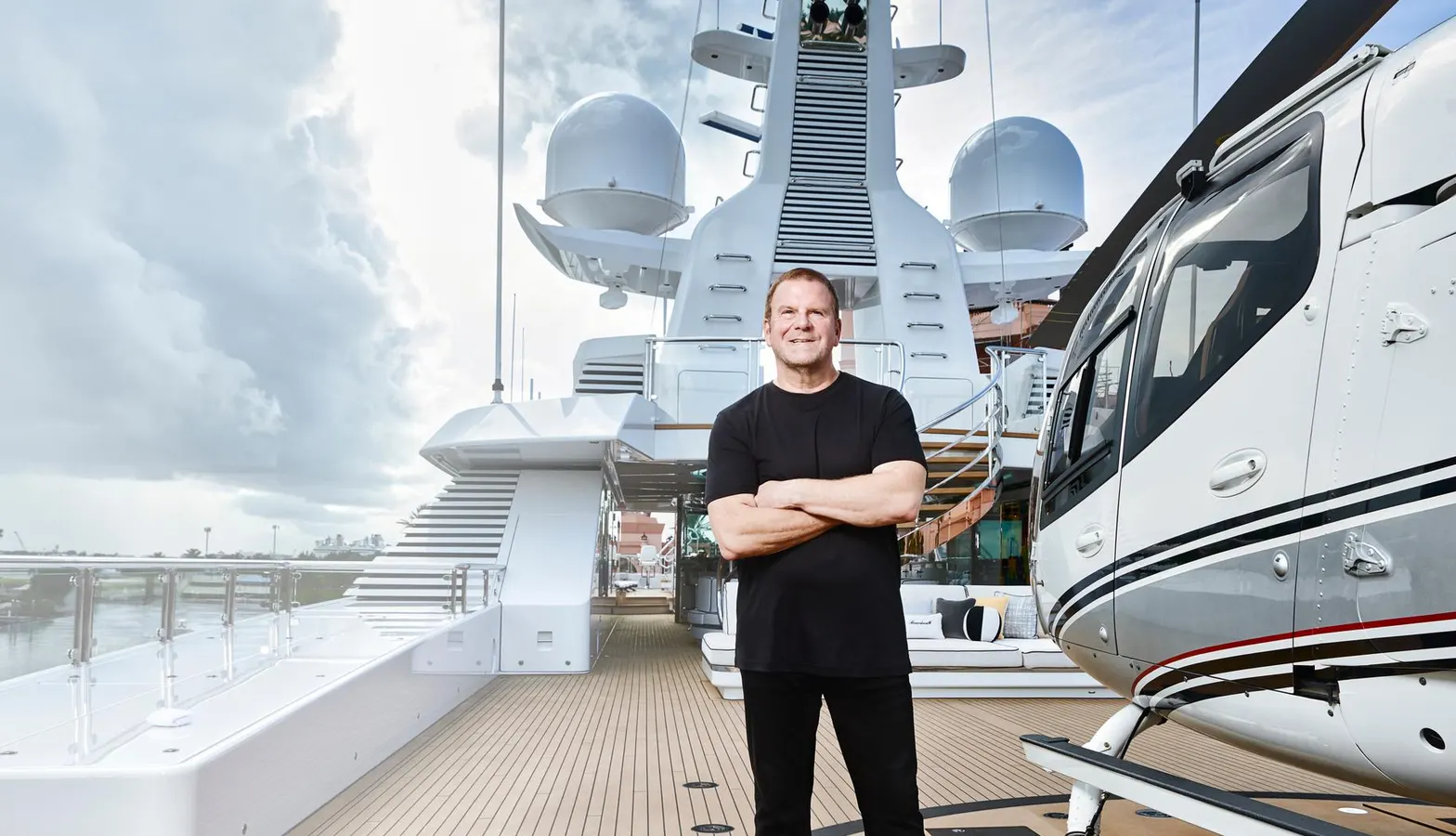
There is a profound, almost poetic irony in the current chapter of Tilman Fertitta’s life, one that captures the sheer scale of his modern-day ambition. For the past year, the self-made Houston billionaire has resided in the heart of Rome, serving as the United States Ambassador to Italy. Strolling through ancient cobblestone piazzas, under the watchful gaze of centuries-old marble statues and the heavy history of the Roman Empire, Fertitta has traded the sleek executive boardrooms of Texas for the vaulted, frescoed ceilings of historic European chancelleries. His highly curated Instagram feed has transformed into a digital gallery of high-stakes global statecraft, showcasing intimate meetings with premium international leaders and cultural icons—such as Prime Minister Giorgia Meloni, fashion powerhouse Miuccia Prada, Senator Marco Rubio, and even His Holiness the Pope. These resplendent Roman settings are captured alongside his second wife, Lauren, painting a picture of a man who has reached the absolute pinnacle of social and political prestige. Yet, Fertitta has openly admitted that this diplomatic posting is far more exhausting and demanding than he initially anticipated, requiring a tireless grasp of intricate geopolitical policies and international relations. For an entrepreneur who has spent his entire life driven by the thrill of the deal and the pursuit of commercial dominance, however, this taste of historic majesty has only whetted his appetite for grand-scale, empire-building projects back home. Rather than planning a quiet, reflective retirement to Texas when his diplomatic service eventually concludes, Fertitta is actively arranging a corporate homecoming of truly imperial proportions. He has agreed to a monumental, jaw-dropping $18 billion transaction to acquire the iconic casino giant Caesars Entertainment—a multi-layered deal comprising $6 billion in hard cash and the assumption of over $12 billion in existing debt—effectively ensuring that when his diplomatic tenure ends, he will simply transition from governing a historic capital of the ancient world to reigning over an untouchable, sprawling commercial empire that stretches from coast to coast across the United States.
To fully appreciate the sheer scale of what Fertitta is attempting to build, one must look closely at the astonishing foundation of his existing commercial real estate, corporate hospitality, and professional sports dominion. Through his corporate vehicle, Fertitta Entertainment, the billionaire already commands a staggering personal net worth of $10.9 billion, a fortune built systematically on the ownership of over 500 high-profile restaurants, 5,000 luxury hotel rooms, and eight premium Golden Nugget resort casinos scattered across major gaming markets. His sports portfolio is equally prestigious; he is the long-time sole owner of the NBA’s Houston Rockets, and has recently expanded his athletic footprint by acquiring the WNBA’s Connecticut Sun for a cool $300 million, with long-term strategic plans to relocate the franchise to Texas and resurrect the historic Houston Comets brand. However, adding Caesars Entertainment to this massive ledger completely redefines his corporate gravity. Caesars is an absolute behemoth in the hospitality and gaming industry, generating more than $12 billion in annual revenue and locked in a perpetual, high-stakes battle with MGM Resorts and Las Vegas Sands for absolute supremacy in the American gaming market. The company’s portfolio is mind-boggling, consisting of over 50 distinct casino properties across the nation that together house more than 46,000 guest rooms. Yet, behind the glittering neon lights and the bustling gaming floors lies a balance sheet of staggering complexity. Caesars’ $32 billion financial ledger indeed includes $14 billion in physical property assets and billions in valuable digital gaming software, but it also carries a massive weight: $12 billion in traditional long-term debt and, even more critically, another $14 billion in long-term lease obligations. This astronomical lease sum represents the rent Caesars must pay on properties it sold off and leased back a decade ago to VICI Properties, a powerful Real Estate Investment Trust (REIT)—a structural reality that Fertitta must now absorb alongside his own holding company’s existing $5 billion in debt.
This mountain of leverage is precisely why Wall Street analysts and financial watchdogs are keeping an incredibly close eye on this transaction, as high debt has historically acted as a heavy drag on Caesars’ performance in the public markets. According to key insights from Morningstar analyst Dan Wasiolek, the company’s stock has chronically underperformed in comparison to its peers largely due to this punishing financial burden; when factoring in those massive long-term lease liabilities, Caesars’ debt-to-EBITDA ratio stood at a steep 6.9 times in 2025, a figure significantly more bloated than Wynn Resorts’ 5.5 times and more than double the lean 3 times maintained by Las Vegas Sands. While a merger with Fertitta’s privately held entities will not magically dissolve this debt overnight, Wasiolek highlights a highly strategic, human-centric move that could prevent the deal from collapse: Fertitta’s deliberate decision to retain Caesars’ current top executive team. This seasoned leadership cohort has spent the last several years successfully integrating major brands like Eldorado and Tropicana into the Caesars corporate family and their highly lucrative customer loyalty programs. By keeping these trusted executives at the helm, Fertitta can leverage their operational expertise to integrate his own Golden Nugget casinos seamlessly into the Caesars network, while simultaneously introducing popular, high-margin dining brands from his own portfolio—such as Strip House, Morton’s The Steakhouse, Bubba Gump Shrimp Co., and the family-friendly Rainforest Cafe—directly into Caesars resort properties, creating a powerful ecosystem of cross-brand consumer loyalty rewards that enhances both casual dining and high-stakes gaming.
While some Wall Street observers remain deeply skeptical of the sheer volume of debt involved, other seasoned analysts argue that Fertitta’s massive bet on Caesars is actually an incredibly shrewd, defensive tactical move designed to protect his broader, food-and-beverage-heavy corporate empire. Analyst Joe Stauff of Susquehanna Investment Group presents a highly compelling, counterintuitive thesis: Caesars’ projected generation of $800 million in free cash flow this fiscal year will act as a vital stabilizing force for Fertitta’s existing corporate portfolio, which is currently navigating an exceptionally hostile economic climate. For a long-time restaurateur, the current macroeconomic landscape is fraught with existential threats, from skyrocketing labor costs and soaring commercial rents to a radical, highly unexpected biological shift in consumer habits. The explosive rise of weight-loss and appetite-suppressing pharmaceuticals like Ozempic, Wegovy, and Mounjaro is actively transforming consumer culture, dampening public demand for rich foods, premium alcoholic beverages, and late-night dining out—the very pillars upon which Fertitta’s massive, nationwide restaurant empire has historically generated its profits. In this challenging food-and-beverage market, acquiring an asset that yields reliable, massive cash flow like Caesars is a vital financial hedge. Furthermore, Stauff argues that the market’s panic over Caesars’ debt levels is overstated when one analyzes the situation through the lens of “traditional leverage.” By backing out the $1.2 billion in annual lease expenses from Caesars’ total $3.6 billion EBITDA, Stauff calculates an adjusted, clean EBITDA of $2.4 billion, which, when measured against the $12 billion in actual long-term debt, yields a highly manageable and stable leverage multiple of 5 times. This adjusted perspective shows that despite the narrative of high risk, physical, land-based casino assets continue to be remarkably steady, high-performing engines of cash generation that can easily withstand broader economic shifts.
Yet, even the most stable physical casino empires face unprecedented external disruptions in the modern era, and Fertitta’s newly expanded gaming empire will have to navigate a fiercely competitive and rapidly evolving digital battlefield. One of the most significant and volatile wild cards in determining the ultimate financial success of the Caesars acquisition is the explosive rise of deregulated, high-speed prediction markets. Established regulated sportsbook operators like Caesars and DraftKings—in which Fertitta personally holds a massive financial stake—are currently engaged in an intensive, high-stakes lobbying war, urging state and federal lawmakers to aggressively regulate and rein in emerging decentralized prediction platforms such as Kalshi and Polymarket. These digital platforms, which allow users to bet vast sums of money on real-world events ranging from presidential elections and inflation rates to global pop-culture occurrences, are increasingly viewed by traditional gaming conglomerates as direct, highly agile competitors to their own heavily regulated sports betting and online casino operations. As sports betting growth begins to face natural market saturation and regulatory contraction across various states, the sudden, borderless competition from these crowd-sourced prediction markets threatens to siphon away vital younger demographics of tech-savvy bettors who prefer the rapid, event-driven action of prediction markets over standard sports spreads. To protect the multi-billion-dollar investments they have made in digital sports gambling infrastructure, Fertitta and his contemporaries will have to deploy significant cash, political influence, and legal resources to preserve their market share in a digitized world that is moving far faster than legacy gaming laws can keep pace with.
Fortunately for Fertitta, his vast, diversified holdings provide him with an abundance of strategic escape valves and financial lifelines should the debt burden of the Caesars acquisition ever begin to threaten his financial stability. State gaming regulators, who historically look askance at excessive geographic concentration, are almost certain to demand that he divest some properties anyway; after all, as Barclays analyst Brandt Montour dryly points out, no single operator genuinely needs to control four separate casinos in Atlantic City or seven massive resorts along the highly competitive Las Vegas Strip. If pressure mounts, Fertitta can easily raise billions in liquid cash by selling off the valuable underlying real estate of his newly acquired properties to powerful REITs like VICI Properties or Gaming and Leisure Properties, or he can simply liquidate his personal, highly valuable 12% stake in rival gaming giant Wynn Resorts, which is currently valued at a staggering $1.3 billion. This deep pool of high-value, liquid assets gives the Texas billionaire a level of financial flexibility that few other corporate raiders could ever dream of commanding. As the deal progresses toward an anticipated shareholder vote later this year, with an eye toward a final regulatory and corporate closing in mid-2027, Fertitta’s future looks incredibly grand. When his diplomatic post in Rome finally comes to its natural conclusion, he will return to American soil not merely as a retired public servant, but as a triumphant, modern-day corporate emperor, poised to guide one of the most culturally significant and financially formidable hospitality dynasties in domestic history.