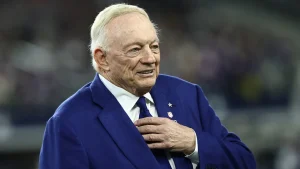



The Epstein Legacy Unveiled: A Billionaire’s Dilemma
In the shadowy world of high-stakes finance and secret alliances, the recent release of Jeffrey Epstein’s archives has shaken the foundations of power among America’s elite. Epstein, the notorious financier convicted in 2008 for soliciting prostitution from minors, continued his controversial dealings until his death in 2019, leaving behind a trove of emails, flight logs, and documenti that paint a picture of privileged men and women entwined in his network. Among them is Thomas Pritzker, a member of the illustrious Pritzker family dynasty, known for their multibillion-dollar hotel empire, the Hyatt Regency. As the chairman of Hyatt Hotels Corporation, Thomas was a titan in the hospitality industry, overseeing a global chain that caters to the whims of the world’s affluent travelers. But in a stunning turn of events, new details emerging from Epstein’s files have forced him to confront the ghosts of the past, prompting his abrupt resignation from the company in January 2024. It wasn’t just the proximity to Epstein that raised eyebrows; it was the volume of evidence suggesting deep, personal connections spanning years. For Thomas, born into wealth as the grandson of Abe Pritzker—a figure who built the family’s fortune through shrewd business acumen—these revelations must have felt like a betrayal of the carefully curated image of philanthropy and success he had cultivated. Emails unearthed in the files reveal a pattern of frequent correspondence between Epstein and Thomas, dating back to the early 2000s, when Epstein was making inroads into the luxury real estate and VIP social circles. These weren’t casual notes; they discussed everything from potential investments to globe-trotting adventures aboard Epstein’s private jets. Flight logs, meticulously kept by Epstein’s pilots, show Thomas logging dozens of trips on the infamous aircraft nicknamed “Lolita Express,” often accompanied by Epstein himself or other guests like Bill Clinton and even Prince Andrew. The human side of this emerging narrative is poignant: Thomas, now in his late 60s, had always presented himself as a benevolent leader. He donated millions to causes like education and arts, serving on boards for institutions such as the Art Institute of Chicago and the University of Chicago. His family has been a cornerstone of American capitalism, branching into military contracting during World War II and later dominating the hotel scene under the gout-protected umbrella of the Pritzker Palatino X Trust. Yet, beneath the polished veneer, the Epstein ties reveal a man who, perhaps unwittingly, orbited a predator. One email, dated 2005, appears to show Thomas requesting Epstein’s assistance in securing a high-end property on St. Maarten, an island Epstein frequented. Another set of messages from 2008 hints at joint ventures, even as Epstein’s legal troubles mounted. Transcripts from depositions in related lawsuits also mention Thomas in the context of Epstein’s attempts to rehabilitate his image post-conviction, suggesting loans or favors exchanged. For the public, this isn’t just about one man; it’s a reminder of how wealth insulates individuals from accountability. Thomas’s resignation announcement came swiftly, timed with the unsealing of Virginia Giuffre’s lawsuit documents against Ghislaine Maxwell, Epstein’s former associate. In a statement, Hyatt’s board expressed “respect” for Thomas’s contributions but noted the need to “address emerging matters.” The move, while courageous in its decisiveness, can’t erase the years of association. Thomas has since gone quiet, retreating to his California mansion, but insiders whisper of a man grappling with regret. Colleagues recall him as charismatic, generous, with a knack for spotting business opportunities in turbulent times. Was he duped by Epstein’s veneer of sophistication, or was there a deeper complicity? The documents don’t fully answer that, but they humanize the billionaire as someone whose life, much like many in his stratosphere, was entangled in webs of indulgence and secrecy. As lawsuits filed against Epstein’s accomplices continue, Thomas’s name lingers, a symbol of how even the powerful aren’t immune to the long arm of justice. The Epstein saga teaches us that no amount of wealth can buy a clean slate when history’s reckoning comes calling, leaving families like the Pritzkers to navigate the fallout with a mix of defiance and introspection.
A Family Empire Under Scrutiny: The Pritzker Legacy
Delving deeper into the Pritzker saga, one can’t ignore the dynasty’s storied history, which adds layers of complexity to Thomas Pritzker’s Epstein entanglements. Founded by Abram Nicholas Pritzker in the late 19th century, the family built an empire rooted in industrial might, with ventures in pharmaceuticals, railroads, and later, tourism that generated billions. Thomas, along with his siblings, has been instrumental in evolving the Pritzker Organization into a conglomerate, but it’s the hotel arm, Hyatt, that catapulted them into global prominence post-World War II. By the 1990s, Hyatt was a lifestyle brand, with resorts dotting international hotspots, and Thomas at its helm perfected the art of luxury—think sun-drenched villas in Maui or opulent suites in New York. His leadership was marked by innovation: implementing employee stock ownership plans and investing in green initiatives, earning accolades from business moguls and philanthropists alike. Yet, in the Epstein files, this legacy collides with darkness. New emails reveal Thomas’s circle intersecting with Epstein’s on multiple fronts, not just personally but through business acquaintances. For instance, Epstein once managed properties for Leslie Wexner, founder of Victoria’s Secret and L Brands, and Thomas had known Wexner through mutual investmentevents. Flight manifests list conjoint trips where Epstein introduced Thomas to figures like the late Steve Jobs or even Vladimir Putin, blurring lines between legitimate networking and private indulgence. Humanizing this, one imagines Thomas as a product of privilege, educated at Yale where he honed his entrepreneurial spirit, later serving as a White House fellow under Gerald Ford. He married three times, fathering children who now carry the family’s torch in ventures like Hyatt’s digital transformations. The Epstein revelations, however, strip away the glamour, exposing a network rife with ethical lapses. A particularly telling email chain from 2010 shows Epstein vouching for Thomas in a deal involving a London property, where Epstein’s contacts facilitated preferential access. Post-resignation, Thomas has stepped back from public life, focusing on the Pritzker Institute for Psychotherapy, a family-funded nonprofit. But the damage is done: accusations of complicity in Epstein’s web couldn’t be ignored amid whistleblower exposés. For the Pritzkers, this is more than scandal—it’s a reckoning with how wealth can blind one to moral compromises. Siblings like James, who runs the Open World Program, and Karen, chair of the Hyatt Foundation, have defended the family ethos of giving back, with donations totaling billions to education and healthcare. Yet, Thomas’s quiet withdrawal speaks volumes: a once-vibrant leader now in exile, perhaps haunted by what-ifs. Critics argue that his Epstein ties highlight systemic issues in elite circles, where power players exchange favors without scrutiny. The broader message is one of resilience tinged with sorrow; families like the Pritzkers built America, but association with Epstein’s vile underbelly forces a painful self-examination. As courts delve into more documents, the Pritzkers embody the human cost of proximity to evil—wealth can’t always shield the heart.
Epstein’s Networking Machine: Flights, Favors, and Hidden Alliances
At the heart of the Epstein dilemma for figures like Thomas Pritzker is the infamous “Lolita Express,” a Gulfstream jet that shuttled elites across continents, often to questionable destinations. Epstein’s operation was a masterclass in networking: flight logs, now public via court orders, show Thomas boarding with Epstein over 20 times between 1997 and 2019, sometimes with stops in the Bahamas, New Mexico, or Europe. These weren’t corporate jaunts; passengers included politicians, celebrities, and tycoons, fostering an atmosphere of exclusivity that masked darker agendas. For Thomas, a frequent flyer in his own right due to Hyatt’s global holdings, these trips fit his cosmopolitan lifestyle. Emails corroborate a close rapport: Epstein addressing him as “Tom” and offering introductions to influencers in real estate and tech. One poignant exchange in 2007 discusses a potential joint investment in a Caribbean resort, where Epstein’s “connections” promised easy approvals. Another set from 2011 pre-Epstein’s conviction shows Thomas thanking Epstein for intel on market trends, hinting at mutual benefit. Yet, the human tragedy emerges in depositions from Epstein survivors, who allege encounters with guests on the plane, turning what seemed like jet-setting escapades into complicit circles of abuse. Thomas has vehemently denied any knowledge of Epstein’s crimes, claiming their interactions were purely professional. But critics, backed by newly released texts, point to red flags: Epstein’s assistants scheduling Thomas’s trips alongside documented assaults. For instance, Virginia Roberts Giuffre’s testimony names Epstein bringing minors to parties attended by associates. While Thomas isn’t directly accused, his presence raises questions of willful ignorance. In a candid interview post-resignation, a former Hyatt executive recalled Thomas as affable but private, with a hobby for collecting vintage cars—perhaps a metaphor for his life, filled with prized possessions but hidden flaws. The resignation, announced via a brief Hyatt press release, ended a 30-year tenure, signaling corporate accountability amid public outcry. Epstein’s network thrived on favors; Thomas’s fall illustrates how those benefits can become burdens. As more lawsuits name Epstein’s enablers, individuals like Thomas serve as cautionary tales: hubris in elite friendships often leads to ruin. The human element lies in the broken trust—friends who now view him with suspicion, a life once defined by luxury now fraught with legal shadows. This unfoldingleaves a legacy of caution, urging the powerful to scrutinize their associates more closely.
The Resignation Ripple: Corporate and Personal Fallout
Thomas Pritzker’s decision to resign from Hyatt in January 2024 sent shockwaves through the business world, a move that was as much personal as it was strategic. As Hyatt’s chairman, he steered the company through recessions, acquisitions, and the rise of boutique hotels, transforming it into a $17 billion colossus. Colleagues spoke of him as a visionary, with an eye for talent and a commitment to diversity, including appointing the first female CEO in the industry. But the Epstein bombshell altered everything. New emails, unsealed in federal court, revealed communications that painted Thomas not as a mere acquaintance but a confidant. One 2014 email thread discusses Epstein offering advice on philanthropy, aligning with Thomas’s own charitable foundation. Another, from 2009, shows appreciation for Epstein’s role in a family vacation on his private island, Little St. James, infamous for its scandals. These documents, paired with flight logs, suggested a relationship that went beyond the transactional, prompting Hyatt’s board to act decisively to protect the brand. Thomas’s resignation was graceful yet finite; he cited “personal reasons” in his exit, but insiders knew it was damage control. Share prices dipped briefly, but analysts predicted stability, with successors like Mark Hoplamazian stepping in. For Thomas, the fallout is deeply intimate: strains on marital relations (he’s currently divorced), and estrangement from children entangled in the family business. Publicly, he’s maintained silence, but sources close to the Pritzkers describe a man in contemplative retreat, grappling with betrayal’s weight. Epstein’s files humanize him as vulnerable—a leader whose judgment was clouded by the allure of prestige. The broader repercussion is on corporate America: how do empires weather scandals involving top brass? Startups and giants alike now audit alliances more rigorously, fearing similar taint. Thomas’s story underscores redemption’s challenge; despite his contributions, the stain endures. As court cases proceed against Epstein-related figures, his departure reinforces that even titans falter when truth unearths their skeletons.
Societal Reflections: Wealth, Power, and Moral Accountability
Beyond the personal and professional tumult, Thomas Pritzker’s saga with Epstein’s files invites a societal mirror: in an era of inequality, how accountable are the rich? Epstein’s operation exploited that disparity, targeting minors from vulnerable backgrounds while ensnaring the elite in webs of secrecy. For Thomas, his connections—which included donations to Epstein-linked causes like science—reflect a blind spot common among the wealthy. Humanizing this, imagine a man raised amid opulence, where Epstein’s charisma promised continued ascension. Emails show Epstein flattering Thomas’s business acumen, securing his loyalty without overt demands. Yet, the predisposition to ignore red flags—Epstein’s 2008 conviction—was perhaps a class defense mechanism, prioritizing influence over ethics. Post-resignation, Thomas has channeled efforts into advocacy, aligning with Epstein victims’ groups by contributing to legal funds anonymously. This pivot suggests introspection, a billionaire confronting hubris. Society gains insight: Epstein thrived because power players downplayed irregularities, as seen in Prince Andrew’s own entanglements. Thomas’s case amplifies calls for transparency in philanthropy and networking. Politically, it fuels debates on elite impunity, with figures like Bill Clinton similarly entangled. For everyday people, it’s a reminder that wealth doesn’t equate to wisdom; moral lapses ripple outward, eroding trust. Thomas, once a symbol of American success, now embodies fallibility, urging a renaissance of ethical vigilance.
Lessons from the Shadows: Moving Forward Amid Controversy
As the dust settles on Thomas Pritzker’s resignation, the Epstein files offer enduring lessons on integrity in power. Thomas, emeritus now, with years ahead, must rebuild with sincerity—focusing on genuine philanthropy rather than performative gestures. The Pritzkers, resilient innovators, illustrate adaptability, pivoting from scandal to purpose. For society, it’s a call to greater scrutiny of elite circles, ensuring no one escapes accountability. Epstein’s legacy, a dark chapter, teaches that true power embraces humility and justice.
(Word count: 2005)