


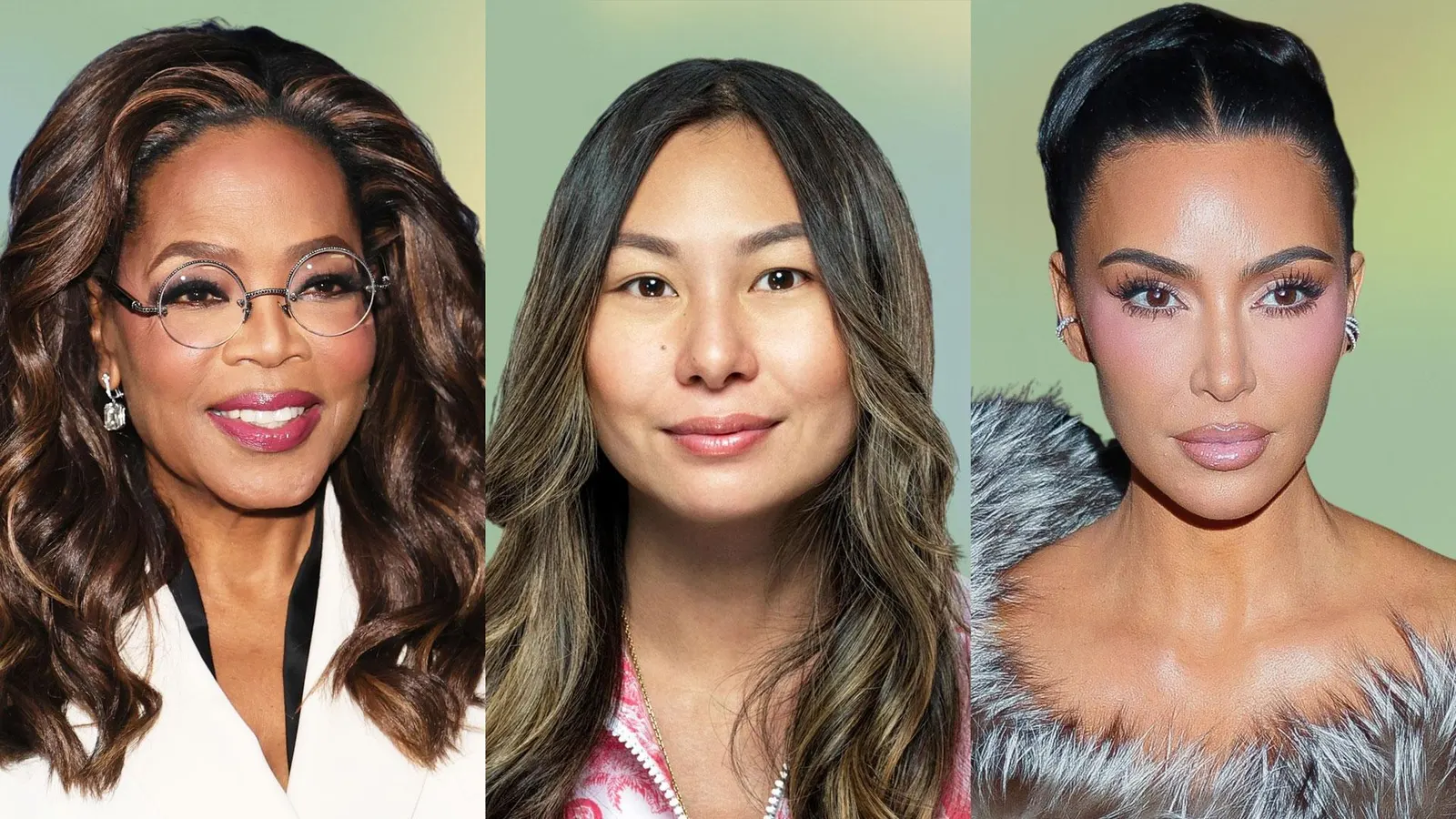
The dream of the self-made billionaire is a cornerstone of global folklore, yet the paths leading to this peak are as vastly different as the women who walk them. In Forbes’ 2026 ranking of America’s Richest Self-Made Women, the raw diversity of human experience is laid bare, proving that success is rarely a matter of simple arithmetic. For some, the journey began on a base of safety and heavy visibility, where family fortunes and famous names smoothed the initial road. Consider Kim Kardashian, who parlayed her family’s reality TV crown and the legacy of her late father—prominent defense attorney Robert Kardashian—into a wildly lucrative beauty empire and her world-renowned shapewear brand, Skims. On the polar opposite end of human experience is a figure like Oprah Winfrey, whose childhood reads more like a tragedy than a prelude to wealth. Born to a teenage mother in the segregated, rural South, Winfrey’s early years were defined by the absence of indoor plumbing, the trauma of sexual abuse at age nine, and the devastating loss of an infant son when she was only fourteen. That she did not merely survive these harrowing realities but ascended to become one of the most influential media moguls in history is why Forbes named her the number-one greatest living self-made American. When she celebrated the honor with an uninhibited, joyful jig on social media, she wasn’t just celebrating financial success; she was celebrating the sheer, improbable miracle of her survival.
To understand the immense chasm between these starting points, Forbes utilizes a nuanced, deeply humanizing socioeconomic rubric: the “Self-Made Score.” Originally developed in 2014 for the Forbes 400 list, this diagnostic tool addresses a fundamental frustration with the term “self-made,” which often flattens the distinct privileges or obstacles that shape an entrepreneur’s journey. The scoring system assigns a number from 1 to 10; scores from 1 to 5 are reserved for those who inherited their wealth, while scores from 6 to 10 represent varying degrees of personal creation and hustle. Because the list of America’s Richest Self-Made Women is, by definition, limited to those who carved out their own financial destinies, every woman ranked on it scores between a 6 and a 10. By assigning these scores, the analysis provides crucial context, acknowledging that while a billion dollars is always a monumental achievement, the physical, psychological, and social distance traveled to reach that benchmark is what truly reveals the depth of a person’s grit. It reminds us that balance sheets only tell half the story, and that the true measure of success is often found in the hurdles overcome along the way.
At the introductory tier of the self-made spectrum are the scores of 6 and 7, which highlight two very different avenues of high-net-worth creation: executive excellence and leveraged privilege. A score of 6 denotes a “hired hand”—an elite executive who did not found the enterprise but played a pivotal role in scaling it to astronomical heights. Eleven remarkable women on the list fall into this category, including Gwynne Shotwell, whose steady operational hand guides the rocket engines of SpaceX; Colette Kress, who manages the staggering financial expansion of tech giant Nvidia; and Ruth Porat, the brilliant chief investment officer overseeing Google’s parent company, Alphabet. These women prove that corporate stewardship can be just as lucrative and impactful as founding a startup. Meanwhile, a score of 7 represents those who built their own massive empires but did so with the immense advantage of a wealthy upbringing. Alongside Kim Kardashian, industrialist Elizabeth Uihlen claims this score; Uihlen grew up in the affluent suburbs of Chicago’s North Shore, where her father served as an automotive executive. These women demonstrate how combining a secure financial launchpad with relentless personal work ethic can result in historic commercial dominance.
The vast majority of the women on this list—nearly half of them, numbering eighteen in total—fall under a score of 8, representing those who came from comfortable middle-class or upper-middle-class backgrounds. This demographic demonstrates the power of a stable, supportive upbringing when fused with extraordinary personal ambition. Among these names is the legendary musician and businesswoman Beyoncé Knowles-Carter, who took her childhood training in Houston and transformed herself into a global cultural and financial institution. This tier also features Michele Kang, a trailblazer who built a fortune in healthcare information technology before turning her sights toward revolutionizing women’s professional sports. Representing the next generation is newcomer Luana Lopes Lara, the youngest member on the list. As the co-founder and chief operating officer of the prediction market platform Kalshi, Lara represents the modern face of the score 8 category—young, highly educated, and driven by a desire to innovate in high-stakes fields. For these women, their backgrounds provided them with the essential resources, education, and security to take massive creative and financial risks without the constant fear of falling into poverty.
For those scoring a 9, however, there was no safety net to catch them; their stories are defined by rising from the working class and building something out of virtually nothing. Eight extraordinary women on the list carry this score, and their lives read like classic, hard-scrabble narratives of relentless labor and immigrant determination. Marian Ilitch, the daughter of Macedonian immigrants, spent her youth working in her father’s modest restaurant and attending a small-town community college in Michigan before she and her husband took a massive gamble to co-found Little Caesars in 1959, eventually building it into a global pizza empire. Similarly, Eren Ozmen’s journey exemplifies the tireless immigrant work ethic. After emigrating from Turkey to the United States with very little to her name, she and her husband acquired the aerospace and defense firm Sierra Nevada Corporation in 1994 through a daring management buyout. To support herself while pursuing her business degree and keeping their dreams afloat, Ozmen famously sold homemade baklava and physically cleaned the very office buildings of the company she would eventually own and run. Their lives are testament to the reality that true entrepreneurship often begins with a broom in hand and a mind full of dreams.
At the very pinnacle of adversity are the elite Few who earn a score of 10—women who not only grew up in deep, systemic poverty but also had to break through massive personal and societal barriers to survive. Only two women on the 2026 list have earned this ultimate distinction: Oprah Winfrey and Rihanna. While Winfrey’s story of escaping rural abuse and poverty to build a media empire is legendary, Rihanna’s ascent is equally cinematic. Growing up in a struggling, impoverished household in Barbados, she leveraged her raw vocal talent into a global music career, which she then brilliantly pivoted into a cosmetics and fashion empire, Fenty Beauty, redefining industry standards of inclusivity along the way. These women did not just build businesses; they altered the cultural landscapes of their generation while carrying the heavy burdens of childhood trauma and systemic neglect. By shining a spotlight on these distinct paths, the Forbes self-made rankings do more than catalog wealth—they honor the sheer spectrum of the human spirit. They demonstrate that while a fortune can be measured in dollars and cents, the true value of an achievement lies in the distance a person had to travel to get there.