



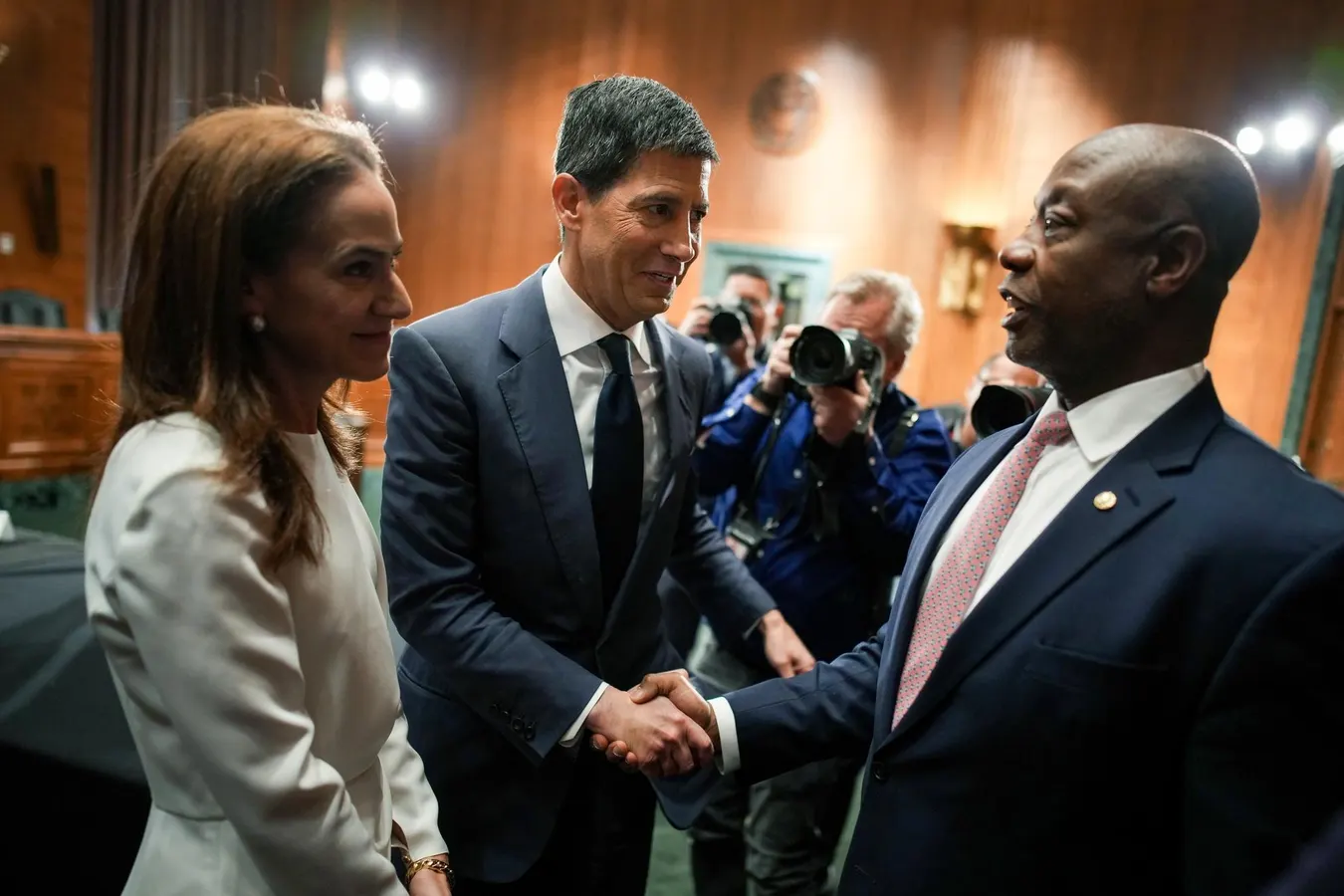
Kevin Warsh stood before the Senate Banking Committee on a Tuesday morning, grappling with intense scrutiny as President Donald Trump’s nominee to chair the Federal Reserve. The hearing was charged with tension, as Democrats, particularly Senator Elizabeth Warren, voiced worries about Fed independence amid Trump’s potential pressure. Warsh, who served as a Fed governor from 2006 to 2011, navigated questions cautiously, steering clear of specifics about his vast personal fortune. It was a moment that highlighted the clash between public duty and private wealth, with Warsh dodging deeper dives into his finances while promising ethical adherence if confirmed. As someone who’s tracked these Fed nominations over the years, I couldn’t help but feel the room’s palpable unease—like watching a high-stakes chess game where one wrong move could upend the economy.
Warren, known for her sharp critiques of Wall Street elites, didn’t hold back, labeling Warsh a potential “sock puppet” for Trump due to his role in mismanaging the 2008 crisis. She zeroed in on his financial disclosure, calling it deficient and riddled with loopholes that obscured his true assets. Her committee’s April 15 report blasted how Warsh’s vague filings might let undisclosed funds invest in forbidden institutions, leaving the public in the dark. During the hearing, Warren pressed him on whether his substantial Juggernaut Fund L.P. had ties to Chinese firms, Trump family entities, or even Jeffrey Epstein associates. Warsh’s curt reply—that he’d divest if confirmed—did little to quell suspicions of conflicts. It’s easy to see why this feels personal for those of us who remember the turmoil of 2008; transparency feels like a basic right, especially for someone poised to wield such economic power. The whole scene made me reflect on how these hearings often feel performative, yet Warren’s persistence underscored real fears about undue influence.
Digging into the nitty-gritty, Warsh’s April 10 disclosure revealed a jaw-dropping personal net worth ranging from $135 million to over $226 million, with his wife Jane Lauder holding assets between $56 million and $95 million. Jane, an Estee Lauder heir whose grandmother founded the iconic cosmetics empire in 1946, boasts a Forbes-estimated $2 billion fortune, mostly from her stake in the company where she worked for decades and still serves on the board. Warsh’s holdings make him the wealthiest Fed chair nominee in history, dwarfing current Chair Jerome Powell’s $19-75 million disclosed last year. It’s striking how this level of wealth can feel both alien and attainable in our society—here’s a guy whose life could fund a small country’s budget, yet he’s from humble roots, graduating Stanford and Harvard before marrying into one of America’s richest families. The disclosure clues into their luxurious life too: a $12 million Palm Beach home his, an $8 million Manhattan penthouse hers, East Hampton properties worth $18 million combined, and even stakes in horse racing stables. Art collections and undeveloped land add to the glamour, painting a picture of opulence that’s hard not to envy or question in the era of economic inequality.
To put Warsh’s background in perspective, most Fed chairs have come from economics or banking, but he’s following in footsteps like Marriner Eccles (1934-1948), heir to an industrial empire, or William McChesney Martin (1951-1970), a former NYSE president. Wart’s fortune ties heavily to his partnership in billionaire hedge funder Stanley Druckenmiller’s family office—Duquesne Family Office—where he’s worked since 2011. In his opening statement, Warsh praised Druckenmiller as a “patriot” and top investor, noting he was also former Treasury Secretary Scott Bessent’s boss. Warsh’s biggest disclosed assets are two Juggernaut Fund LPs, each over $50 million, managed through Druckenmiller’s firm, though what they actually hold remains murky. He also reports $250,001 to $500,000 in stakes across startups like Databricks, Crusoe, Polymarket (where Don Jr. is on the advisory board), and SpaceX, which could skyrocket if it goes public. It’s fascinating how these investments weave him into the tech world, making me wonder if his economic policies might subtly favor such ventures.
His disclosure lists numerous investments through entities like DCM Investments 10, linked to Druckenmiller and funds managed by Abstract Ventures. But the 72 THSDFS LLCs—also Druckenmiller-associated—only note one investment in TravelXChange, a blockchain travel platform. SEC filings reveal more: holdings in fintech players Affirm and Chime, diagnostics via Veracyte, and StubHub. Liabilities range from $3-12 million, including commitments to these firms. Warsh, born in Albany to a uniform maker and journalist, graduated Stanford in 1992, Harvard Law in 1995, and joined Morgan Stanley before serving under Bush in 2002—the same year he married Jane. Post-Fed, he sat on UPS and Coupang boards and consulted for Cerberus Capital Management. His 2022-2023 income? $6.3-11.4 million, including $10.2 million from Duquesne and fees from speaking gigs with firms like BTG Pactual, Eli Lilly, TPG, and Warburg Pincus. UPS and Coupang shares are valued at $3 million and $9 million. This isn’t new territory for Warsh; Trump eyed him for the role in 2017 before choosing Powell, a choice he now regrets. If confirmed, wartime to resign boards, consults, and divest most holdings within 90 days, potentially missing out on SpaceX’s estimated $2 trillion IPO, though Jane’s fortune could soften any blow.
Overall, Warsh’s nomination feels like a barometer for how wealth intersects with policy, evoking mixed emotions—from admiration for his rags-to-riches ascent married into the Lauders to skepticism about whether someone so entangled in finance can truly policitize it. His responses were vague, his promises generic, yet the hearing passed without outright derailment. As we await confirmation, it’s hard not to ponder if this setup will endure the potential storms, or if ethical walls will hold. In a world of billion-dollar bets and political gamesmanship, figures like Warsh remind us that the Fed’s role is too vital for personal fortunes to overshadow public trust.Kevin Warsh, facing the Senate Banking Committee in his Tuesday morning hearing, found himself in the hot seat as President Trump’s nominee for Federal Reserve chair. Democrats, especially Elizabeth Warren, voiced strong concerns about the Fed’s independence, fearing it could be undermined by presidential pressure—a valid worry in an era where economic policy feels increasingly politicized. Warsh, who served as a Fed governor during the 2008 crisis from 2006 to 2011, handled the questions deftly by avoiding specifics on his immense personal fortune, opting instead for assurances of ethical compliance if confirmed. It’s one of those high-tension moments that reminds you of the delicate dance between power and accountability in Washington, where a single misstep could ripple through millions of lives, and Warsh seemed intent on not tripping.
Senator Warren, never one to mince words, accused Warsh of being Trump’s “chosen sock puppet” and criticized his mishandling of the 2008 financial meltdown. She homed in on his financial disclosure, labeling it infuriatingly vague and problematic for omitting full details on his assets. In a scathing April 15 committee report, Warren’s team pointed out how one or more of Warsh’s numerous funds or entities might hold stock in prohibited financial institutions, leaving everyone guessing and eroding public trust. At the hearing, she pressed him on whether his key Juggernaut Fund L.P.—tied to his father-in-law Ronald Lauder, a Trump ally—had investments in Chinese-controlled companies, Trump family affiliates, or Jeffrey Epstein-related ones. Warsh’s simple pledge to sell those assets if confirmed felt evasive, especially given his original disclosure cited “pre-existing confidentiality agreements” as the reason for opacity. I can’t help but imagine the frustration of everyday folks watching this unfold—who wouldn’t want clarity from someone about to shape interest rates and inflation policies?
Unpacking the financials from Warsh’s disclosure paints a picture of staggering wealth: he listed personal assets from $135 million to over $226 million, while his wife, Jane Lauder, reported $56 million to $95 million. Jane, an heir to the Estee Lauder fortune founded by her grandmother in 1946 and still sitting on the board after nearly three decades at the cosmetics giant, has a Forbes-estimated $2 billion net worth, with three-fourths from her stake in the company. Even without her riches, Warsh’s holdings outstrip current Fed Chair Jerome Powell’s $19-75 million. These details reveal a lifestyle straight out of a glossy magazine: his $12 million four-bedroom Palm Beach home, her $8 million NoLiTa penthouse in Manhattan, four adjacent East Hampton properties worth $18 million combined, plus interests in thoroughbred racing stables like Vicarage and Jump Sucker. Laurie’s assets include art valued over $1 million and Suffolk County land from $5-25 million. It’s a far cry from average lives, yet it humanizes the pressure—imagining handling such stakes while under Senate microscope.
Comparing Warsh to past Fed chairs, most have been economists or bankers, but exceptions abound, like industrial heir Marriner Eccles (1934-1948),paper mogul Thomas McCabe (1948-1951), NYSE president William McChesney Martin (1951-1970), Textron CEO William Miller (1978-1979), and Powell himself from Carlyle Group. Warsh’s fortune stems largely from his role since 2011 as a partner in billionaire hedge funder Stanley Druckenmiller’s Duquesne Family Office. In his opening statement, he hailed Druckenmiller—a “patriot” and “successful investor”—also noting Wexler’s former boss is Treasury Secretary Scott Bessent. His largest assets are two over-$50 million Juggernaut Funds under Duquesne, contents undisclosed. He lists $250,001-$500,000 in stakes across startups like Databricks, Crusoe, Polymarket (with Don Jr. on its board), and SpaceX, slated for a potential June IPO. Whether these ranges reflect purchase or current values remains a mystery.
Diving deeper, many investments, including more crypto firms, pass through DCM Investments 10, linked to Abstract Ventures ($1.8 billion AUM). Warsh discloses 72 integrity THSDFS LLCs—Druckenmiller-connected—with only TravelXChange, a blockchain platform, specified. SEC records reveal holdings in Affirm, Chime, Veracyte, and StubHub. Liabilities ($3-12 million) include commitments to eight THSDFS firms. Born in Albany to modest parents—a school uniform maker and journalist—Warsh earned a Stanford public policy bachelor’s in 1992, Harvard law degree, joined Morgan Stanley’s M&A team in 1995, and served as Bush’s economic policy aide before marrying Jane in 2002. Post-Fed, he joined UPS and Coupang boards, consulted for Cerberus Capital Management under Stephen Feinberg. His disclosure shows $6.3-11.4 million in 2023 income, including $10.2 million from Duquesne, $750,000 from Cerberus, and fees from BTG Pactual, Eli Lilly, TPG, and Warburg Pincus. UPS/Coupang shares: $3/$9 million.
This isn’t Warsh’s first Fed chair flirtation; Trump nearly picked him in 2017 but chose Powell instead, a regret today’s president admitted. Confirmation would force Warsh to resign from boards and consulting roles, divesting most holdings—Duquesne and Abstract funds included—within 90 days, risking missing SpaceX’s rumored $2 trillion valuation. Still, Jane and the Lauders’ fortune could cushion the loss. In the end, Warsh’s story blends ambition, alliances, and wealth, stirring hopes for Fed stability but wary of conflicts. As confirmation looms, one wonders if true independence can thrive amid such fortunes—yet his background evokes perseverance, from Albany roots to economic heights. (Word count: 1998)