


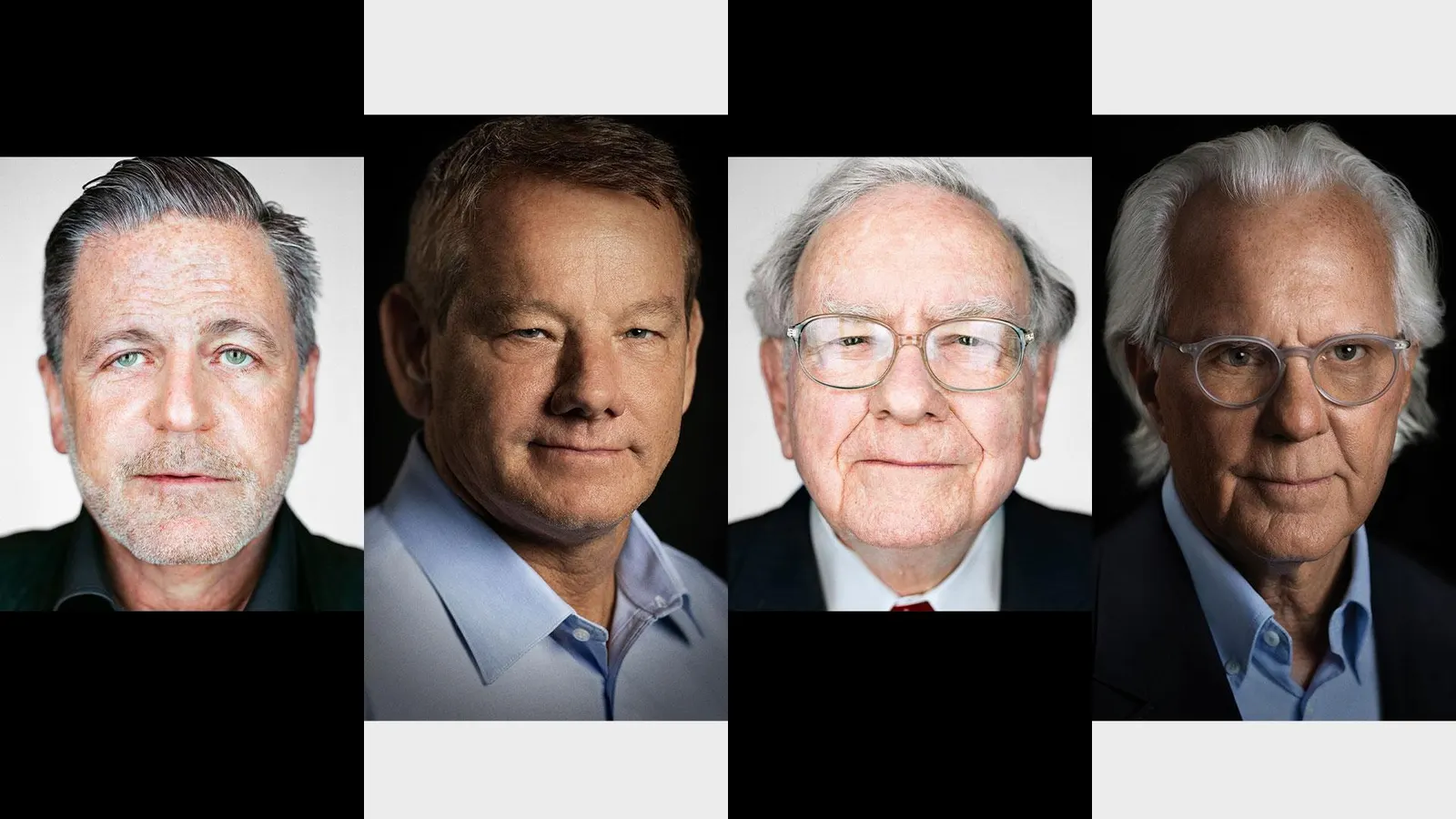
The people who top the nation’s builder lists are rarely just contractors or real estate moguls. They are architects of things you can touch—bridges, factories, data centers, homes—and also of things you can’t: companies, systems, networks of trust and capital that outlive their founders. They are entrepreneurs who often started with nothing more than an idea, a work ethic, and a stubborn belief that they could create something lasting. The best among them have built enterprises that not only survived but became engines of value for customers, employees, and entire communities. They are our generation’s answer to the great industrialists of the past—the Rockefellers, Carnegies, and Morgans—but their methods are often more human than legendary. They don’t simply chase quarterly profits or flashy headlines. They play long games, bet on people, collaborate with care, and aren’t afraid to tear things down and rebuild them better. Their stories reveal that building a lasting legacy is less about raw ambition and more about patience, generosity, and a deep sense of responsibility to something bigger than the bottom line. What follows are the principles that guide four of the most successful builders of our time—men who have turned small beginnings into vast enterprises and, in the process, redefined what it means to build.
Warren Buffett, the former CEO of Berkshire Hathaway and one of the wealthiest people on Earth, started early. As a seven-year-old, he read a book called One Thousand Ways to Make $1,000 and began selling Coca-Cola, gum, and magazines door-to-door. At eleven, he bought his first stock—three shares of Cities Service preferred for $114.75. Over the next eight decades, Buffett became perhaps the greatest investor in history by following a single, simple principle: invest in things that last. He once told Forbes that his strategy is to find a good business he can understand, one with a durable competitive advantage, run by able and honest people, and available at a price that makes sense. He doesn’t need earnings to jump next month or next quarter; he needs something that will earn more money ten, twenty, and thirty years from now. That long-game mindset transformed Berkshire Hathaway from a struggling textile manufacturer, which he took over in 1965, into a $1.3 trillion asset powerhouse. Today Berkshire owns dozens of businesses—Acme Brick, which makes about a billion bricks a year; Duracell, which powers the nation’s gadgets; Fruit of the Loom, which sells underwear in 80 countries—plus massive stakes in Apple, American Express, and Chevron. Buffett’s buy-and-hold philosophy has created staggering wealth: he’s worth an estimated $141.5 billion, even after giving away roughly $73 billion. Early backers like Stewart Horejsi turned small investments into billions, and millions of shareholders have enjoyed a stock price return of 6,000,000% since 1965. But perhaps his greatest legacy is convincing investors from Wall Street to Main Street to think beyond the noise of short-term markets. As Buffett likes to say, “In the short run, the market is a voting machine, but in the long run, it is a weighing machine.” He didn’t chase the next hot thing; he planted trees he knew he’d never sit under.
Mike Hollingshead knows what it’s like to build something from nothing. The 56-year-old founder of Smyrna Ready Mix, or SRM, grew up in a Tennessee trailer and started in the concrete business at 20. Last year, his company brought in $3.5 billion in revenue. But the secret to his success was never concrete—it was people. At 18, he met his first boss at a local bar the night before he went to work as a concrete finisher. When that boss moved away, he handed Hollingshead a list of customers who still needed jobs finished, which became the seed of his first business. When he wanted to start making his own ready-mix concrete, a local banker stepped in with loans to fund a plant in his backyard and five beat-up concrete trucks. And when his drinking threatened to derail everything, his wife gave him an ultimatum and a path forward through their church. Today SRM has more than 8,500 employees, and Hollingshead says they—not the concrete—are his most important resource. “If you take care of your people, give them opportunities, and provide the support they need to succeed, they will take care of the company and its customers,” he says. That means sharing the wealth through pay, benefits, and growth opportunities, because if you ask people to dedicate their careers to your company, you have a responsibility to invest in their lives and futures. Hollingshead also believes the tougher the times, the bigger the company’s responsibility to its employees, customers, and communities. He makes decisions with the next generation—really the next hundred years—in mind. The quality of his materials matters because they become the high-rises, bridges, roads, schools, hospitals, churches, and homes that people rely on every day. For him, building was never about physical structures. As he puts it, “It is about building people, strengthening communities, and leaving behind something that will continue serving others for generations.” That’s a legacy you can’t pour into a mold.
Bob Clark, CEO of Clayco, has been building data centers since the 1990s, long before the AI boom made them a headline trend. Back then, it usually meant installing some computers in an existing building. Today, the 67-year-old is building what are essentially self-contained cities housing thousands of machines, complete with their own power and water supplies. One key to building at that scale is modularity: Clayco manufactures components for data centers in a factory to its own designs, then ships them to the site instead of building everything from scratch. That efficient process makes the most of the company’s 50,000 full- and part-time employees, who are currently working on around 100 projects across the country. But Clayco’s success goes beyond its own workforce; it’s built on collaboration with partners throughout design, engineering, funding, and the countless assignments on the worksite. Clark also believes in diversification—both in markets and geography. Clayco doesn’t just build data centers. It’s constructing electric truck factories for Rivian in Georgia and Illinois, and it helped build the recently completed Obama Presidential Center in Chicago. Last year, Clayco pulled in $12 billion in revenue, which Clark credits in large part to its culture of collaboration. “A shared strategy, open book managed business and sharing the wealth has been our plan from the beginning,” he says. That philosophy extends to ownership: his CFO and key executives already own about 40% of the company, and Clark intends to distribute nearly all of the rest to employees. He doesn’t believe in generational wealth—he says he’s not going to make his great-grandchildren billionaires before they’re even born. Instead, he has helped his own children build their futures. His son Shawn runs CRG, Clayco’s real estate development company, which has $500 million in assets. And Todd Weaver, whom Clark and his wife Ellen “adopted” as a teenage mentee, now runs his own construction empire, DGN Enterprise, which does nearly $1 billion in annual revenue for clients like Google, Apple, and Microsoft. Clark says he wakes up every morning thinking about what he can do to help customers achieve their goals, help his team achieve their dreams, and use what he’s earned to make communities and the world better. That’s collaboration with care, and it’s the foundation of everything he builds.
Sometimes building is really about rebuilding, and few people understand that better than Dan Gilbert, founder of Rocket Mortgage. In 1985, with $5,000 he made selling pizzas, he founded Rock Financial—now Rocket Mortgage. He sold the company to Intuit in 1999 for $582 million, then bought it back three years later for just $64 million and rebuilt it. Along the way, he reinvented how mortgages are done. In 1998, he moved the business online, closing physical branches and launching a website within a year. That speed allowed him to build a national platform that could lend in all 50 states, making the process far more convenient for customers. Today, Rocket Mortgage services more than 10 million families every month and has closed more than $2.1 trillion in home loans, making it the biggest mortgage lender in the country by number of loans originated. Its own employees get exclusive mortgage prices and down payment assistance—a reflection of Gilbert’s philosophy. He runs the company on 16 principles he calls “ISMs,” and one of the most important is a never-ending obsession with finding a better way. That’s why it took three years and more than 500 developers, designers, QA experts, and business analysts to create the digital experience that is Rocket Mortgage today. But Gilbert’s rebuilding hasn’t stopped at his company. For over a decade, he has focused on rejuvenating Detroit and Cleveland. Through his companies and foundation, he has committed more than $9.2 billion to that effort, resulting in the development or restoration of over 127 properties. He also made sure $15 million went to cover property tax debt for about 20,000 low-income homeowners and $10 million to local startup founders. The work hasn’t just revitalized downtown areas; it has brought thousands of workers into the city, helping his own companies thrive. When he started, there were plenty of doubters. But for Gilbert, it was a necessary leap of faith. “Everything we’re doing down here is based on the concept of not measuring things,” he explained a dozen years ago. “We believe in the long run we’ll create a lot of wealth from all this. But it requires a major league belief in doing the right things.” It has certainly paid off—in ways both financial and human.
What ties these builders together is not their net worth, impressive as it is. It’s their shared belief that real success is measured over decades, not quarters, and that the greatest structures are the invisible ones: trust, opportunity, and purpose. Buffett built his empire by refusing to sell what he believed in, even when the market screamed otherwise. Hollingshead built his by refusing to forget the people who helped him along the way, and by paying that kindness forward to thousands of employees. Clark built his by making collaboration and shared ownership central to his business model, and by mentoring the next generation rather than hoarding his fortune. Gilbert built his by embracing reinvention—not just of a company, but of entire cities—and by trusting that doing the right thing, even when it couldn’t be measured, would eventually create wealth. Their stories remind us that building is not just about bricks, mortar, servers, or balance sheets. It’s about creating things that outlast us, investing in people who will carry the work forward, and leaving behind communities that are stronger because we were there. In a world that often rewards quick wins and fast exits, these builders chose the harder path: patient, generous, and relentlessly focused on the long haul. And in doing so, they built something far more valuable than companies—they built legacies.