



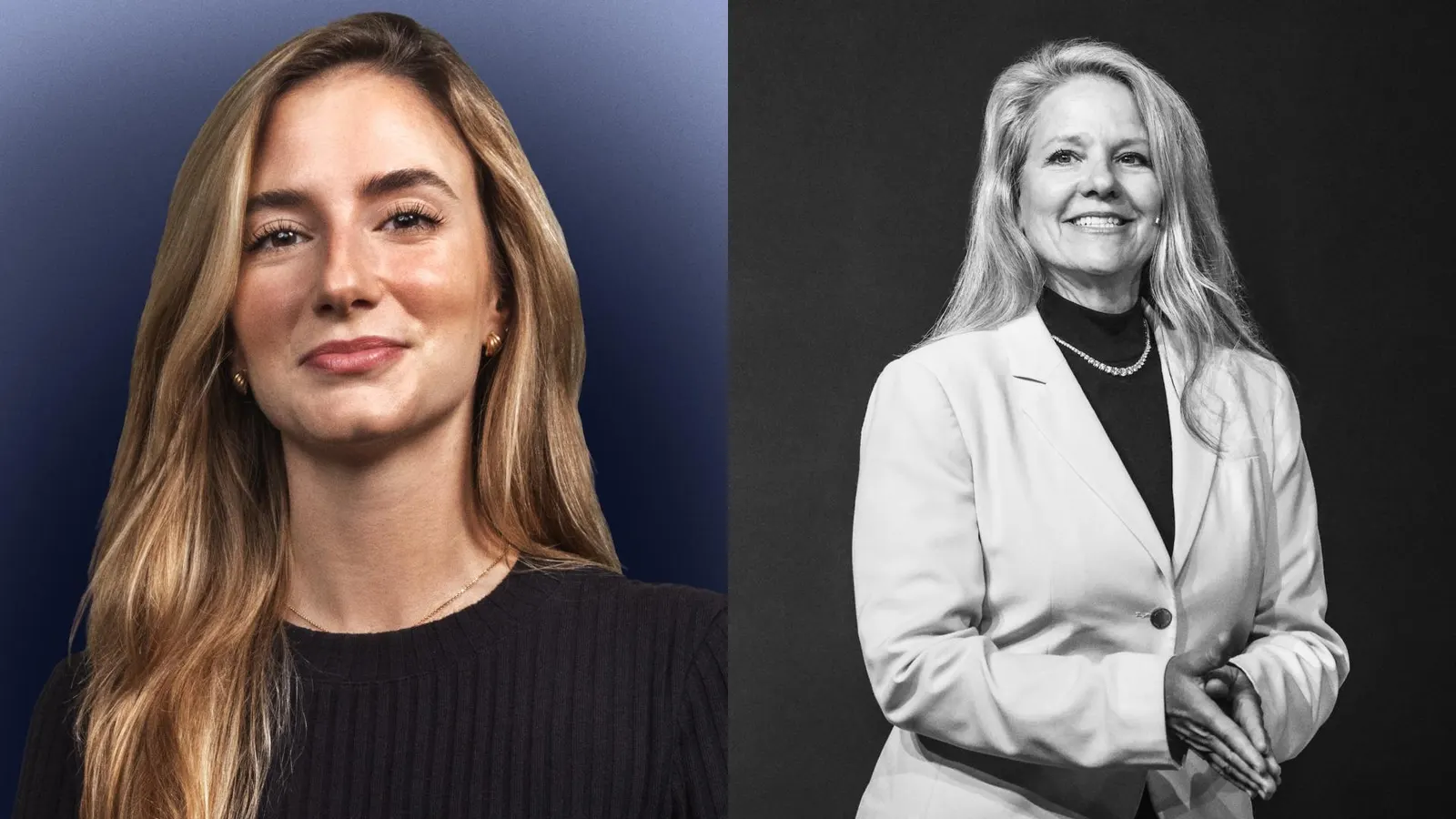
Imagine standing at the intersection of classical grace, high-level mathematics, and elite financial speculation, only to throw it all behind an audacious, high-stakes gamble against the federal government. This is the origin story of Luana Lopes Lara, a former classical ballerina whose intellectual curiosity led her from the stage to the halls of MIT, and eventually to the intense trading floors of Citadel Securities. In 2023, Lopes Lara looked at her college friend and Kalshi cofounder, Tarek Mansour, and proposed a historic move that defied every principle of traditional startup self-preservation: they needed to sue the Commodity Futures Trading Commission. Every single investor they spoke to begged them not to do it, warning that picking a fight with powerful federal regulators was a fast track to corporate suicide. But Lopes Lara’s life had been defined by a deep-seated conviction and a refusal to accept arbitrary limits. By the close of that year, the New York-based prediction market startup had filed its historic lawsuit, challenging the regulatory blockades that prevented everyday Americans from wagering on political elections. Just months before the historic 2024 presidential election, the court ruled in Kalshi’s favor, dismantling a century-old restriction and ushering in a brand-new financial frontier. This legal victory changed everything. Today, at just 30 years old, Lopes Lara rules as the world’s youngest self-made female billionaire, overseeing a platform that is capturing an astonishing $1.5 billion in annual revenue. With both founders recently celebrating their milestone 30th birthdays, their matching 12% stakes in the newly minted $22 billion empire have catapulted them onto Forbes’ inaugural Iconoclast 50 list as its youngest inductees, proving that sometimes the ultimate risk yields the ultimate reward.
To step inside Kalshi’s Manhattan office is to witness a masterclass in split-second executive synergy, where Lopes Lara and Mansour sit directly across from one another, deeply embedded within the trenches of their staff. While Mansour acts as the outward-facing catalyst of the firm—handling the macro-strategy, public-facing media, investor relationships, and high-stakes regulatory policy—Lopes Lara is the quiet, highly disciplined engine room driving their rapid growth. Describing herself as the naturally introverted and meticulously organized half of the partnership, she masterfully handles the chaotic, ground-level machinery of Kalshi. Her leadership style is defined by an extraordinary capacity for multitasking; as she notes, while Mansour excels at focusing entirely on a single monumental objective, she is capable of seamlessly executing across engineering, design, product, market creation, legal, and customer support simultaneously. John Wang, Kalshi’s head of crypto, vividly compares her to an elegant orchestra conductor, marveling at her innate ability to pull the perfect minds into a room at the exact right moment, banishing all corporate distractions, and aligning creative forces with absolute precision. This relentless focus is what keeps the hyper-growth startup from derailing. When Kalshi’s payment infrastructure desperately needed a complete rebuild, an undertaking that would typically consume weeks of corporate bureaucracy, Lopes Lara designed a flawless strategic blueprint and rallied her team to complete the entire overhaul in just two frantic days. She directly manages the daily operations of over 150 employees, reserving her Sundays for the emotionally demanding work of mapping out the weekly KPIs for every department, setting a grueling, hands-on precedent that sees her arriving first in the office and leaving near midnight.
This incredible combination of work ethic and operational discipline has positioned Kalshi at the absolute center of what industry leaders are calling a profound shift in how humanity processes risk. The prediction market landscape is no longer just a playground for tech elites, academic theorists, and crypto enthusiasts; it has evolved into a fundamental feature of the global financial system. Wall Street heavyweights have quickly taken notice, recognizing that understanding human behavior through financial forecasting is the ultimate modern asset class. Robinhood’s visionary founder, Vlad Tenev, recently proclaimed that we are merely at the dawn of a massive “prediction market supercycle” that could comfortably process trillions of dollars in annual trading volumes over the coming years—a conviction validated when Robinhood began directly integrating Kalshi’s predictive contracts into its massive user base. The concept has garnered support across the ideological spectrum, from market-maker Jeff Yass of Susquehanna International Group to political figures like Donald Trump, whose administration fiercely defended the validity of these markets against state-level gambling classifications, with Donald Trump Jr. stepping in as a strategic advisor to Kalshi. What Kalshi has unlocked is not just a platform for betting, but a highly accurate, crowdsourced truth engine that strips away public relations spin and corporate talking points to reveal what the world actually believes will happen next. In doing so, Lopes Lara has done more than build an exchange; she has constructed a mirror that reflects collective human expectation in real-time, proving that when people are forced to back their opinions with capital, the noise of speculation melts away to reveal cold, hard reality.
This same relentless operational discipline and resistance to external noise is what defines Gwynne Shotwell, the formidable Chief Operating Officer of SpaceX and one of the most powerful corporate leaders on the planet. While her legendary boss, Elon Musk, captures the public imagination with chaotic social media posts and world-altering claims, Shotwell has spent nearly two decades quietly steering the day-to-day operations of the world’s most valuable private aerospace company. Armed with an academic background in mechanical engineering integrated with an innate brilliance for sales and business development, she has run SpaceX’s complex operations since 2008, systematically lowering launch costs and increasing rocket deployment frequencies until the idea of space travel moved from science fiction to reliable commercial reality. Under her steady hand, SpaceX has transcended being just a rocket company to become the primary architect of a brand-new orbital economy, with global enterprises competing to tap into SpaceX’s infrastructure to build everything from orbital satellite nets to space-based artificial intelligence data centers. Her leadership style is famously direct, insisting on an intense work culture with zero margin for error or complacency. Former SpaceX engineers recall Shotwell walking the busy factory floors, personally checking in on mission control teams with sharp, disarming questions designed to keep everyone on their toes. She works to protect her 23,000 employees from the media storm of Musk’s public persona, defining her primary mission as ensuring her workforce remains entirely insulated from distraction. Her unique ability to balance wild engineering dreams with rigid operational realities has enabled SpaceX to win unprecedented regulatory clean bills of health, unlocking a launch cadence that easily dwarfs all global competitors combined.
While Lopes Lara and Shotwell rewrite the structural rules of finance and space travel from behind the scenes, creative dynamos like Taylor Swift, Beyoncé, and J.K. Rowling are performing equally transformative work on the world’s most visible stages. Decades ago, the relationship between pop-cultural stardom and serious corporate ownership was fraught with tension. When Forbes featured Madonna on its cover in 1990 questioning her business acumen, the star and her representation aggressively shunned the corporate spotlight, operating under an outdated assumption that commercialism diluted artistic credibility. Today, that old dynamic has been completely disintegrated, replaced by a generation of female superstars who view financial ownership not as a secondary concern, but as an essential element of artistic self-determination. This shift is perfectly embodied by Taylor Swift, who, after losing the master rights to her early music catalog to predatory private equity investors, embarked on an unprecedented, multi-year project to re-record her entire early discography, rallying her massive fan base to abandon the older versions in favor of hers. By May 2025, buoyed by the historic success of her $2 billion Eras Tour, Swift finalized a triumphant full-circle victory by utilizing her liquid capital to buy back those original rights from Shamrock Capital for $360 million, cementing her status as a self-made $2 billion force. Similarly, Beyoncé Knowles-Carter built her remarkable $1 billion empire on a brave decision made over a decade ago when she founded Parkwood Entertainment. She actively chose to bypass traditional talent managers and corporate middlemen to retain full ownership over her labor, creating her own empire so that she would never have to split her money and success with corporate structures.
This cultural transformation is not limited to the music industry. Renowned author J.K. Rowling recently rejoined the exclusive billionaire club, nearly three decades after her debut novel fundamentally altered modern publishing, driven by a landmark $5 billion multi-year adaptation deal with HBO that breathes fresh narrative life into the Harry Potter franchise. This massive deal demonstrates that when creators retain tight, long-term legal control over their intellectual properties, their financial influence only compounds over time. On the other end of the financial spectrum, the landscape of massive wealth is being reshaped by visionaries like MacKenzie Scott and Melinda French Gates, who are showing that true self-made power lies not merely in the hoarding of immense capital, but in the intentional, transformative distribution of it. These legendary figures represent a growing cohort of female change-makers who are leveraging their wealth to target historic systemic inequalities, choosing to invest heavily in grassroots organizations, global healthcare, and education to build a more equitable future. Looking across the entirety of the modern landscape, the common thread linking every single female leader in the Forbes Iconoclast 50 is a refusal to operate within the narrow boundaries laid down by legacy institutions. Whether they are challenging federal regulators, navigating the engineering demands of interplanetary colonization, reclaiming their creative masters, or building multi-billion-dollar empires from scratch, these trailblazers have shown that supreme organizational focus, an absolute intolerance for mediocrity, and the courage to take high-stakes ownership of one’s destiny are the ultimate engines of human progress.