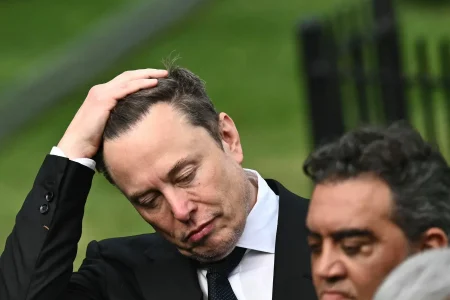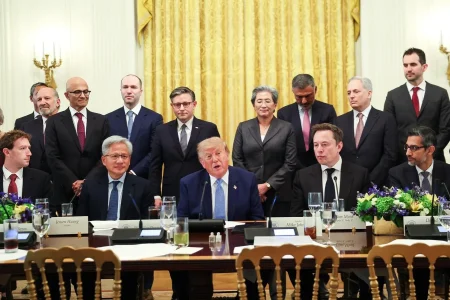



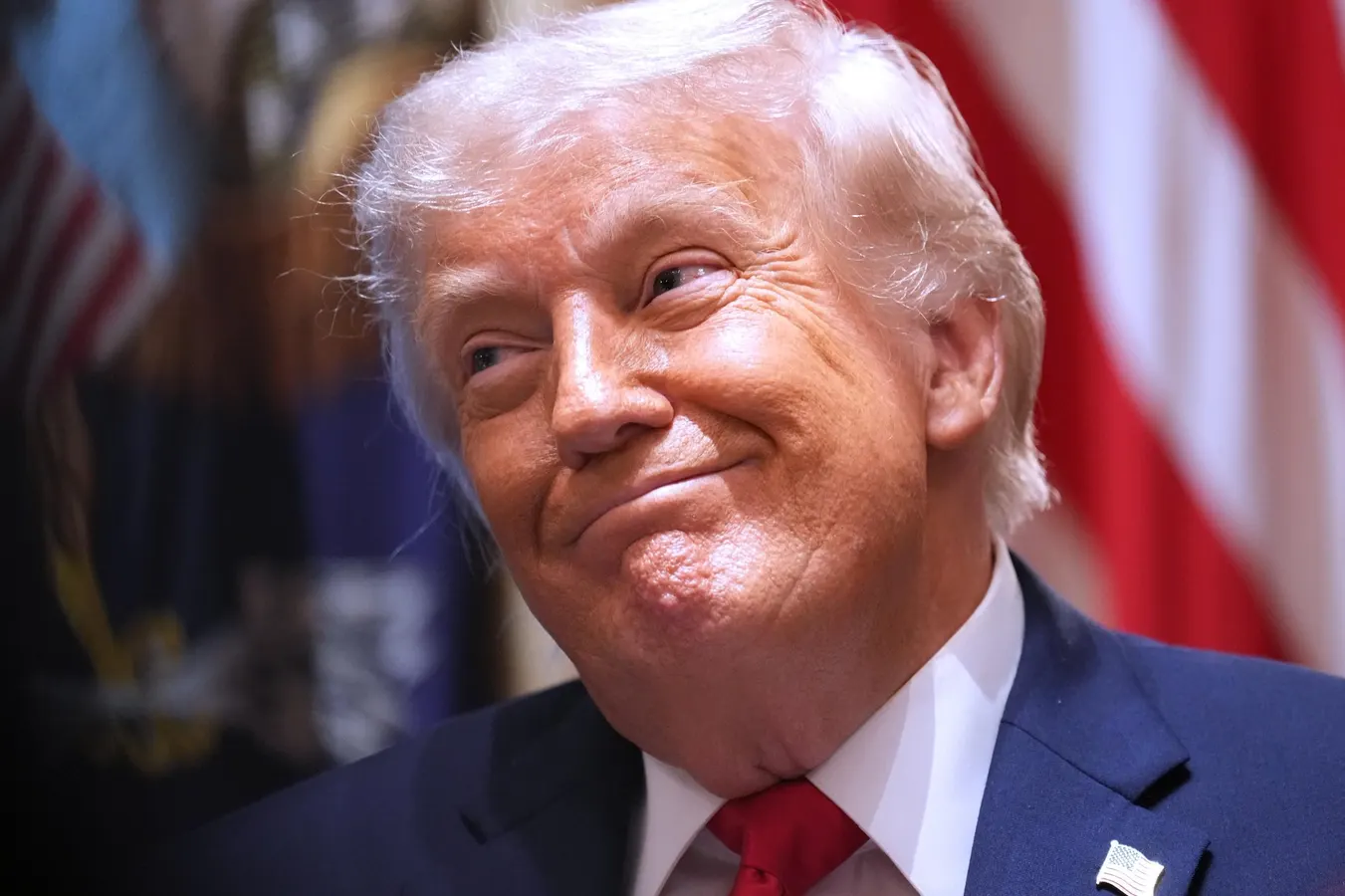
Early in his second term, Donald Trump settled into the passenger seat of a Tesla, looked around at the digital dashboard, and offered a glowing assessment to the vehicle’s creator and his most prominent billionaire supporter, Elon Musk: “Everything is computer!” It was a passing remark, but it has since matured into the defining philosophy of the president’s personal financial empire. In a dramatic departure from his presidential predecessors—and indeed from his own first term—Trump has transformed his personal investment portfolio into a hyper-active, high-frequency trading vehicle. Financial disclosures revealed that the president made an astonishing 4,000 trades between January and March of this year alone. Averaging 44 trades per day, this activity represents a threefold increase over his entire trading volume for 2025, with total transactional values swinging between $200 million and $700 million. By bypassing traditional, hands-off investments like government bonds and broad-based mutual funds, Trump has positioned himself as an active participant in individual public equities. He has essentially become a one-man market signal, where a single purchase or sale from the Oval Office can recalibrate a company’s valuation overnight, raising profound questions about where public policy ends and private wealth accumulation begins.
This unprecedented trading volume has ignited a fierce political and ethical debate, dragging the administration into a familiar defensive posture. Critics, led by progressive lawmakers like Massachusetts Senator Elizabeth Warren, have sounded the alarm, characterizing the transactions as a flagrant display of self-dealing and a danger to national security, particularly after Trump acquired Nvidia shares shortly before taking its CEO, Jensen Huang, on a diplomatic mission to China. In response, the president’s defenders have rallied to insulate him from allegations of insider trading. His son, Eric Trump, took to social media to assert that all family assets are managed via a blind trust held by leading financial institutions. Yet, federal disclosures tell a different story, revealing direct ownership in highly volatile, specific tech equities rather than insulated index funds. Vice President J.D. Vance offered a more down-to-earth defense, insisting that the president is not sitting in the Oval Office actively trading on a retail brokerage application. The Trump Organization and the White House have leaned heavily on a unified statement declaring that the portfolio is held in fully discretionary accounts managed by independent third parties, meaning the president has no direct role in selecting or approving specific trades. Spokesperson Anna Kelly dismissed the rising chorus of criticism as a “tired narrative,” asserting there are no conflicts of interest.
Regardless of who is pulling the trigger on these trades, the financial yields are undeniable, particularly within the hardware infrastructure of the artificial intelligence boom. Dell Technologies emerged as Trump’s most lucrative bet. Following a massive purchase of between $1 million and $5 million on February 10—a trade later bolstered by smaller acquisitions in March—Dell’s stock surged by 142% on the back of massive AI data center demands. Assuming a median investment of $3 million, this single holding generated an estimated $4.3 million in profit. The trade’s timing is particularly striking given the cozy relationship between the administration and Dell’s leadership; in late 2025, CEO Michael Dell and his wife Susan made a staggering $6.25 billion donation to the U.S. Treasury to finance “Trump accounts,” a newly minted Republican savings program for young families. Trump later gave the company an extraordinary promotional boost directly from the White House, publicly urging citizens to “buy a Dell” after an executive meeting. The stock jumped 11.5% in a single day and has risen over 31% since. Similar synergies appeared with Texas Instruments, where Trump invested up to $5 million in January, just before Commerce Secretary Howard Lutnick publicly praised the company’s domestic manufacturing expansion. The stock subsequently climbed 72%, yielding a median gain of $2.2 million. Meanwhile, Jabil, an AI server hardware manufacturer based in Trump’s home state of Florida, saw its stock rise 47% after Trump bought in on February 10, hot on the heels of official White House praise for its domestic investments, securing the president a cool $1.4 million gain.
The intersection of presidential investment and geopolitical foreign policy is perhaps most visible in the semiconductor sector, where national security decisions and personal portfolio gains have aligned. Advanced Micro Devices (AMD) proved to be another goldmine for the president. After the administration orchestrated an agreement allowing AMD to export high-end microchips to China in exchange for a 15% royalty cut paid directly to the U.S. government, Trump executed a massive series of trades in the stock. Despite a premature sale in late March that limited his overall upside, his primary February purchase gained 136%, netting a median profit of $1 million. The connection was cemented further when AMD’s CEO, Lisa Su, visited the White House for an education initiative championed by Melania Trump, before being appointed to a prominent presidential artificial intelligence advisory panel. Trump’s portfolio managers also demonstrated an uncanny knack for timing regulatory turnarounds. Cadence Design Systems, a chip software firm that paid a $140 million fine in mid-2025 for violating export protocols with a Chinese military academy, was bought heavily by Trump on March 17. The stock immediately recovered, rising 30% and adding $900,000 to his ledger. Similarly, Synopsys—which had its own complex Chinese merger corporate restructuring greenlit after Washington eased chip-export regulations—was purchased on February 10, climbing 22% for an estimated $650,000 profit.
The personal chemistry between Trump and some of the tech sector’s most prominent titans has also consistently translated into financial windfall. Oracle Corporation, led by Trump financial backer Larry Ellison, was traded by the president’s managers at least 17 times in the first quarter of the year. Trump’s primary $1 million to $5 million investment in Oracle occurred on March 17, exactly eight days before Ellison was appointed to the White House AI advisory board, resulting in a 25% stock appreciation and a $750,000 gain. Apple CEO Tim Cook has executed a similarly masterful diplomatic dance with the president. Cook famously courted Trump’s favor, gifting him a custom gilded plaque and successfully lobbying for vital tariff exemptions for Apple components. This calculated relationship culminated in Cook joining Trump on his high-profile state visit to China in May. This diplomatic theater took place alongside a flurry of Apple stock transactions by the president’s portfolio, resulting in a solid 16% rise and a $500,000 gain.
The extraordinary digital-first transformation of the president’s wealth is rounded out by high-growth cloud computing and cybersecurity assets. Cloud-monitoring firm Datadog experienced a dizzying 74% rise after the president’s portfolio acquired a stake in mid-March, netting an estimated $550,000 gain across ten separate transactions. Meanwhile, cybersecurity provider Fortinet yielded a 61% gain, worth $450,000, after Trump’s managers aggressively rebuilt a position they had liquidated earlier in the year. Taken together, these ten high-tech bets alone have funneled an estimated $12.7 million in investment profits into the president’s personal accounts. By tying his personal financial health directly to the unregulated AI expansion and digital infrastructure platforms he governs, Trump has rewritten the rules of the American presidency. In this new era, the leader of the free world operates not just as a policymaker, but as a high-volume investor in the very tech ecosystem he oversees. Ultimately, his prophetic declaration to Elon Musk inside that Tesla was not simply a reaction to a sleek new car—it was the blueprint for an administration where governance and market optimization are run on the same high-frequency digital circuit.