

Paragraph 1: The Silence Breaks
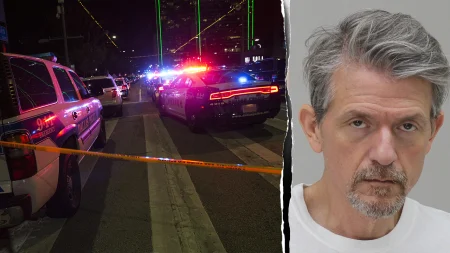
The stillness of a crisp November afternoon in the rural outskirts of Spangle, Washington—a tranquil farming community nestled south of Spokane—was violently shattered on November 3rd by the urgent, desperate crackle of a police radio. At approximately 2:25 PM, a terrified woman dialed for help, reporting that she had just been shot. Her voice, laden with pain and sheer panic, initiated a cascade of urgency within the Spokane County Sheriff’s Office. Deputy Mason Acheson and Deputy Parker Perry, along with a team of their brothers and sisters in blue, immediately responded to the address, bracing themselves for the unknown. As they converged on the isolated home, dispatchers relayed crucial, disheartening intelligence: the suspected gunman was a 37-year-old male who held an active, serious felony warrant. Compounding the threat, there was a very real possibility that he possessed access to additional weapons and that other innocent victims might be hiding or held captive within the walls of the house. Faced with this volatile and terrifying equation, the deputies made a split-second, selfless calculation. They bravely moved toward danger to protect individuals they had never met, a testament to the unwavering oath they had sworn. The woman who made the call would later be transported to the hospital, suffering from injuries that appeared to be non-life-threatening, but the psychological trauma of the day would linger forever. This act of valor, this decision to stride into the jaws of death, would tragically cost Acheson and Perry their lives, transforming a routine domestic violence call into a defining moment of supreme sacrifice for the community they served. The quiet calm of the wheat fields and farmhouses was about to become the backdrop for a firefight that would leave a permanent scar on the county’s history.
Paragraph 2: The Storm of Lead
Realizing the extreme danger presented by the suspect’s background, the sheriff’s office made the strategic decision to activate its elite SWAT team, ensuring that the situation was handled with maximum tactical superiority. They knew that standard patrol procedures would be insufficient against a man who had already proven he was willing to shoot an unarmed woman. K-9 Deputy Parker Perry, a dedicated handler, answered the fateful call alongside his loyal, four-legged partner, Brego. The German Shepherd, a symbol of protection and unwavering companionship, stood by his master, panting in anticipation, unaware of the hellish gauntlet that awaited them within the dimly lit interior of the home. The combined team, moving with calculated precision and stealth, took their positions around the property, waiting for the opportune moment to execute their rescue operation. At around 3:15 PM, they made their move, forcing their way through the threshold of the residence. The breaching of the door was met with a lethal, instantaneous storm of bullets. An ambush of gunfire tore through the air, striking both Deputies Perry and Acheson with devastating accuracy. The initial burst was sudden and overwhelming, leaving no time for the officers to take cover. In the chaos and deafening boom of the exchange, their teammates, responding with exemplary courage and adrenaline-fueled reflexes, engaged the threat, returning fire to suppress the attacker. They then risked their own lives to drag their fallen comrades out of the line of fire, seeking immediate cover in the front yard. First aid was hastily applied, with desperate attempts to stem the flow of blood from the catastrophic wounds. The severity of the injuries prompted a massive logistical response from the Washington State Patrol, which closed substantial sections of Interstate 90 and U.S. Highway 195, transforming them into temporary landing zones for medical helicopters. Despite the frantic efforts of paramedics, the breakneck speed of their transport, and the skill of trauma surgeons, the damage was simply fatal, marking a profound and heartbreaking loss for the entire department.
Paragraph 3: The Grim Aftermath and the Cold Truth
With the heroic deputies evacuated to the hospital, the scene at the Spangle residence remained an incredibly tense and chilling standoff, containing the potential for further bloodshed. Spokane police assumed command of the volatile perimeter, and specialized SWAT units from both Spokane and Kootenai counties were summoned to conduct a methodical, room-by-room search of the potentially booby-trapped dwelling. The uncertainty of the situation hung heavy in the air, the silence broken only by the bark of commands and the distant hum of surveillance drones. Authorities deployed an unmanned aerial vehicle to peer inside the structure, providing real-time, critical intelligence to the tactical teams on the ground, preventing the need for more officers to walk into a potential trap. The drone’s camera sent back grim images revealing that the suspected shooter, later identified as Ryan Larsen, 37, had succumbed to a self-inflicted gunshot wound, ending his reign of terror on his own terms. He had chosen to take his own life rather than face the consequences of his actions, leaving behind a trail of destruction. Subsequent thorough searches of the interior uncovered the bodies of two additional victims, Suzanne Larsen, 72, and Rebecca Larsen, 45. The revealing obituary published by the family tragically clarified the connections, identifying them as Ryan Larsen’s mother and sister. This revelation painted a harrowing portrait of domestic violence and familicide, exposing the deep, systemic cancers that can fester within a family home. The police had not just walked into a simple standoff; they had entered a domestic war zone where a man had turned on his own blood. Sheriff John Nowels, visibly shaken and struggling to maintain his composure, addressed the press, his voice heavy with grief. “It was a very tragic day in Spokane County,” he lamented. “A lot of families have been affected,” recognizing that the ripple effects of this violence extended far beyond the immediate victims, touching the hearts of first responders, friends, neighbors, and the entire county who now had to mourn the loss of their protectors.
Paragraph 4: The Life and Legacy of Mason Acheson
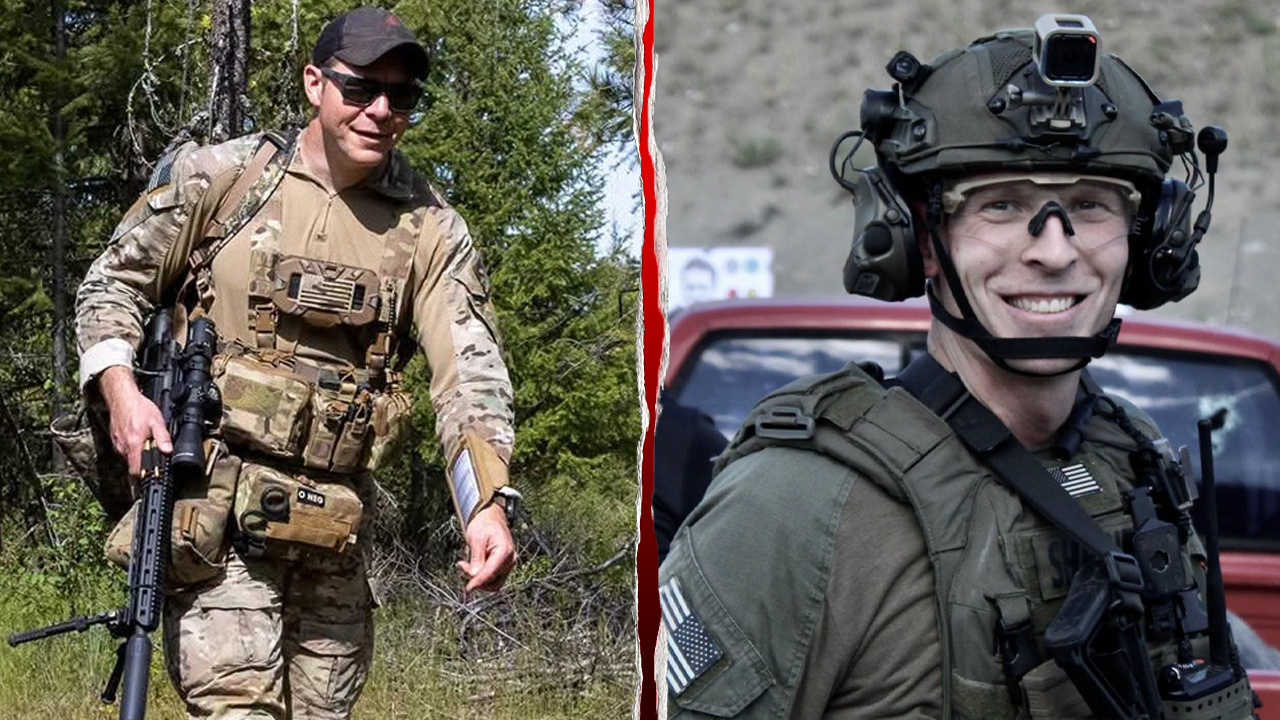
Deputy Mason Acheson was the epitome of a dedicated, multi-layered public servant, a man who seamlessly transitioned between military and civilian protection. His career in service began in 2011 when he enlisted in the Washington Army National Guard, diligently climbing the ranks to achieve the non-commissioned officer grade of Sergeant. His exemplary military career included a challenging deployment to Poland from 2021 to 2022, where he earned three prestigious Army Commendation Medals, showcasing his leadership and competence under international pressure. Prior to joining the Spokane County Sheriff’s Office in 2022, Acheson dedicated eight years of his life to the Washington State Patrol, serving as both a trooper and a highly respected firearms instructor, which equipped him with an extensive range of tactical and interpersonal skills. In his role as a sniper on the sheriff’s office SWAT team, Acheson embraced the crucial responsibility of being the watchful eye in the sky, providing overwatch and security for his teammates during the most dangerous operations, ensuring their safe passage through treacherous scenarios. He was the final line of defense, the silent guardian who could neutralize a threat from a distance before it ever reached his brothers. His colleagues in the department recalled his unwavering fortitude, stating that “in the face of danger, he stepped forward to preserve life.” Away from the uniform, Acheson was a cherished husband and proud father to his two beloved children. Representative Michael Baumgartner, a personal friend, fondly recalled knowing Acheson and his wife from their local CrossFit gym, and revealed that Mrs. Acheson was the piano teacher for his own children, describing them as “just wonderful people.” This personal connection highlights the interwoven nature of the community, underscoring that the loss of Acheson is not just a professional casualty, but a deep personal wound for those who knew him as a neighbor, a friend, and a father.
Paragraph 5: The Bright Star of Parker Perry
Deputy Parker Perry embodied the future of modern law enforcement, a dynamic officer equally adept at tactical operations and community engagement. His journey with the Spokane County Sheriff’s Office began in 2020, where he quickly distinguished himself, spending three rigorous years as a vital member of the elite SWAT team. In 2025, he transitioned to the K-9 unit, forming an unbreakable bond with his steadfast partner, Brego, a relationship built on mutual trust and loyalty. Mirroring his fallen colleague, Perry’s service extended deep into the military; he enlisted in the Washington Army National Guard in 2017, and through sheer intelligence and dedication, rose to the distinguished rank of Captain, serving as a military intelligence officer and earning two Army Commendation Medals. The call on November 3rd found Perry responding with an eagerness that defined his character; the sheriff’s office noted that he answered the call “on his own, without prompting,” a spontaneous act of heroism that showcased his selfless nature, eager to place himself in harm’s way for the sanctity of others. Perry’s life was a rich tapestry of love and anticipation; at home, he was a devoted husband and father to two children, and the family was eagerly awaiting the arrival of their third child. That future was cruelly ripped away in an instant. In his final, profound act of service, Perry was kept on life support at the hospital for a few days while arrangements were made for him to donate his organs. This poignant decision ensured that even in his tragic passing, he would “continue to serve others with the gift of life,” leaving a legacy of valor, love, and extraordinary generosity that will echo long after the last tear has been shed. His family, in their darkest hour, chose to give life to others, a testament to the character of the man they raised and loved.
Paragraph 6: A Community in Mourning, A Legacy Forged
The devastating loss of Deputies Acheson and Perry sent shockwaves of grief and outrage across the nation, provoking an outpouring of tributes from the highest levels of government. Washington Governor Bob Ferguson, recognizing the immense sacrifice, ordered all flags at state facilities to be lowered to half-staff on November 9th in their honor, a solemn visualization of the state’s collective mourning. FBI Director Kash Patel took to social media to honor each deputy individually, listing Acheson’s end of watch as November 4th and Perry’s as November 7th, acknowledging their military backgrounds and pledging the bureau’s unwavering support to their bereaved families, friends, and colleagues. The FBI itself issued separate, heartfelt tributes, cementing their legacy as icons of American valor. Rep. Michael Baumgartner poignantly asked the public to keep both families in their prayers, reiterating that the deputies “both died protecting our community.” The Spokane County Sheriff’s Office, deeply moved by what it described as an “outpouring of heartfelt condolences,” established a memorial fund through the Sheriff Community Oriented Policing Effort to cover the deputies’ funeral expenses, promising that any remaining funds would be directed to their families. As the small community of Spangle and the broader Spokane County opens its collective heart, they grapple with a profound, irreplaceable hole. These two men were not merely statistics or pinpoints on a map; they were fathers wrestling with kids, husbands who kissed their wives goodbye, soldiers who served their nation, and warriors who ran towards the sound of gunfire. Their selfless sacrifice serves as an enduring reminder of the thin blue line, a line that protects the innocent at the ultimate price. While their lives were cut tragically short, their stories of bravery, generosity, and dedication will remain forever etched into the heart of the community they gave everything to protect. They leave behind wives, children, and a grieving department, but they also leave an example of heroism that will inspire generations of future officers to come. Goodnight, Deputies, we will take it from here.