


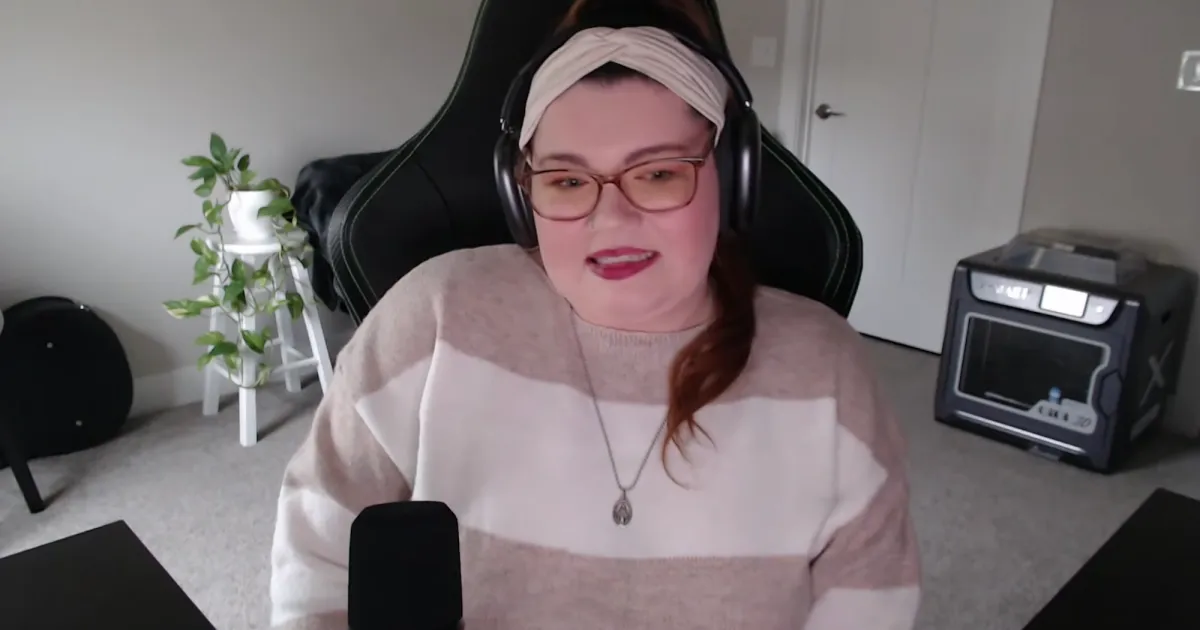
For years, the public narrative surrounding Amber Portwood has been defined by turbulence—courtroom battles, public struggles, and the messy dismantling of her family units played out under the unforgiving glare of reality television. Yet, in a recent, unguarded YouTube vlog, the 36-year-old Teen Mom alum offers a portrait that feels radically different from the headlines of yesteryear. It is a portrait of quiet, hard-won peace. Sitting down to reflect on her life, Amber doesn’t appear as a woman defined by her past mistakes, but rather as a mother and partner who has learned to navigate the treacherous waters of blended families, estrangement, and personal accountability. She speaks with a raw vulnerability that cuts through the noise, offering a rare glimpse into a dynamic with her ex, Andrew Glennon, and their eight-year-old son, James, that has fundamentally shifted from adversarial to collaborative. It is a narrative of profound emotional growth, where the cold language of legal custody agreements has been replaced by the warmer vocabulary of shared holidays, video game sessions, and mutual respect. This is not a story of perfect resolution, but one of pragmatic and tender survival.
The heart of Amber’s reflection beats strongest when she speaks about her son, James. Describing their relationship as “amazing,” she paints a vivid picture of a bond that transcends physical distance. James lives primarily in California with his father, Andrew, who was granted sole legal and physical custody in 2022, yet Amber’s voice lights up with an unmistakable maternal pride as she recounts her recent visit. She describes the mundane, beautiful intimacy of watching him play video games—a boy so eager to show his mother his digital exploits that the screen becomes a shared language of love. But it is her description of James’s latest passion that truly encapsulates her pride: Brazilian jiu-jitsu. With a mother’s unabashed boastfulness, she reveals that her eight-year-old is exceptionally gifted, having been promoted up to the 10-to-13-year-old class. The playful edge in her voice is palpable when she recounts their phone call, where she teasingly asked if he thought he could now take her down with his newfound skills. His confident “Yeah” is met with her spirited, “Oh, OK. We’ll see, we’ll see.” In this exchange, we see the architecture of a healthy, joyful relationship—one built on play, encouragement, and the sheer delight of watching your child find their strength. It humanizes Amber immensely, stripping away the celebrity to reveal a mother just reveling in the simple, chaotic glory of her son’s youth.
However, the path to this tender coexistence has not been uniform across her children. Amber is also the mother of seventeen-year-old Leah, her daughter with ex-husband Gary Shirley. Here, the narrative takes on a more somber, reflective tone. Amber acknowledges an estrangement with Leah, but crucially, she frames it not as a failure, but as a painful act of respect. “I have joint custody of my daughter,” she says, “I respected her wishes because of what she had went through from my past s***.” This admission is a profound indicator of her personal growth. In the past, Amber might have fought, raged, or demanded control. Now, she demonstrates a brutal self-awareness, understanding that Leah’s need for distance is a direct consequence of the chaos that permeated her early childhood. By stepping back, Amber is redefining what it means to be a “good mom” in this specific context. It is not about forcing proximity, but about honoring the autonomy of a young woman who needs space to process her own history. Amber’s ability to articulate this without bitterness is heartbreakingly mature. She contrasts this with her relationship with James, eagerly asserting that with him, she is “full-on his mommy,” spending holidays together and maintaining regular contact. This stark divergence in her experiences with her two children underscores that parenting is not a one-size-fits-all equation, but a series of bespoke negotiations with the ghosts of the past and the realities of the present.
The most striking revelation in Amber’s vlog is the evolution of her relationship with Andrew Glennon. The 2022 custody battle was a bitter, public affair, steeped in allegations and legal recriminations. To hear her speak now is to witness a seismic shift in perspective. “S*** happened with my and his father, [but] we are coparenting and we’re doing a very decent job at it. There’s just no malice there,” she states. This is not just a diplomatic statement; it is a declaration of peace. She reveals that they have exchanged apologies “on both ends” regarding everything that transpired, and that this mutual acknowledgment is all she needs to move forward. This humanizing detail—the quiet, private exchange of remorse between two people who once stood as adversaries—is the linchpin of their current dynamic. It speaks to a profound emotional maturity, where both parents have decided to prioritize the well-being of their son over the need to be right. They have effectively compartmentalized their romantic failure from their parental duties. By openly stating, “We’re good,” Amber normalizes the idea that healing a co-parenting relationship is often a quiet, internal victory rather than a public reconciliation. It is a testament to the fact that sometimes, the bravest thing two people can do is not fall back in love, but simply learn to stand side-by-side in the stands, cheering for the same child.
Amidst the complexities of coparenting and navigating her relationship with her daughter, Amber also offers a tender update on her private life, revealing a new relationship that appears to be a stabilizing force. Approaching their one-year anniversary, Amber speaks about her mystery boyfriend with a softness that has been absent from her public persona for a long time. “We’re doing magnificent,” she gushes, describing him as a “calm, loving soul” with a “brilliant mind.” This description is incredibly telling. After years of highly publicized, volatile relationships, Amber has chosen a partner who embodies the very antithesis of chaos. He is stable, having held the “same exact job” for over twenty years—a detail she shared in a previous livestream—and possesses a thick accent that adds a layer of mystery and allure. He remains unidentified, a deliberate choice that shields their bond from the harsh scrutiny of the public eye. This privacy is a privilege she has carved out for herself, a sanctuary away from the tabloid cycle. In him, Amber has found not just a lover, but an anchor. His calmness seems to ground her, allowing her the space to thrive in her roles as a mother and an individual. It is a lovely, humanizing detail to see her so unguarded and grateful, acknowledging that she is “so blessed” to have found such a presence in her life.
Ultimately, Amber Portwood’s reflection is a masterclass in redefining personal success. She is not measuring her life by the standards of a traditional family unit, but by the quality of the connections she has managed to salvage and build amidst the wreckage of her past. Her statement, “I’m a good mom, like, we’re good,” is not a defensive rebuttal to critics, but a quiet, self-assured declaration of her own truth. She acknowledges the imperfections—the “s***” that happened, the estrangement from Leah, the legal defeats—but she refuses to let those define her current reality. Instead, she highlights the resilience of her bond with James, the respectful distance with Leah, the peaceful coparenting with Andrew, and the genuine love with her new partner. This is the human story beyond the headlines: a woman in her mid-thirties learning to accept the life she has, rather than mourning the one she imagined. She has learned that strength lies not in control, but in surrender—surrendering to the needs of her children, to the necessity of apology, and to the gentle power of a calm love. In sharing this introspective glimpse, Amber invites us to see her not just as a reality TV star, but as a fellow human navigating the messy, beautiful, and often painful process of becoming whole.