

On a crisp October morning, the serene beauty of Utah’s Wasatch Range was shattered by a terrifying cascade of events that would test the limits of human endurance and the skill of professional rescuers. The Utah County Sheriff’s Office recently released dramatic video footage capturing the aftermath of a harrowing fall on Mount Timpanogos, a majestic peak rising over 11,700 feet. The footage, shot from a helicopter and a fixed-wing airplane, reveals the stark, windswept granite slopes with chilling clarity, showing just how unforgiving the terrain truly is. On October 26th, a female hiker, whose identity remains private for the sake of her recovery, suffered a catastrophic loss of footing while navigating the treacherous summit area. She plummeted hundreds of feet in an uncontrollable tumble of limbs, loose gear, and dislodged rocks, a violent free-fall where every second felt like an eternity. The only soundtrack to her frantic struggle was the scraping of boots and the clatter of stone. By some miracle, her slide was arrested on a narrow, jagged cliff ledge, a tiny outcropping barely wide enough to hold her trembling body. Clinging to the rock with pure adrenaline, she was exposed to the biting winds and the dizzying drop below, where a single shift of weight could have meant a fatal plunge. The initial wave of primal panic was overwhelming, mixed with the sheer disbelief that a simple hike had transformed into a fight for survival on a literal cliff edge.
The rescue operation began with a frantic call for help, but the precise location of the hiker was initially unknown, turning the search into a needle-in-a-haystack endeavor. The sheriff’s office deployed their fixed-wing search aircraft, and it was the keen-eyed pilot who first spotted the tiny speck of color against the gray rock, a human figure clinging desperately to that precarious ridge. This incredible aerial spotting was the crucial first step, transforming a hopeless search into a localized rescue effort. For the hiker, that distant hum of the airplane overhead was the most beautiful sound she had ever heard, a sign that she had been found and was no longer alone. Her ordeal was far from over, however. The fall occurred on a section of trail notorious among mountaineers for its dangerous, loose scree and steep drop-offs. In late October, the danger is magnified exponentially; freezing temperatures and a slick veneer of ice from earlier storms make the rocks treacherous to the naked eye. Her moment of distraction—perhaps a glance at the breathtaking panorama or a slight misplacement of weight on a loose stone—was all it took. Gravity seized her, and there was no time for thought, only instinct. She likely tried to dig her heels in and grasp at passing vegetation, but the momentum was too great. When she finally came to a stop on that isolated ledge, battered and bruised, she was far from any trail, alone, and had to conserves her energy, hoping her cell phone had survived the fall to call for help.
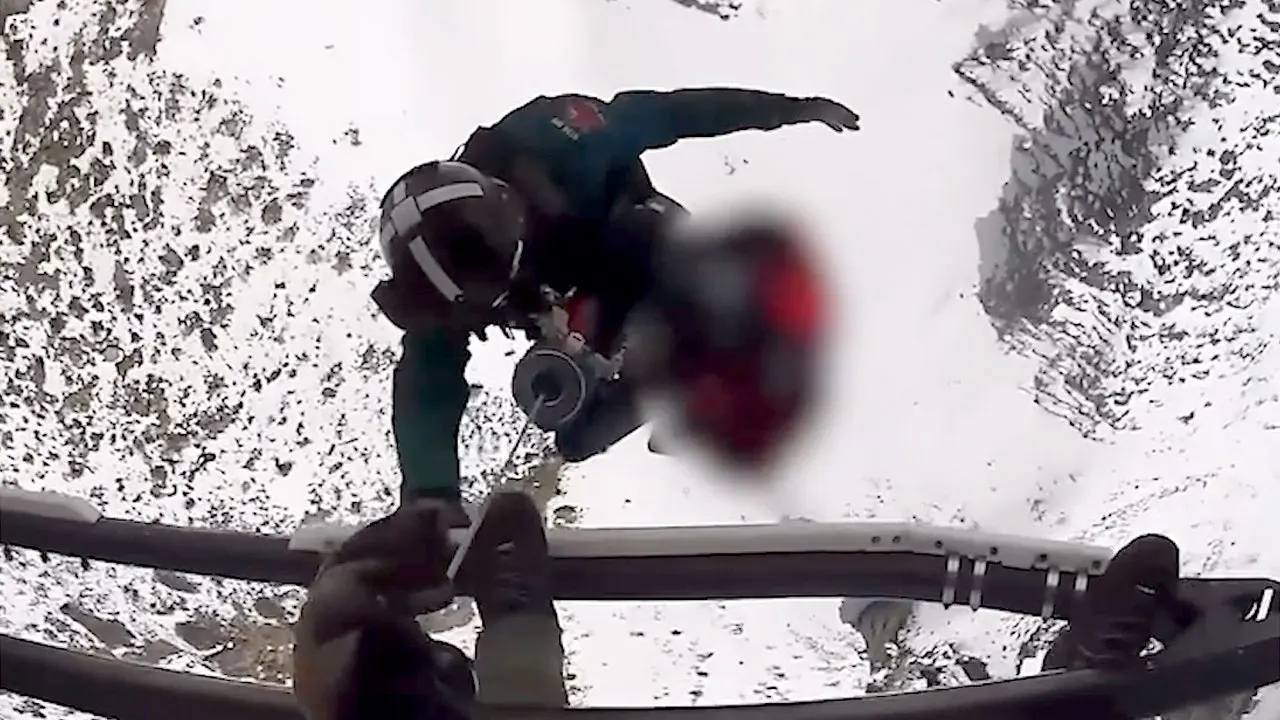
The rescue that followed was a textbook example of inter-agency coordination and high-altitude aviation skill. Upon the pilot’s report, the Utah County Sheriff’s Search and Rescue team mobilized immediately, but the rugged terrain made a ground approach dangerous. The use of a rescue helicopter was absolutely necessary. The released video shows the aircraft hovering directly above the stranded hiker, the rotor wash whipping her hair and debris around her. The pilot had to perform incredibly delicate maneuvers to hold the helicopter steady against strong mountain updrafts and downdrafts, keeping the skids just feet away from the cliff face. A rescue specialist, a dedicated member of the SAR team, was then lowered on a hoist down to the ledge—an intensely dangerous procedure as the rescuer must also brace against the winds and uneven terrain. Once on the ledge, the specialist worked quickly to secure the hiker into a harness, ensuring she was safe before they could both be lifted back into the belly of the aircraft. The operation demanded perfect communication, precision, and a calmness under pressure that is almost superhuman. For the hiker, watching that helicopter approach was a moment of profound relief. She had been facing a multi-hour descent with serious injuries or a night exposed to the elements, but instead, she was airlifted to safety in a matter of minutes. As the harness clicked into place, the tension visibly eased from her body, and the view of the valley expanding beneath them symbolized a return to life.
In the days following the rescue, the Utah County Sheriff’s Office provided an update that brought immense relief to the community. “We have heard that the hiker is recovering well from her injuries,” they wrote on social media, a simple statement carrying a weight of gratitude. While the specific nature of her injuries wasn’t disclosed, the fact that she survived the fall and underwent the hoist rescue is a testament to her resilience and the quick response of the teams. However, the psychological scars of such an event linger long after physical wounds heal. The sound of scraping rocks and the image of the sheer cliff face will likely stay with her forever. Yet, she also carries the memory of being saved, of witnessing the helicopter appear on the horizon, and experiencing the immense kindness of strangers who risked their own safety. This incident humanizes the abstract dangers of the outdoors, serving as a stark reminder that the mountains we love are not theme parks. They are wild, unpredictable places demanding immense respect. For the hiker’s family and friends, watching the footage must have been a mixture of terror and profound thankfulness, as they came to grips with how close they came to losing her. The local community rallied around the story, sharing posts of gratitude for the rescuers and celebrating her incredible strength, reinforcing the core values of preparedness and resilience that bind people together.
Located approximately 50 miles south of Salt Lake City, Mount Timpanogos is a beloved recreational destination, drawing thousands of hikers annually. Standing as the second-highest peak in the Wasatch Range, its distinctive silhouette is a landmark for surrounding communities. According to the U.S. Forest Service, the mountain offers a network of 17.4 miles of trails, primarily accessed via the Aspen Grove and Timpooneke trailheads. These trails wind through glacial cirques, past waterfalls, and up to the famous Emerald Lake before a formidable final ascent. For many, summiting Timpanogos is a rite of passage, a test of physical fitness and endurance. But its beauty is deceptive. The weather can change dramatically in hours, and the high-altitude environment takes a toll on the body. The rocks, especially after summer, become loose and treacherous, and the steep drop-offs along the summit ridge are unforgiving. The mountain holds deep cultural significance for the Ute people, who consider it a sacred place. Hikers are rewarded with breathtaking views of Utah Lake, but they must also contend with exposed ridgelines where a fall means a long drop. The final scramble is often described as a hand-over-hand climb. The allure of the mountain is undeniable, but its dangers are equally real, a duality that makes every successful summit a personal victory and every rescue a sobering reminder of its raw power.
Perhaps the most poignant message from this harrowing event comes directly from the sheriff’s office: “This incident is a stark reminder of how fast a fun outing can turn into a life-or-death situation.” This truth resonates with anyone who ventures into the backcountry. It highlights that preparation is not optional; it is an essential component of any hike. Checking the weather forecast, informing someone of your route, and carrying essential gear—extra layers, a first-aid kit, a headlamp, and a charged communication device—are not just suggestions but lifelines. The hiker was fortunate to have cell service and to have been spotted so quickly, but it could easily have gone the other way. The released footage serves as a powerful educational tool, showing exactly what can happen when conditions turn sour and how fragile we are in the face of nature’s power. As the community sends its best wishes for a full recovery, the story of the Mount Timpanogos fall will be told and retold as a cautionary tale. It encourages hikers to respect the mountain, honor their own limits, and always be prepared for the unexpected, because in the vast, silent expanses of the high country, rescue may be swift, but it is never guaranteed. The heroism on that cliff edge is a testament to the spirit of volunteerism, while the survival of the hiker is a testament to the will to live. For every hiker who straps on their boots tomorrow, this story is a reminder to pause, take a deep breath, and look at the horizon with respect, knowing that the wilderness is always in charge—and to be deeply grateful for the dedicated men and women who stand ready to answer the call.