

With the midterm elections now only days away, the quiet hum of prediction markets has grown into something resembling a drumbeat. On Polymarket, the platform where traders put real money behind their political forecasts, five Senate races have tightened dramatically over the past week. In South Carolina, Alaska, Iowa, Ohio, and Kansas, the gaps between the leading candidates have narrowed by anywhere from four to twenty points. These shifts are more than just statistical noise. Four of those races are now rated as pure toss-ups by the Cook Political Report, and the fifth, South Carolina, is considered only “lean Republican.” That matters immensely because the entire balance of power in Washington is at stake. Republicans are scrambling to protect a slim majority in the Senate, while Democrats need a net gain of just four seats to flip the chamber. The fact that so many races are moving in the same direction at the same time tells a compelling story: voters are still making up their minds, and neither party can afford to take anything for granted. Prediction markets don’t always get the future right, but they measure momentum in real time, and right now, the momentum is telling us that this is far from a settled election. The next few days will be a nerve-wracking wait for both sides, and the outcomes could easily come down to a few thousand votes in a handful of states.
The movement in South Carolina has been especially striking, because this is the most Republican-friendly of the five states, and yet the race is suddenly far more competitive than anyone expected. Last Friday, Republican incumbent Darline Graham held a 56-point lead over Democrat Annie Andrews on Polymarket, at 79 percent to 23 percent. By this Friday, that lead had fallen to 45 points, with Graham at 73 percent and Andrews at 28 percent. It’s still a comfortable margin on paper, but a double-digit slide in a matter of days is enough to make party strategists nervous. Graham is not a typical incumbent. She was appointed to fill the remaining months of her brother Lindsey Graham’s term after his sudden death in July, and she is now seeking to keep a seat that had been in the family for years. The campaign has been rocked by an extraordinary development: three male escorts appeared in a documentary and alleged that the late senator had paid them for sexual encounters. That revelation has injected a volatile, unpredictable element into the race, and it may be one reason why the gap has narrowed. Andrews, a pediatrician by profession, has waged an unexpectedly tough fight in a deep-red state, and recent polling averages show Graham ahead by only 2.7 points, not the overwhelming margin the odds would suggest. President Donald Trump has taken notice. He traveled to South Carolina on Thursday for his second visit this month, rallying supporters in a state he won by eighteen points in 2024. The fact that a Republican in such a reliably red state needs the former president to come in and stabilize her numbers says a great deal about the anxiety spreading through the GOP. Meanwhile, in Alaska, another supposedly safe Republican seat is suddenly in play. Democrat Mary Peltola’s lead over Republican Senator Dan Sullivan has narrowed from a 49-point gap on Polymarket to a 35-point gap, moving from 75 percent to 26 percent to 68 percent to 33 percent. Recent polls show Peltola either narrowly ahead or essentially tied with Sullivan, even though Trump carried Alaska by double digits. The race took another strange turn when Republican Governor Mike Dunleavy ordered an investigation after The New York Times reported that Democratic operatives may have helped recruit a candidate with the same name as Sullivan. The governor wrote on social media that he wanted to determine whether the scheme violated state law and whether criminal charges or civil action were warranted. It’s the kind of bizarre late-campaign wrinkle that makes this election cycle feel especially unpredictable.
In Iowa, the tightening has been even more dramatic, and the implications are enormous for Republican hopes of holding the Senate. Republican Representative Ashley Hinson has seen her 16-point lead over Democratic challenger Josh Turek shrink to just five points on Polymarket. She had 59 percent odds on October 23, compared to Turek’s 43 percent, but by Friday her advantage had slipped to 53 percent against his 48 percent. The RealClearPolling average of recent polls shows the race in a virtual dead heat, with Hinson ahead by just 0.2 points. That is effectively a tie, and it’s a dangerous place for an incumbent to be in the final days of a campaign. Iowa has been trending more Republican in recent years, but it has also shown a willingness to elect Democrats in the right circumstances, and this cycle seems to be offering the right conditions for a serious challenge. Ohio is another state where the margin is narrowing, though less dramatically. Democrat Sherrod Brown’s lead over Republican Senator Jon Husted has tightened by four points on Polymarket, moving from a 39-point advantage to a 35-point advantage. Brown’s odds went from 70 percent to 68 percent, while Husted rose from 31 percent to 33 percent. Recent polling averages give Brown a 2.6-point lead, which is far from comfortable for an incumbent in a state that has shifted hard to the right. President Trump has made multiple visits to Ohio on behalf of Husted, but so far those appearances have failed to give the Republican challenger a lasting boost. The fact that even the full force of Trump’s political machine cannot break through the Democratic resistance is telling. Ohio was once a bellwether state, and it remains a critical test of whether Trump’s coalition can still deliver in the places that used to be reliably Republican.
Kansas may be the most remarkable story of all. Republican Senator Roger Marshall’s lead over Democrat Adam Hamilton has gone from a 23-point advantage on Polymarket to just three points. Marshall was at 62 percent on October 23, while Hamilton stood at 39 percent; by Friday, the race had tightened to 53 percent to 50 percent. In other words, what once looked like a secure Republican seat is now genuinely competitive. Kansas is a state that Trump won by sixteen percentage points, and it’s a place where Democrats have not won a Senate election in almost a century. That makes Hamilton’s surge nothing short of extraordinary. It also helps explain why Republicans are suddenly pouring resources into states they once considered safe and why the national party is sounding alarms in the final stretch. The GOP is supposed to be defending a narrow majority, but instead it is on its heels in Iowa, Kansas, Ohio, Alaska, and even South Carolina. The party’s concerns are compounded by broader national trends: Trump’s approval ratings have slipped, voters are anxious about the economy, and the ongoing conflict with Iran is casting a shadow over the election. These issues are not helping Republicans in the suburban and rural communities that will decide the next Senate. The cumulative effect of these tightening races is a political landscape that looks much more favorable to Democrats than many expected just a few months ago. Whether that translates into actual wins on Tuesday remains to be seen, but the opportunity is clearly there.
Political scientists who study elections say this kind of late tightening is not necessarily a sign of a major realignment, but rather a reflection of the natural rhythm of campaigns. Costas Panagopoulos, a political science professor at Northeastern University, told Newsweek that this sort of movement usually confirms what everyone already knew: the race is close, and anything can happen once the votes are counted. Cal Jillson, a professor at Southern Methodist University, pointed to the states themselves. They all have Republican senators and Republican state leaders, he noted, and yet four of them are leaning Democratic in this cycle. “This tells you quite clearly that the playing field is tilting increasingly toward the Democrats,” he said. But he also cautioned that the partisan history of these states is deeply Republican, so voters are likely to feel conflicted as they enter the voting booth. “Tuesday night we’ll find out which way they went,” he added. Grant Davis Reeher, a political science professor at Syracuse University, drew an analogy to the stock market. Prediction markets are betting odds, he said, and they show how people are reacting to the polls and what they expect to happen. In some ways, they can be more useful than polls, especially if the bettors know what they’re doing. Reeher also explained that a certain amount of narrowing in the final days of a campaign is completely normal. As Election Day approaches, close races tend to tighten further, and the people placing bets are simply responding to that trend. He added that some of the movement seems to be in a Republican direction, as the market recalibrates its expectations about the size of a possible Democratic wave. That nuance is important: while Democrats are clearly competitive in more places than usual, the race for the Senate is still too close to call with confidence.
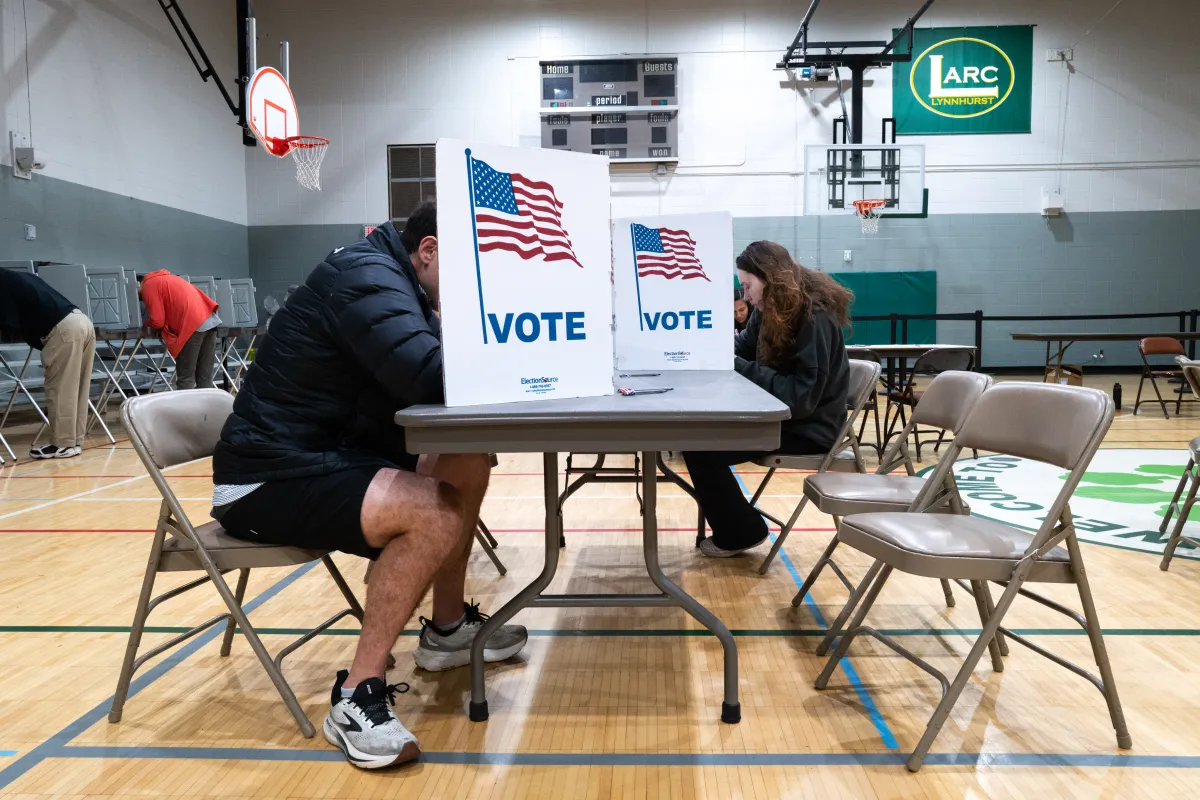
At the end of the day, prediction markets are not crystal balls. They are real-money expressions of sentiment, shaped by polling, fundraising reports, candidate developments, and the moods of the traders themselves. They can capture momentum, but they cannot vote. What they tell us this week is that the Senate map has expanded, that Republican incumbents in places that should be safe are suddenly looking over their shoulders, and that Democrats have a genuine path to a majority. But it also tells us that the margins are razor-thin, and that the outcome could hinge on a few points of turnout in a handful of states. For voters, this is both an exciting and exhausting moment. Midterms are often treated as a referendum on the party in power, but each of these races is also deeply personal, shaped by the candidates, their histories, and the local issues that matter most to the people who live there. The documentary allegations in South Carolina, the strange same-name controversy in Alaska, the rural appeal of a pediatrician in a red state, the resilience of a former labor organizer in Ohio, the near-century of history in Kansas — all of these stories are now converging on a single Tuesday. Whatever happens, the results will be read as a judgment on the state of American politics, on Trump’s influence, on the economy, and on the country’s mood after a bruising few years. The one sure thing is that nothing is guaranteed. The prediction markets have narrowed, the polls have tightened, and the campaigns have done everything they can to sway the last undecided voters. Now it’s up to the people. Early voting is already underway in many places, and Election Day is almost here. When the last ballots are counted, we may look back on these final-week shifts as the first sign of a realignment, or as just another false signal in a volatile political season. But either way, this much is clear: the 2026 midterms are delivering the kind of drama that keeps political observers glued to their screens, and every single vote is going to count.