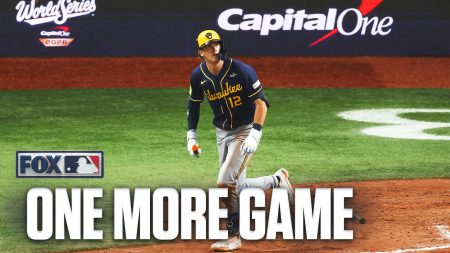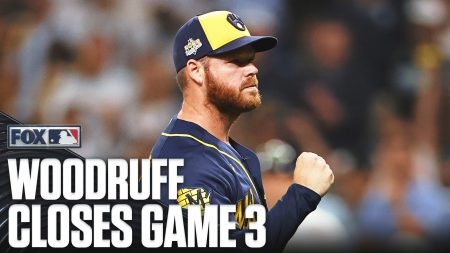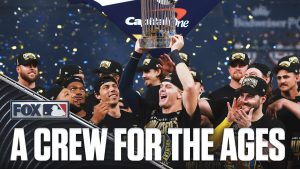


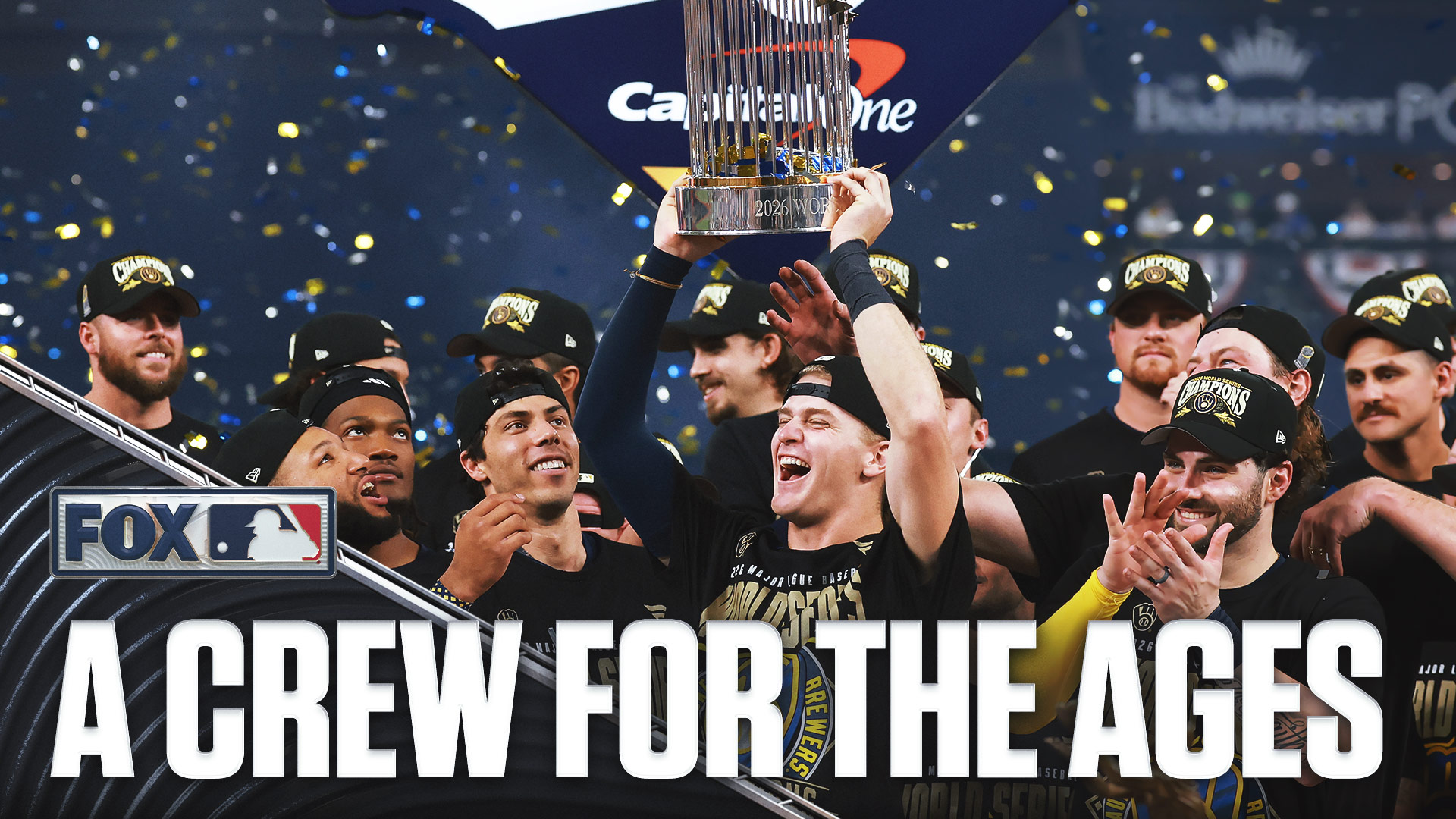
The final out hung in the cool October air like a held breath, and then the city of Milwaukee exhaled in a torrent of cheers, tears, and beer-soaked euphoria. It had been forty-four years in the making—a lifetime for some, a legend for others—but the Milwaukee Brewers had finally done it. The 2026 World Series championship was theirs. As the bullpen emptied and the players piled onto the mound at American Family Field, the decades of heartbreak, the near-misses, the gut-wrenching losses in October, all dissolved into a single, perfect moment of redemption. For a franchise that had waited since its American League days in 1982, when the Cardinals dashed their hopes in seven games, this was more than a baseball victory; it was a cathartic release for an entire fanbase that had never stopped believing. The scoreboard, which had been a silent witness to so many empty Octobers, now flashed “WORLD SERIES CHAMPIONS” in blazing gold, and the roar of the crowd seemed to shake the very foundations of the city’s riverfront stadium. Players hugged, wives and children flooded the field, and the champagne spray caught the stadium lights like a thousand tiny diamonds. It was a scene that belonged to every small-market dreamers’ story, yet this time, the dream had become reality.
But this championship was no fluke, no Cinderella run that caught lightning in a bottle. It was the culmination of a season that redefined what it means to play baseball in the modern era. The Brewers had stormed through the regular season with 103 wins, the best record in Major League Baseball, and claimed the National League Central for the fourth straight time. They did it not with brute force or a lineup of home-run mashers, but with a fundamental commitment to the game’s oldest virtues: situational hitting, impeccable baserunning, airtight defense, and relentless pitching. As FOX Sports’ Derek Jeter put it, “This has cemented them now as one of the best overall teams that we’ve seen in a long time. And in this day and age, when everyone’s trying to hit home runs, they don’t worry about strikeouts. You have a team like the Milwaukee Brewers that play situational baseball.” That philosophy was on display night after night. They moved runners over, executed hit-and-runs with precision, and never gave away an out. Their pitching staff, anchored by a bullpen that seemed to have an endless supply of arms, kept opponents off balance. The team didn’t just win; they won in a way that felt almost old-fashioned, a throwback to a brand of baseball that purists yearned for. Legendary slugger David “Big Papi” Ortiz, now an analyst for FOX Sports, marveled at their completeness: “They play the game right. They move the runner over. They get on base. They run the bases perfectly fine. They play good defense. They got great pitching. You have an old-school manager [in Pat Murphy] who basically keeps them put all year round, and that’s why they dominate the National League.” It was a masterclass in teamwork, where the sum was far greater than its parts.
That unselfishness and discipline carried the Brewers through a postseason that was, in a word, dominant. They went 11-2, dispatching the San Diego Padres in the NLDS before sweeping the Los Angeles Dodgers, the league’s biggest spenders, in the NLCS. They were so locked in that in each of their final 18 games—including the regular season’s last week and the entire playoff run—they allowed fewer than five runs and ten hits while striking out at least five batters. That level of consistency is almost unheard of in the high-stakes pressure cooker of October. The World Series itself was a showcase of the team’s collective brilliance. Ace Jacob Misiorowski, who will likely take home the NL Cy Young award, pitched a masterful 5.2 innings in the clinching Game 5, leaving only due to a cramp that was more precaution than concern. And then there was William Contreras, the World Series MVP, who delivered both offensively and defensively. He hit .381, going 8-for-21 in the series, but it was his work behind the plate that truly set him apart. He threw out four would-be base stealers and won ten Automated Ball-Strike challenge calls, a new wrinkle in the game that he turned into an advantage with his sharp eye and cat-like reflexes. Contreras wasn’t just a star; he was a microcosm of the entire Brewers ethos—quietly efficient, devastatingly effective, and always doing whatever it took to win.
What made this team so special, and what made their journey so compelling, was the utter absence of a singular superstar. There was no Aaron Judge or Shohei Ohtani, no bellicose MVP candidate delivering heroics every night. Instead, there was a roster built on depth, youth, and an almost freakish level of cohesion. As Alex Rodriguez, the FOX Sports analyst and former MVP, observed with a mix of admiration and awe, “This is an impossible love story; an impossible team not to admire. From top to bottom, the character, the A-plus roster construction. You have nine or ten guys under the age of 28, but they play like veterans.” Indeed, the Brewers’ clubhouse was a collection of unheralded trades, savvy draft picks, and developmental success stories. They were a team that had no clear leader, yet everyone led. They were a team that had no individual numbers that jumped off the page, yet they kept winning. Manager Pat Murphy, a disciple of the legendary Tony La Russa and a man who had spent decades in the game, kept them playing with a discipline that bordered on arrogance. He instilled a belief that they were never out of a game, that a single run was sacred, and that every pitch mattered. This was baseball as a team sport, where the sum of the parts was nothing short of a championship-caliber machine.
For the city of Milwaukee, though, this title was about more than the one season. It was about an identity. The Brewers had been a foundational part of the city’s fabric since 1970, but the championship trophy had always been elusive. The franchise had experienced heartbreak in 1982, losing the World Series in seven games; they had lost in the NLCS twice, in 2011 and 2018, each time breaking hearts. They were also the definition of a small-market team—not the glitzy Yankees or Dodgers, not boasted by a billionaire’s checkbook. Their payroll was a fraction of the league’s big spenders, yet they had built a roster through shrewd trades and a farm system that consistently churned out talent. That made this victory even sweeter, a testament to the power of smart management and unrelenting resilience. The city itself had always embraced its team with a blue-collar fervor, and this championship felt like a reward for that loyalty. The streets of Milwaukee filled with fans wearing mustard-and-blue jerseys, honking car horns and dancing in the streets. The team’s win was a celebration of the city’s spirit—a working-class town that never takes success for granted because it knows how fleeting it can be. And in that moment, the long wait didn’t matter anymore. The past was not erased, but it was overwhelmed by a flood of joy that made every heartbreak worth it.
Looking forward, the Brewers appear poised for continued success. With a core of players under 28, a manager who has proven his mettle, and a front office that has mastered the art of finding championship-caliber talent in unlikely places, this might not be a one-and-done title. The 2026 championship is not just a culmination; it is a promise of sustained excellence. For the players, it’s validation that their unselfish approach works. For the fans, it’s the beginning of a new era of belief, where every October doesn’t have to be a tightrope of anxiety. But perhaps the most humanizing element of all is the style in which they did it. They didn’t rely on superstar ego or highlight-reel heroics; they relied on trust, execution, and an unwavering commitment to each other. In a world that often glorifies the individual, the 2026 Milwaukee Brewers proved that a team—truly a team—can write a story no one ever expected. As the champagne bottles drained and the celebration stretched into the night, one could almost hear the ghosts of the 1982 team toasting from above, finally at peace. The 44-year wait was over, and for the city and its beloved Brewers, the impossible had become the most beautiful reality. The World Series trophy was coming home, and it would never, ever be too long again.