


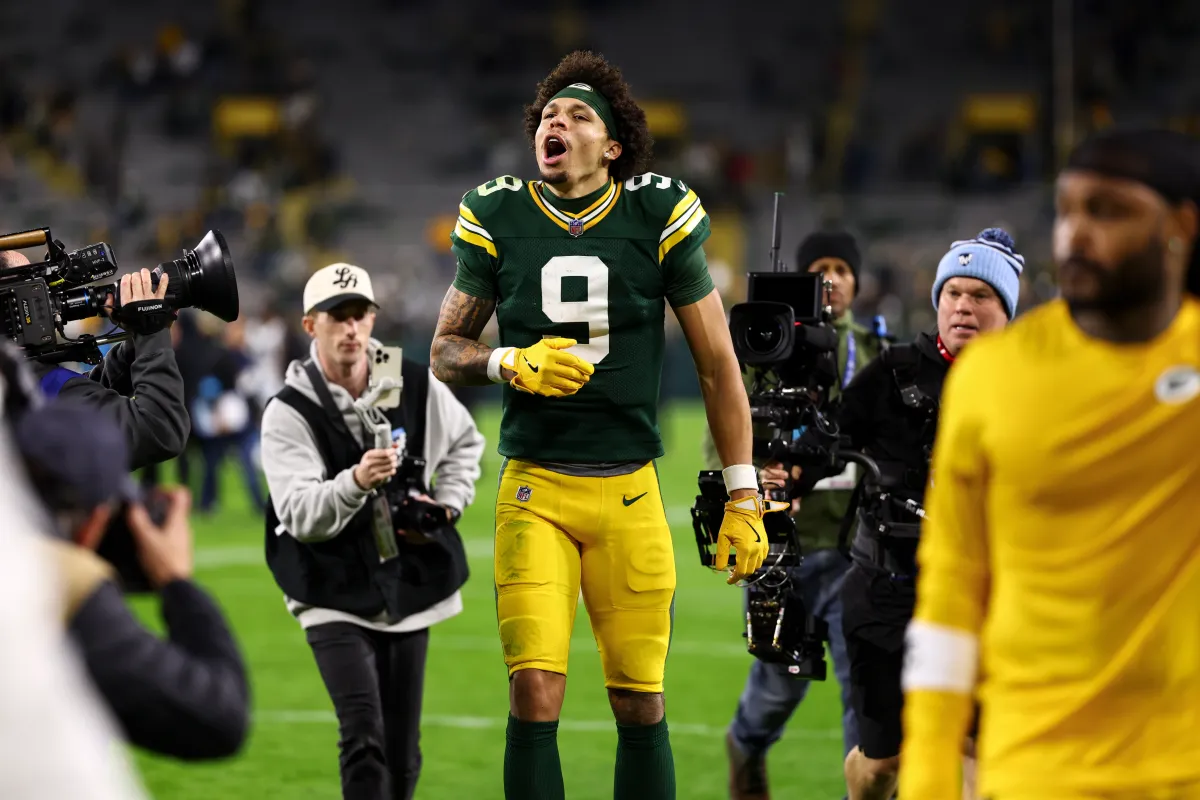
Thursday night at Lambeau Field was supposed to be another chapter in the Green Bay Packers’ push for consistency, a prime-time showdown against a struggling Carolina Panthers team that offered a chance to build momentum. But no one in the building could have anticipated the emotional whiplash that unfolded under the lights. Christian Watson, the Packers’ dynamic wide receiver, turned a routine offensive series into a scene of genuine concern when he went down with a chest injury in the second quarter. What followed was a surreal sequence that took Watson from the turf, to a local hospital by ambulance, and then—against all initial expectations—back onto the field before the final whistle. By the time the night ended, the Packers had secured a 27-19 victory, but the story was never really about the score. It was about resilience, uncertainty, and a player who refused to let a frightening moment define his evening. The crowd, the sideline, and even viewers at home were left holding their breath, only to have that tension released with a roar when Watson’s familiar number reappeared on the field.
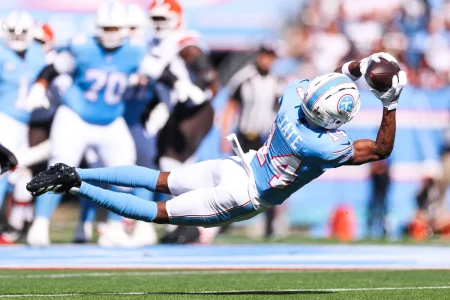
The critical moment arrived midway through the second quarter, when quarterback Jordan Love dropped back and unleashed a deep pass downfield. Watson, running a route with the kind of burst that makes him such a dangerous weapon, tracked the ball perfectly and hauled in a 53-yard reception that seemed destined to set up a scoring drive. But as he came down, Carolina cornerback Will Lee III collided with him in a violent, awkward meeting of bodies. Watson immediately remained on the ground, a sight that silenced the crowd and brought medical personnel rushing onto the field. The play had all the sudden, sickening stillness that football fans dread—a player down, teammates gathering, the game momentarily irrelevant. After several tense moments, Watson was able to get to his feet and walk slowly to the sideline, but it was clear something was wrong. The Packers’ medical staff evaluated him carefully, and then came the decision that no one wanted to hear: Watson would be taken to a nearby hospital by ambulance for precautionary testing. As the ambulance pulled away, the reality of the situation settled over the sideline. Here was a player who had already battled a frustrating string of injuries in his young NFL career, and now he was being taken away on a Thursday night, with his team needing him and his future suddenly unclear.
Hospital visits during football games are never routine, no matter how precautionary the language might be. For Watson, the trip had to feel especially heavy. He had spent parts of his first three professional seasons dealing with hamstring issues and other ailments that interrupted his rhythm and forced him to watch from the sideline more than he ever wanted. Each injury carries its own weight, but a chest injury is different. There is an instinctive fear when a player goes to the hospital mid-game, a fear that goes beyond football and touches something more fundamental about health and well-being. Inside the hospital, Watson underwent testing while the game continued without him back at Lambeau. The Packers, aware of what had happened, had to compartmentalize their emotions and keep playing. Love kept slinging the ball, the receivers rotated, and the offense tried to find a rhythm, but there was no escaping the thought of their teammate. Then, in a development that stunned everyone, the hospital evaluation came back clean. Watson was cleared. And with the third quarter already underway, he made his way back to Lambeau Field. The mere sight of him walking through the tunnel was enough to reignite the packed stadium. He received a thunderous ovation from the home crowd before reentering the game with just over four minutes remaining in the period—a rooting section that had spent the last hour worrying about him now celebrating him as if he had just scored a touchdown.
The fact that Watson managed to return at all was remarkable. The fact that he immediately resumed his role as the focal point of the passing attack was something else entirely. By the time the night was over, Watson had finished as the game’s leading receiver with eight catches for 113 yards. What made those numbers even more stunning was how many of them came before the injury scare. Six of those receptions and 100 of those yards were compiled in the first half, before he was carted off and taken to the hospital. That meant his final two catches and 13 yards came after his return, in the fourth quarter, when the game was still hanging in the balance and the Panthers were scrapping to claw their way back. It would have been easy for Watson to sit out, to let the adrenaline fade and the soreness catch up, to think about the bigger picture and long-term health. Instead, he came back and helped his team close out a victory. Love finished the night completing 30 of 41 passes for 288 yards, three touchdowns, and one interception, and while his stat line was impressive, the emotional steadiness he showed after seeing his receiver wheeled away was just as significant. The Packers leaned on the passing game more than usual, and Watson’s ability to stress the secondary was a major reason why.
The game itself unfolded as a contest of shifting momentum. Green Bay built a seemingly comfortable 27-10 lead in the second half, and for a while it looked like the night would end in a stress-free home win. But the Panthers, despite their record, refused to go quietly. Bryce Young, the young quarterback fighting for his own narrative, found Jalen Coker for a 26-yard touchdown in the fourth quarter, slicing the Packers’ advantage to eight points and making the home sideline nervous. A late comeback attempt was brewing, and the tension in Lambeau began to rise. But the Packers’ defense, summoned for one last stand, came up with the stops they needed. The offense, steadied by Love and energized by Watson’s return, milked the clock and protected the ball. When the final seconds ticked away, the scoreboard read 27-19, and the Packers improved to 5-3 on the season. The victory mattered, of course. Every win does in a crowded NFC. But the broader story was the collective exhale that happened after the final whistle. Players embraced Watson on the sideline, coaches patted his helmet, and the fans filtered out of the stadium with a memory that had nothing to do with a standard football production. They had witnessed something rarer than a great catch or a key sack—they had witnessed a player stare down a frightening moment and choose to come back.
Looking forward, the Packers will monitor Watson’s condition closely, even with the encouraging medical clearance. Chest injuries can have lingering effects, and the team’s medical staff will surely be cautious in the days ahead. Thursday night’s return was a triumph of grit, but it also underscored how fragile a player’s availability can be in the NFL. For Watson, the night was another chapter in a career already defined by resilience. He has known the frustration of injuries, the long rehabilitation hours, the questions about durability, and the pressure that comes with being a highly drafted receiver expected to produce. Yet on this night, he turned a potential nightmare into a statement about who he is. He didn’t just come back; he came back and made a difference. In a league where every game is a grind and every player carries some level of pain, Watson’s unexpected comeback stood as one of the most memorable moments of the Packers’ season. It was a reminder that football is more than Xs and Os, more than statistics and standings. It is about players pushing through fear, teammates rallying around one another, and a community finding joy in a sight as simple as a receiver jogging back onto the field. Thursday Night Football delivered drama, but the real story was human—a young man who went to the hospital and came back to finish what he started.