




Wall Street Goes Perpetual: ICE and Trade[XYZ] Bring Hyperliquid-Style Derivatives to the Regulated Mainstage
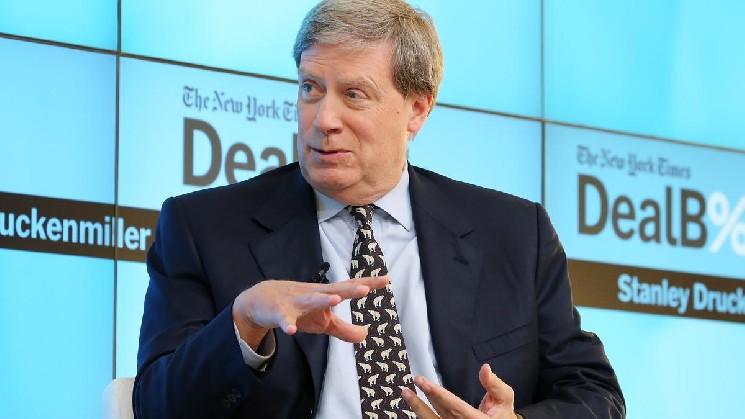
New York — Legendary investor Stanley Druckenmiller has never been one to chase hype. Over a career that includes running money for George Soros and building a reputation as one of the most closely watched macro traders on Wall Street, he has consistently identified structural shifts before they become consensus. That is why his recent public endorsement of Hyperliquid resonated far beyond crypto Twitter. It arrived at a moment when the architecture of digital asset trading is being redrawn, and it gained even more significance when Intercontinental Exchange (ICE), the parent company of the New York Stock Exchange, revealed an ambitious plan to bring Hyperliquid-inspired perpetual futures into the regulated U.S. financial system. The vehicle for that ambition is a partnership with Trade[XYZ], one of the most active market-building teams in the Hyperliquid ecosystem. Under the proposal, the new venue—referred to as ICE[XYZ] in the joint announcement—would offer round-the-clock trading in perpetual futures tied to cryptocurrencies, stocks, commodities and currencies. Unlike conventional futures, which expire on a fixed date, perpetual contracts allow traders to keep positions open indefinitely while typically using leverage. The market would be subject to approval by the Commodity Futures Trading Commission. ICE would operate a dedicated U.S. exchange and clearing infrastructure and take a minority stake in Trade[XYZ]. The financial terms were not disclosed. The very fact that a company with ICE’s scale and regulatory experience is moving in this direction signals that perpetual futures are no longer a fringe experiment; they are becoming central to the future of modern market infrastructure.
To understand why this matters, it helps to consider the strange rise of the perpetual contract. In traditional markets, futures have been a cornerstone for more than a century. Farmers hedge crops, airlines hedge fuel, and speculators bet on interest rates. But every futures contract eventually expires, forcing traders to settle, roll into a new month, or take delivery. Perpetual futures strip away that constraint. They are designed to track the price of an underlying asset continuously, with a funding payment mechanism that keeps the contract price aligned with the spot market. For traders, the appeal is obvious: there is no expiration date to track, no contract roll to execute, and no gap in coverage when markets shift. That makes perpetual futures especially useful in the crypto economy, where news breaks at 2 a.m. and prices can move violently over a weekend. They have become the default instrument for leveraged speculation on digital assets, and they have also attracted a growing amount of professional money looking for efficient ways to express short-term views. What has been missing is a regulated, institution-friendly venue where those contracts can be traded with the same safeguards and clearing protections that exist in traditional futures markets. ICE[XYZ], if approved, would attempt to fill that gap. Instead of simply migrating an over-the-counter model into a regulated wrapper, it proposes a dedicated exchange with ICE’s own clearing infrastructure, meaning every trade would be backed by a system designed to manage defaults, monitor risk, and protect market integrity. That combination of around-the-clock flexibility, broad asset class coverage, and rigorous oversight is something the market has never quite seen before. It represents a genuine attempt to build a bridge between the speed and accessibility of decentralized trading and the safety and transparency that institutional investors have come to expect from established exchanges.
Trade[XYZ] is not a name that registers with most retail investors, but within the digital asset world, it has become a quiet force. It is one of the largest developers of markets on Hyperliquid, the blockchain-based protocol that has emerged as a serious rival to centralized exchanges for traders who want speed, transparency, and low latency. Hyperliquid is built on its own blockchain, which allows it to process transactions faster and at lower cost than many legacy systems, and it has developed a passionate community of users who value the ability to trade without giving custody of their funds to a third party. Trade[XYZ]’s platforms on Hyperliquid have already processed more than $650 billion in combined volume in just over a year—a number that would be eye-catching for any venue, digital or otherwise. The firm’s existing markets will continue to operate alongside the proposed U.S. venue, the companies confirmed, and no formal launch date has been announced. Nor is this a simple licensing arrangement. ICE’s decision to take a minority stake in Trade[XYZ] suggests a deeper industrial logic. By tying a traditional exchange operator to a developer that understands the speed and design preferences of crypto-native traders, ICE is effectively buying a road map into a market that has historically been hostile to slow, regulated incumbents. It is also a vote of confidence in Hyperliquid’s technology, which many in the industry once dismissed as a niche playground for sophisticated traders. The scale of Trade[XYZ]’s volume, combined with ICE’s institutional credibility, suggests that the two companies see an opportunity to define the next phase of digital asset derivatives, rather than simply react to it.
Perhaps the most intriguing part of the announcement is the backstory. The partnership did not come together through a series of cold emails or a sudden strategic review. According to Hyperliquid co-founder Jeff Yan, it grew out of a conversation he had with ICE chief executive Jeff Sprecher about a year ago. Yan recounted on X that when he first spoke with Sprecher, the ICE CEO asked what success would look like for Hyperliquid. Yan said he joked that success would mean seeing the platform’s technology make its way into ICE’s own infrastructure. “I could never have predicted the progress that we’ve made as a community in a single year to make this come true,” Yan wrote. The quote is a reminder that major financial deals often begin with a conversation and a half-serious idea. It also says something about Sprecher, who has spent decades building electronics-first markets and has never been afraid to embrace new technology. Under his leadership, ICE transformed the futures industry through electronic trading, and the NYSE acquisition was itself a bet on the convergence of markets and technology. The idea of exploring a partnership with Hyperliquid is fully in keeping with that history. For Hyperliquid’s supporters, the collaboration is a validation of a design philosophy that treats the exchange not as a middleman, but as a transparent piece of infrastructure. For those who have followed Sprecher’s career, it is simply the latest reminder that he does not arrive late to technological shifts. The fact that these discussions were underway long before the public announcement suggests that both sides understood the strategic importance of what was taking shape, and that the resulting deal is the product of patient relationship building, not a rushed reaction to market conditions.
The implications for institutional investors are potentially significant. Many large asset managers and hedge funds have been reluctant to trade cryptocurrency derivatives because the venues offering them often operate offshore with limited regulatory oversight and little transparency around capital controls or financial reporting. A CFTC-regulated venue backed by ICE’s clearinghouse would remove a number of those obstacles. It would give compliance officers a familiar regulatory framework, risk managers a clearer picture of collateral flows, and traders the ability to hold leveraged positions without relying on unknown counterparties. The fact that the venue plans to offer perpetual futures on traditional assets as well—stocks, commodities, currencies—underscores ICE’s view that this is not merely a crypto play. It is a new way of looking at how derivatives should trade in a 24/7 global market. The CFTC’s approval is not a foregone conclusion. The commission has taken a cautious approach to new products, particularly those involving digital assets. But the involvement of a well-established exchange operator with deep experience in futures clearing is likely to be viewed differently than a request from a startup platform. There is also the market context: with bitcoin ETFs now listed in the United States and traditional institutions increasingly comfortable with digital assets, the demand for regulated derivatives is stronger than ever. If approved, ICE[XYZ] could become a template for other exchanges and clearing firms, forcing the broader industry to rethink the boundaries between traditional and decentralized finance. It could also put pressure on offshore venues to improve their own standards, as institutional flows migrate toward platforms that offer stronger legal footing and better segregation of assets.
Even with all that momentum, there are real obstacles ahead. The CFTC could delay, condition, or reject parts of the proposal. The operational challenge of running a clearinghouse that never closes is considerable; risk teams would need to monitor positions and margin calls around the clock, and that requires a level of automation that most legacy systems were not designed to handle. There is also the question of adoption. Traders who already use Hyperliquid and Trade[XYZ] enjoy low fees, instant settlement, and a level of flexibility that regulated venues often struggle to replicate. To win them over, ICE[XYZ] will need to offer something more than compliance—it will need to offer a genuinely better trading experience. At the same time, the decentralized ecosystem has its own challenges, including concerns about governance, the concentration of liquidity, and the long-term sustainability of platforms that depend on community enthusiasm. A regulated alternative may actually benefit those platforms by validating the underlying technology and pushing the wider ecosystem to improve. But the broad direction of travel is unmistakable. The same week that one of Wall Street’s most celebrated investors offered a public endorsement of Hyperliquid, the company that owns the New York Stock Exchange announced it had been working on a way to bring that technology into the mainstream. The proposed exchange may take months to get off the ground, and it may not look exactly as it does today by the time it opens. But the era in which perpetual futures were treated as a shadow-market curiosity is over. From here on, they are a mainstream financial instrument, and the race to build the infrastructure to support them is officially under way. For market participants, that means watching the CFTC’s next move carefully, and for the broader financial industry, it means accepting a simple reality: the boundaries between Wall Street and the digital asset economy are continuing to dissolve.