


There is a kind of crime that often goes unnoticed until it is too late, not because it happens quietly, but because it hides in plain sight. Across American cities and suburbs, people park their cars in driveways, leave them in airport lots, or hand them over to valets and rental companies, never imagining that those vehicles might one day be used by a violent criminal organization. But according to federal authorities, that is exactly what has been happening along the southern border. A cross-border pipeline of stolen vehicles was allegedly supplying Mexican cartels with the cars and trucks they need to carry out their daily work. These were not random joyrides or isolated thefts. They were part of a coordinated scheme in which vehicles were stolen from private owners and major rental car companies, then driven through El Paso, Texas, and across the border into Mexico, where they were turned over to people connected to powerful criminal networks. The U.S. Attorney’s Office for the Western District of Texas has now charged 13 people in connection with the operation, and the investigation has already recovered 29 vehicles worth an estimated $1.14 million. But behind those numbers are real people, real neighborhoods, and a sobering reminder that the vehicles we rely on for our daily lives can be pulled into something far darker.
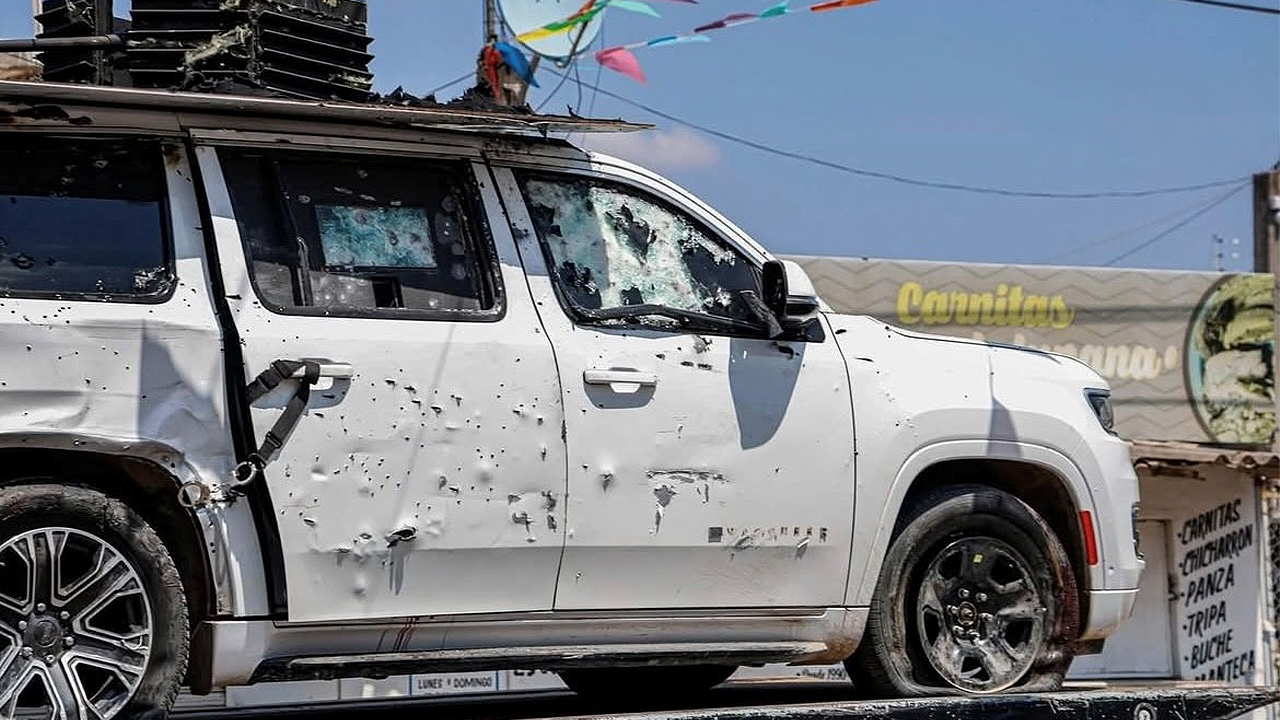
The investigation, which prosecutors have dubbed Operation Southbound Takedown, began last spring when federal agents and prosecutors noticed a troubling pattern. Stolen vehicles were not simply disappearing into chop shops or being stripped for parts. Instead, they were being driven south, toward the border, and delivered to individuals with alleged ties to criminal organizations in Mexico. The vehicles recovered so far paint a vivid picture of the operation. Photographs released by prosecutors show a damaged white SUV that had been found in Mexico, its body bearing the scars of hard use. There were also armored vehicles, including a black SUV and a pickup truck, both outfitted with the kind of protective plating that suggests they were meant for dangerous work. These were not ordinary family cars. They were tools, weapons in a broader infrastructure of crime. For the cartels, reliable transportation is not a luxury; it is a necessity. They need vehicles to move people, to transport goods, to conduct surveillance, to flee from rivals, and to project power in the streets and highways of the territories they control. When American vehicles cross the border illegally, they become part of that machinery. Ryan G. McRae, the special agent in charge of Homeland Security Investigations in El Paso, made this clear when he said that these stolen vehicles “demonstrate an alarming pattern” and are used to support the day-to-day operations of dangerous criminal organizations. He also stressed that these are not isolated property crimes. They are not just about stolen cars. They are about sustaining a violent underground economy.
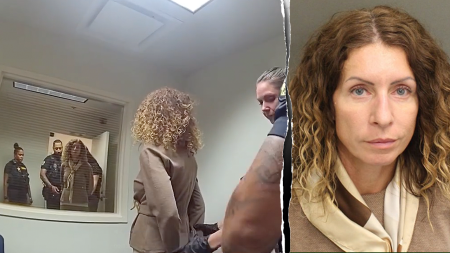
Behind the statistics and legal jargon are 13 individuals now facing serious federal charges. Of the 13, 11 are U.S. citizens and two are Mexican citizens, one of whom has a lawful permanent resident card and another who has a border crossing card. Two of the Americans, Kimberly Aguilar and Marty Gerardo Jr., are currently in state custody, while the other 11 were federally indicted and arrested between July 22 and October 19. All 13 are charged with interstate transportation of stolen property, a felony that carries up to ten years in federal prison if convicted. As with any criminal case, the charges are allegations, and each person is presumed innocent unless proven guilty in a court of law. But the broader message from prosecutors is unmistakable. This case is not just about recovering stolen cars or punishing a few individuals. It is about disrupting an entire network that helps cartels operate with impunity. U.S. Attorney Justin R. Simmons delivered a stark warning to anyone who might be tempted to make a quick buck by transporting stolen vehicles across the border. He said the cartels are exploiting people who are looking for easy money, and that those people are helping to fuel operations that include human smuggling, extortion, drug trafficking, and even murder. His words were direct: “You are now on notice. If you provide support to these cartels, many of which have been designated as foreign terrorist organizations, by transporting stolen vehicles out of this country and into Mexico, we will find you, and we will prosecute to the fullest extent of the law.”
To humanize this story is to understand that the people involved are not faceless villains or distant bureaucrats. They are human beings making choices, and those choices have consequences that ripple outward in devastating ways. For the families who had their cars stolen, the loss is personal. A vehicle is often more than a machine; it is the way a parent gets to work, the way a family takes a child to school, the way someone visits a sick relative. When that vehicle is stolen and driven into Mexico to support a cartel, it becomes part of a system that profits from suffering. And for the individuals who allegedly participated in the scheme, their lives are now upended. They are sitting in jail cells, facing years in federal prison, separated from their families and communities. The two Mexican citizens charged in the case, one with a green card and one with a border crossing card, now face the possibility of losing their immigration status, their freedom, and their futures. The term “quick buck” may have sounded appealing to them at some point, but the price they are now paying is enormous. The law enforcement officials involved in this investigation want the public to understand that this is not a victimless crime. Every stolen vehicle that crosses the border is a small cog in a much larger machine, a machine that produces violence, fear, and destruction. McRae emphasized that the work is not over. “This work is ongoing; we’re not stopping here,” he said. His counterpart at the FBI’s El Paso office, Special Agent in Charge Coult W. Markovsky, echoed that sentiment with an even sharper warning: “To individuals assisting the cartels, Justice will find you!”
This case sits at the intersection of ordinary life and extraordinary cruelty. It is easy to think of cartels as distant problems, things that happen in other countries, in places with different laws and different realities. But this investigation shows how connected our worlds really are. The cars that drive on American roads, the rental vehicles that tourists pick up at the airport, the pickup trucks that contractors use for work, these are all potential targets for criminal networks that stretch across borders. The cartels are not isolated in Mexico; they have supply chains, lookouts, drivers, and facilitators who live on this side of the border and are willing to participate in illegal activity. The recent expansion of the Trump administration’s list of U.S.-designated foreign terrorist groups in Latin America to 21 organizations underscores the seriousness of the threat. These are not just drug trafficking gangs. They are sophisticated, violent operations that have been formally labeled terrorists by the U.S. government. By targeting the vehicles that keep these organizations moving, law enforcement is attacking the logistics that make their violence possible. A cartel that cannot move its members, its weapons, its drugs, or its money is a cartel that cannot operate effectively. That is why Operation Southbound Takedown matters. It is an attempt to choke off one of the many lifebloods of organized crime, not through a dramatic raid in a jungle, but through the painstaking work of following stolen cars, tracing license plates, and building cases against the people who move them.
Perhaps the most unsettling part of this story is how easy it is to imagine someone ending up on the wrong side of this investigation. Maybe a person is struggling to pay bills, and a neighbor or a friend offers them a few hundred dollars to drive a car across the border. Maybe they do not ask too many questions. Maybe they tell themselves that no one is really getting hurt, that the car was insured, that the rental company would get paid back. But the reality, as federal prosecutors describe it, is far darker. The stolen vehicles recovered in Mexico, including the armored trucks and the damaged SUV, are not just property. They are evidence of the cartels’ reach and their appetite for American goods. They are symbols of a shadow economy that feeds on desperation and greed. And they are a reminder that choices have consequences. The 13 people charged in this case are now facing those consequences, and their names will be attached to this investigation for years to come. But the case is also a call to the rest of us. It is a reminder to be aware of what happens to our cars, to be cautious about who we trust, and to understand that even a seemingly small act of participation in a criminal enterprise can have outsized effects. The men and women who worked on this investigation, from Homeland Security Investigations to the FBI to the state and local agencies that participated through the Homeland Security Task Force, did not stop when the arrests were made. They are still tracking leads, still following the money, still looking for the next link in the chain. As McRae said, the work is ongoing. And in that ongoing work, there is a message of hope: that justice, though sometimes slow, does not sleep, and that those who would use stolen cars to fuel murder, extortion, and human suffering will be held accountable, not just in Mexico, but in the United States as well. For the victims of car theft, for the communities along the border, and for everyone who believes in the rule of law, that is a promise worth protecting.