


1. A Mother’s Compassion in the Shadow of Tragedy
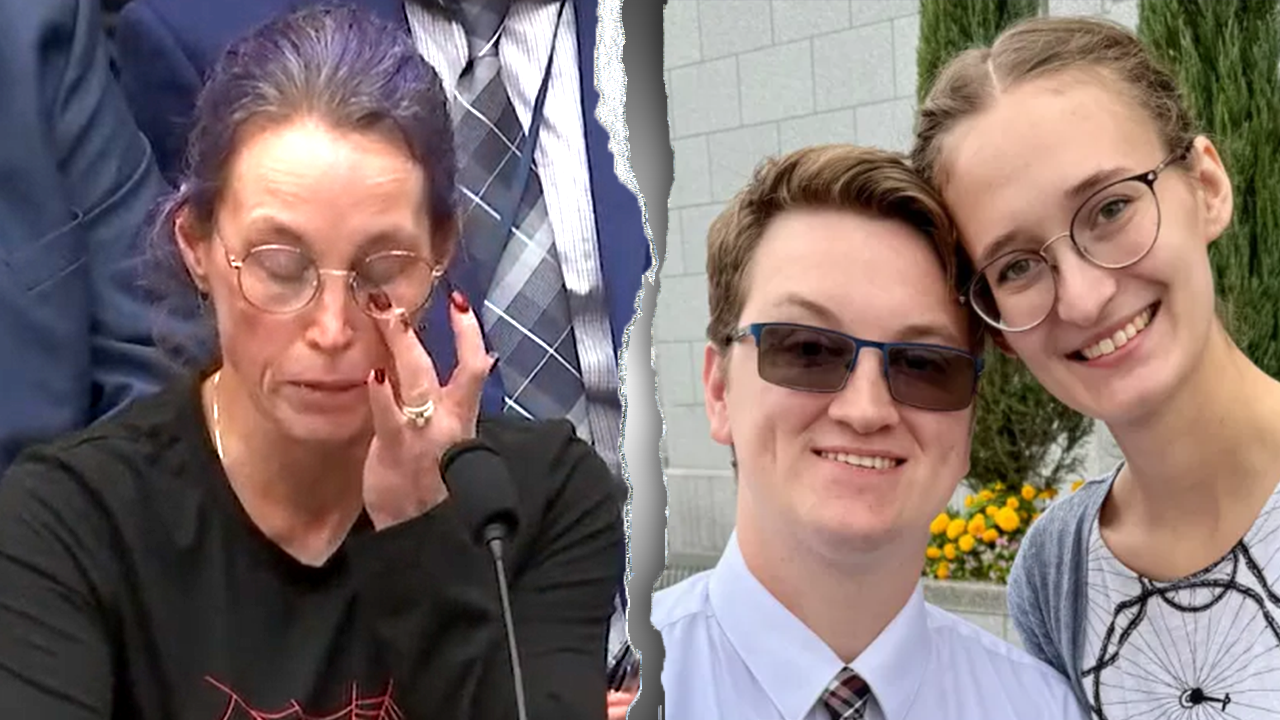
There are moments of grief that either close a person’s heart or somehow crack it wide open. For Elizabeth Carter, the mother of 25-year-old William Micah Carter, the unimaginable pain of losing her son and his bride has led her to an extraordinary, almost unbearable act of grace. In a video released by U.S. Immigration and Customs Enforcement’s Victims of Immigrant Crime Engagement (VOICE) office, Elizabeth is seen speaking directly to Rajinder Kumar, the 32-year-old Indian national charged with killing William and his newlywed wife, Jennifer Lynn Lower. The setting was the passenger window of an ICE vehicle earlier this month, moments before federal agents transferred Kumar back to Oregon state custody to face criminal prosecution. As Elizabeth introduced herself, her voice trembled and tears welled in her eyes, yet she did not speak with anger. “Hello Mr. Kumar, my name is Elizabeth Carter; I’m William Micah Carter’s mother,” she began, noting that Kumar seemed unable to meet her gaze. Then came the words that stunned even the hardened federal agents standing nearby: she prayed for him and for his family. She acknowledged that he had not woken up that morning intending to kill two newlyweds, and that his family, too, was suffering. The video captures a profound collision of justice and forgiveness, where a mother’s agony meets a defendant’s shame, and where the grief-stricken mother refuses to let hatred define the memory of her son.
2. The Deadly Crash That Tore Two Families Apart
The tragedy unfolded on November 24, 2025, on a quiet stretch of U.S. Highway 20 in Oregon, when Kumar allegedly jackknifed his commercial tractor-trailer across both lanes of traffic. William Micah Carter and Jennifer Lynn Lower, married for just sixteen days, were traveling in their Subaru Outback when they slammed into the trailer. Both were killed instantly. They were two young lives full of promise, a couple just beginning their future, suddenly erased in a moment of catastrophic negligence. Kumar was later indicted by a Deschutes County grand jury on two counts of first-degree manslaughter and three counts of recklessly endangering another person. He pleaded not guilty in state court, setting the stage for a legal battle that would soon intersect with the country’s most contentious political issue: immigration. The couple’s death might have remained a local tragedy, but the circumstances surrounding Kumar’s presence in the United States transformed it into a national flashpoint. For Elizabeth Carter, however, the issue was never about politics. It was about her son, a young man she described as full of life and love, and about Jennifer, a daughter-in-law she had come to adore. In the midst of her grief, she chose to see the humanity in the man responsible for their deaths, even as the justice system prepared to hold him accountable.
3. An Unlawful Entry, a Work Permit, and a Commercial License
As details emerged, the case took on a broader significance. Court and immigration records showed that Kumar had entered the United States unlawfully near Lukeville, Arizona, on November 28, 2022. He was apprehended by U.S. Border Patrol and then released into the country under the Biden administration’s policies, pending removal proceedings. During that period, he was granted federal work authorization, and later obtained a commercial driver’s license issued by the State of California. The fact that an undocumented immigrant, arrested at the border, could receive work authorization and a CDL became a symbol for critics of the nation’s immigration system. For Elizabeth Carter, it added another layer of anguish. Her son and daughter-in-law were killed by a man who, in her view, should never have been driving a commercial truck in the United States. Yet even as she voiced her frustration with the policies that allowed Kumar to remain in the country, she never lost sight of his humanity. After Kumar was indicted in Oregon, ICE lodged an immigration detainer requesting that Deschutes County Jail notify federal agents before releasing him. But county corrections officials, citing Oregon’s state sanctuary policies, declined to honor the detainer and released Kumar into the community on April 2. For weeks, he walked free while the family of the victims waited for justice.
4. ICE Steps In, and a Jurisdictional Battle Unfolds
The release sparked outrage and fear. With Kumar no longer in custody, his immigration status became the central issue. ICE Enforcement and Removal Operations (ERO) Seattle agents tracked him down and arrested him on April 22 in connection with his immigration case, detaining him at the Northwest ICE Processing Center in Tacoma, Washington, while moving forward with federal removal proceedings. For a time, the case appeared to be caught between two systems: state criminal justice and federal immigration enforcement. ICE ERO Seattle then announced that Kumar would be returned to Deschutes County authorities to face the felony manslaughter charges before any deportation order could be executed. Acting Field Office Director Julio Hernandez made the agency’s position clear: “Two Americans lost their lives, and their families deserve accountability. ICE worked closely with law enforcement partners to ensure Kumar is returned to state custody to answer for the serious charges against him. This coordinated action protects the public, supports the victims’ families, and ensures that an individual accused of these crimes does not evade justice.” Department of Homeland Security officials confirmed that federal deportation proceedings would remain paused while Oregon prosecutors pursued the criminal charges, with trial proceedings pending in Deschutes County Circuit Court. It was a rare and deliberate decision to prioritize criminal prosecution over removal, and it offered a measure of reassurance to a grieving mother who had already seen too many failures in the system.
5. An Angel Mom’s Unlikely Grace and the Political Fight She Never Wanted
Elizabeth Carter, however, did not stop at demanding accountability. She became something of an unlikely advocate, appearing in emotional interviews and even pleading with her own political party to “grow up” on immigration. In one widely shared video, she called herself a “lifelong Democrat” and admitted she was “ashamed” of her party’s approach to border security. She spoke of her son as an American who deserved protection, and she spoke of Jennifer as a daughter she had only just begun to know. Yet when she faced Kumar, she did not meet him with accusations or rage. She met him with the kind of empathy that is almost impossible to fathom. She told him she knew his family was suffering too, that he was not a monster who had planned to kill, and that she prayed for him. It was not an excuse, nor was it an acceptance of what happened. It was something deeper: an insistence on seeing a human being even in the face of devastating loss. Her words carried the weight of a mother who understood that hate would only compound the tragedy. In a world quick to demonize, Elizabeth Carter modeled a different way, one that held someone accountable without stripping him of his humanity.
6. Justice, Memory, and the Long Road Ahead
As Kumar awaits trial, the Carter family continues to grieve, but Elizabeth has made it clear that her compassion does not mean abandoning the fight for justice. She wants the criminal process to move forward, and she wants the immigration system to change so that other families do not endure the same pain. Yet her message to Kumar remains a powerful testament to the human capacity for mercy. In her eyes, he is not simply an illegal immigrant or a killer; he is a man whose actions destroyed lives, including his own. Her prayer for him and his family revealed a heart determined to heal rather than hate. The video, released by ICE’s VOICE office, stands as a jarring reminder that even in the midst of national political battles, real people are suffering and real mothers are weeping. For Elizabeth Carter, the legacy of William Micah Carter and Jennifer Lynn Lower will not be defined by the tragedy alone, but by the grace their mother showed in the hardest moment of her life. As the judicial system takes its course, she remains a figure of resilience and compassion, proving that even when justice demands accountability, the human heart can still choose love over revenge. In the end, her words to Kumar will echo far beyond the courtroom wall, reminding all of us that in the darkest hours, there is still room for grace.