



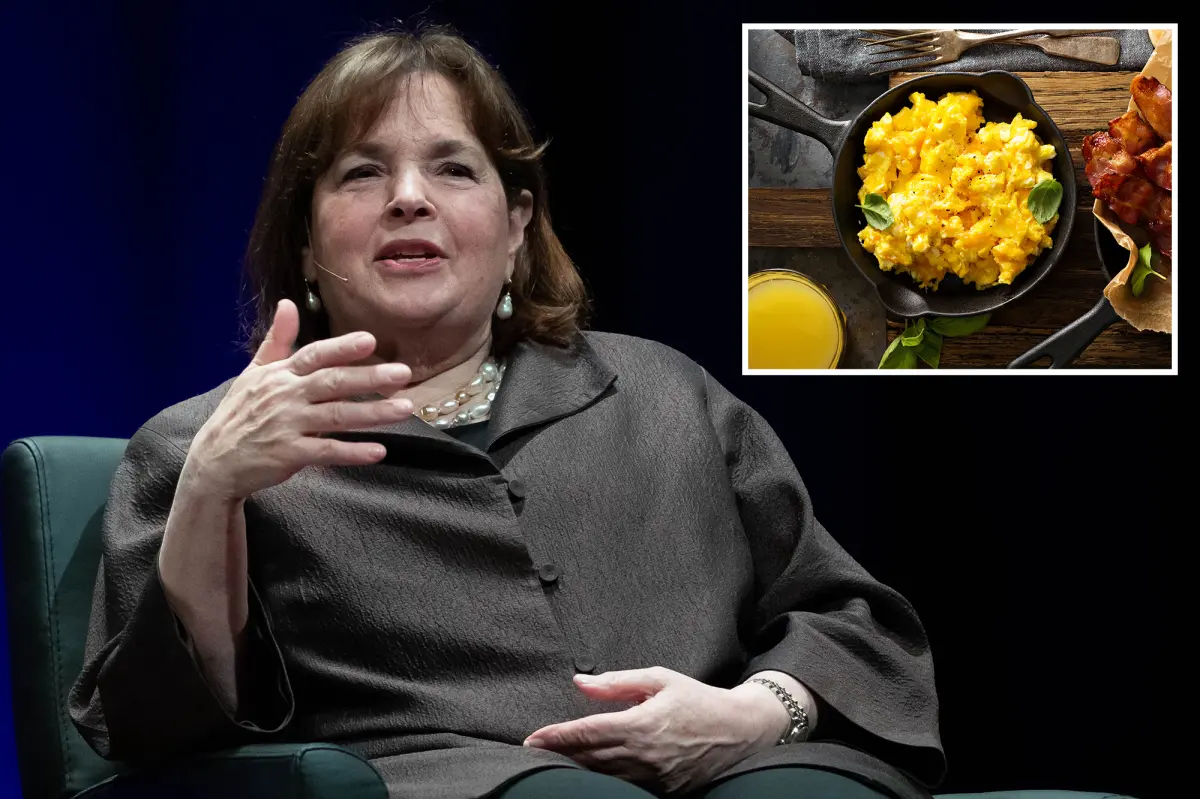
There’s something almost magical about scrambled eggs. On the surface, they’re the simplest thing in the world: a few eggs, a pan, some butter, and a little patience. But anyone who has ever made them knows that they can also be a quiet little battlefield of technique and taste. Chefs have spent years perfecting their own versions, and some of the most famous cookbook writers and television personalities in the world are fiercely loyal to their personal tricks. Gordon Ramsay and Bobby Flay, for instance, both swear by a final swirl of crème fraîche to give the eggs a luxurious richness. Alton Brown, ever the scientist, goes in a completely different direction, using mayonnaise and an extra yolk to create an impossibly creamy texture. Those are all wonderful approaches, but leave it to Ina Garten, the beloved Barefoot Contessa, to add her own stylish, Italian-inspired twist to the humble breakfast dish. She recently sat down with the Wall Street Journal and revealed that her secret to perfect scrambled eggs is sitting in the dairy aisle: ricotta cheese. It’s a simple, comforting, and deeply delicious idea, and it turns out to be exactly the kind of genius move that makes her cooking feel approachable yet special at the same time.
Garten’s advice sounds almost too easy, but the results, she promises, are extraordinary. The secret isn’t just the ricotta itself; it’s the way you cook the eggs. “How you cook the eggs makes such a difference, too,” she told the Journal. “If you cook them at a very low heat and add ricotta to give it creaminess and a little texture, it’s just a whole other thing.” She described the final dish as being more like a custard than scrambled eggs, and honestly, that’s exactly the kind of description that makes your mouth water. Instead of dense, rubbery curds, you get soft, velvety folds that feel almost luxurious. She also recommends adding whatever fresh herbs you happen to have around, and personally, she loves a handful of chives mixed right in. The mild onion flavor cuts through the rich dairy beautifully, adding a little freshness and color. It’s this kind of intuitive, flexible cooking that has made Garten such a comforting presence in kitchens around the world. She gives you permission to use what you have, to trust your instincts, and to make something that feels both elegant and effortless. There’s no fussiness here, no complicated foams or emulsions, just a simple, thoughtful improvement that makes a familiar dish feel brand new.
Interestingly, Garten’s method shares some important DNA with Ramsay’s famous technique, at least when it comes to the overall philosophy. Ramsay relies on gentle cooking to keep his eggs soft and creamy, and he adds his crème fraîche cold at the very end, partly to stop the cooking process and partly to introduce a rich, tangy silkiness. Garten, on the other hand, takes her own path. She folds the ricotta into the eggs as they cook, letting little pockets of cheese remain visible and melt slightly into the mixture. It’s a lovely idea because ricotta offers a delicate, milky flavor and a slightly grainy texture that keeps the eggs from becoming too homogeneous. That texture is a big part of the charm. Rather than achieving the kind of flat, uniform custard you might get from a French-style technique, you get something with more personality and rusticity. The eggs remain soft and folded, with tiny curds of ricotta scattered throughout. It feels like a rustic Italian breakfast, maybe something served in a sunny kitchen overlooking a garden, rather than a fussy fine-dining affair. This is what Ina Garten does so beautifully: she transforms a simple idea into something that feels personal and warm, while still delivering the kind of quality you’d be happy to serve to company.
For anyone who wants to try it at home, Garten’s recipe, adapted from her cookbook Simply Ina, is wonderfully straightforward. It serves four people and uses just a handful of ingredients: eggs, milk, butter, olive oil, and ricotta. She heats the butter and olive oil together over medium-low heat in a skillet, letting them melt and shimmer gently. While that’s happening, she whisks the eggs with a splash of milk, a good pinch of salt, and some pepper, whisking until everything is completely combined and slightly frothy. Then comes the important part: she pours the eggs into the warm pan and lets them set briefly at the edges, almost like an omelet that hasn’t quite decided what it wants to be. After that, she stirs constantly, using a spatula to push the curds around until they are soft, custardy, and just barely set. The ricotta gets folded in as they cook, creating those lovely little pockets of cheese I mentioned. The result is a breakfast that feels indulgent but not heavy, rich but still bright. Garten suggests serving the eggs on buttered toast, perhaps with a sprinkle of chives, a shower of grated Parmesan, and a pinch of red pepper flakes for a little heat. That combination of creamy eggs, crunchy toast, salty cheese, and a spicy finish is genuinely hard to beat. It’s the kind of meal that turns an ordinary Saturday morning into a small celebration, and it all comes together in less than ten minutes.
But Garten didn’t stop with breakfast. She also shared a few other clever shortcuts that make everyday cooking and last-minute entertaining feel totally manageable. For those times when you need an appetizer in a hurry, she suggested making her “emergency blue-cheese dip.” It literally couldn’t be simpler: just mix blue cheese with a little mayonnaise, and you’re done. The bold, pungent flavor of the blue cheese blends perfectly with the creamy mayo, creating a quick dip that tastes like you spent way more time on it than you did. She likes to serve it with whatever vegetables happen to be sitting in the fridge, like crisp cucumber slices, carrot sticks, or cherry tomatoes. But she also mentioned that potato chips, olives, salami, and cucumber slices make excellent go-to snacks on their own. The philosophy here is refreshing: you don’t have to be a gourmet chef to host a great gathering. You just need a few high-quality ingredients and a little imagination. Even dessert can be a shortcut, according to Garten. She told the Journal that when she’s short on time, she’ll simply buy a cheesecake from a good bakery and whip up a quick raspberry sauce at home to serve alongside it. Fresh raspberries, a little sugar, maybe a squeeze of lemon, and suddenly the store-bought cheesecake becomes something special. “Nobody will ever know,” she said with a smile. “You’re relaxed. The dessert is delicious. Everybody has a good time.” That little quote sums up her entire approach to cooking and hosting beautifully: it’s not about perfection, it’s about enjoyment.
Ina Garten has made a career out of helping people feel confident in the kitchen, and her advice continues to evolve with the times. She now shares even more of her food and entertaining ideas on her video podcast, Happy Hour With Ina Garten, which she films in her Manhattan apartment. It’s a lovely extension of her warm, personal style, giving viewers a chance to feel like they’re stepping into her world for a drink and a chat. The scrambled egg revelation is just the latest example of her ability to make ordinary food feel extraordinary, all while keeping the process simple, low-stress, and genuinely fun. The secret, as always, is to cook with care, use good ingredients, and not take yourself too seriously. Whether it’s folding ricotta into slow-cooked eggs, making an emergency blue-cheese dip, or jazzing up a bakery cheesecake with a fresh raspberry sauce, the goal is always the same: to bring people together around a table, to share something delicious, and to enjoy the moment. So the next time you’re standing at the stove wondering what to make for breakfast, consider following Ina’s advice. Turn the heat down low, grab a container of ricotta, and let the eggs become something a little more luxurious. You might just find yourself with a custardy, creamy, unforgettable plate of scrambled eggs that feels like a warm hug on a plate. And if you do, you’ll understand exactly why she calls it a whole other thing.