

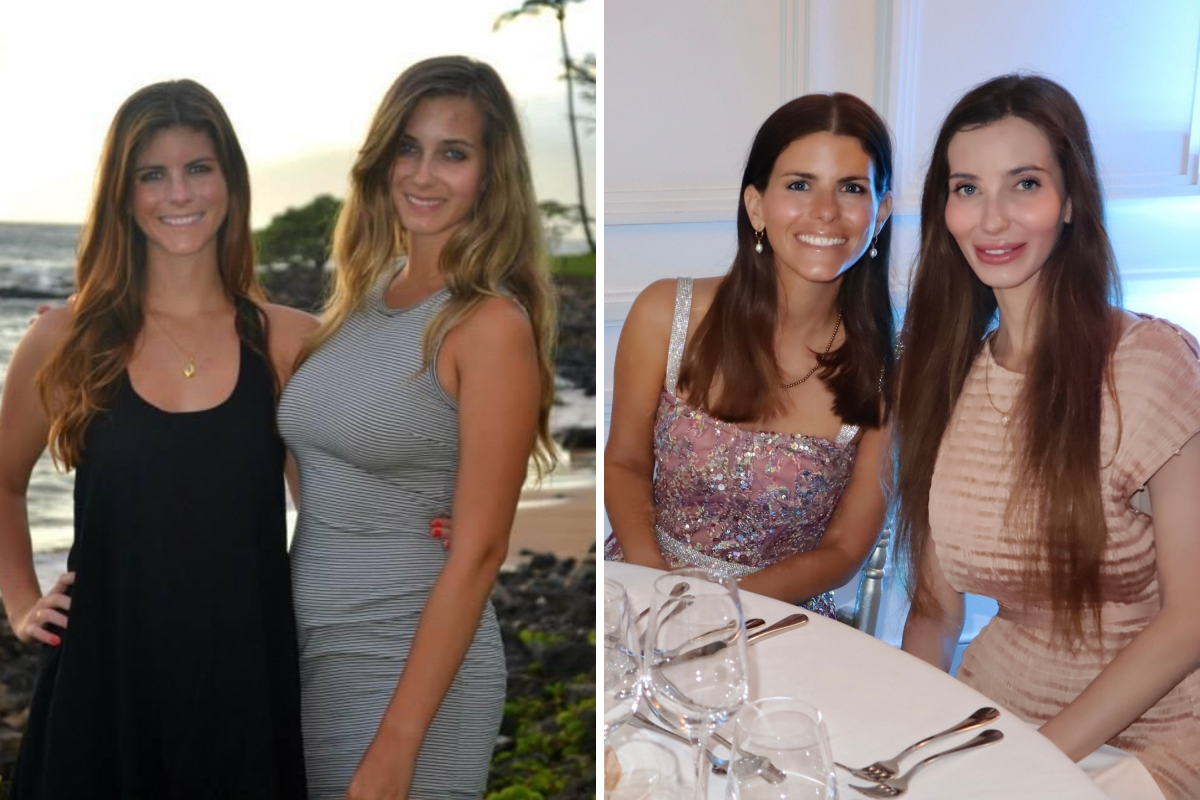
A 26-year-old art student, Ali, was living out a dream in Paris, far from her Florida roots, when her life ended without warning. She was young, vibrant, and to everyone around her, the picture of health. Her sister, Marisa, and their mother had flown across the ocean to spend time with her, sharing long walks through the city and soaking in the ordinary joy of being together. Nothing seemed wrong. Nothing felt dangerous. Then, on May 26, 2024, in the span of a single phone call, the world shattered. Ali had been on the line with her mother, chatting as if it were any other night, when the line suddenly went flat. There was no goodbye, no cry for help, just silence. Marisa and her mother rushed to Ali’s apartment, hearts pounding with that terrible, primal urgency that comes when something feels profoundly wrong. When she did not answer the door, they called French emergency services. But it was too late. Ali was gone. The shock was devastating because it was so inexplicable—how does a seemingly healthy young woman die in an instant, with no warning, no prior diagnosis, no chance to prepare? That question haunted her family in the weeks that followed. Marisa later described the jolt of that night with painful clarity: “She appeared to be healthy. Her death was such a shock.” It was the kind of shock that does not fade, but instead transforms into an aching, desperate need for truth.
Weeks after the funeral, the answers finally began to emerge, but they were not the ones anyone expected. An autopsy was completed, and Marisa, accompanied by her mother, sat with multiple doctors in South Florida to review the findings. What they learned felt like a cruel twist of fate. The doctors concluded that Ali may have been living with an undiagnosed form of Ehlers-Danlos syndrome, specifically vascular Ehlers-Danlos syndrome, or vEDS. This is a rare, inherited connective tissue disorder that affects the very scaffolding of the body. For most people, connective tissue is the invisible glue that holds organs, skin, blood vessels, and joints together. For those with vEDS, that glue is dangerously fragile. The doctors believed that Ali experienced an abdominal aortic rupture—a tear or burst in the main artery carrying blood through the abdomen—and that it likely killed her instantly. There would have been no time for emergency intervention, no desperate race to the hospital, no chance to fight back. Her family had to take some comfort in that, knowing that she did not suffer, but it also underscored just how silently deadly this condition can be. One moment, she was on the phone with her mother. The next, she was gone. And the reason, hidden inside her body for 26 years, had never been discovered until after her death.
To understand what happened to Ali is to understand how easy it is for invisible illnesses to go unnoticed, even by attentive, loving families. Ehlers-Danlos syndrome is not one single disease, but a group of inherited conditions that affect the body’s connective tissues. The symptoms can be subtle and varied, often dismissed as quirks or complaints rather than warning signs. In Ali’s case, the clues had been there all along, scattered throughout her childhood and young adulthood like breadcrumbs that no one knew to follow. She was always very flexible, able to bend and contort her body in ways that amazed her younger sister. Growing up, she complained often of aches, pains, and fatigue—things that many children experience, but that persisted in a way that perhaps should have raised more questions. She bruised easily, sometimes severely, even after nothing more than a minor knock. Her skin was translucent, a detail that seems poetic and delicate, but is actually a known hallmark of connective tissue fragility. In vascular EDS, the body’s blood vessels and internal organs are exceptionally weak, prone to tearing, bursting, or developing dangerous bulges called aneurysms. It is estimated to affect only one in 100,000 to 200,000 people, making it one of the rarest and most serious forms of EDS. But rarity is little comfort when the diagnosis comes too late.
What makes Ali’s story especially heartbreaking is that she was taken to doctors multiple times as a child. Her mother, vigilant and concerned, sought answers for her daughter’s strange collection of symptoms. Yet again and again, she was made to feel like a hypochondriac, as though she were inventing problems for a child who looked perfectly fine on the outside. No genetic testing was ever ordered, no specialist ever connected the dots. Marisa remembered watching her sister perform cool, flexible tricks as a child, delighted by the apparent superpower, completely unaware that it might be a sign of a deadly underlying condition. “When we were younger, she’d show me all of these cool, flexible things she could do. I had no idea that it could be a sign of a deadly condition,” Marisa said. It is a painful reflection for anyone who has lost someone too soon: the realization, after the fact, that the signs were there, but they didn’t know how to decode them. Marisa later expressed her hard-won wisdom simply and powerfully: “I have realized that just because you look healthy doesn’t mean you don’t have an underlying condition.” This is at the core of her grief, and it is also at the core of her new mission—to make sure other families do not learn this lesson the same way.
Ali’s story is a stark reminder that health is not always visible. In an age where people are judged by how they appear, and where invisible symptoms are often dismissed, her death carries a broader message about the importance of listening to our bodies and advocating for ourselves. It also speaks to the immense difficulty that families face when trying to get rare diseases diagnosed. In Ali’s case, her mother was not irresponsible or neglectful. She did the right thing. She sought medical help, she expressed her concerns, and she pushed for answers. But the system failed her, and the medical community did not recognize the pattern. Vascular EDS is so rare that many doctors may never see a case in their entire careers. Its symptoms—hypermobility, easy bruising, fatigue—can overlap with so many other conditions or simply be dismissed as normal variations of human experience. Because of this, people with vEDS often go undiagnosed until a catastrophic event occurs, if they are diagnosed at all. Marisa’s decision to speak publicly about her sister’s death is not just an act of grieving; it is an act of advocacy. By sharing Ali’s story, she hopes to educate other families, to warn them about the signs, and to encourage them to trust their instincts when something seems wrong. She has finally found the courage to talk about that terrible night and the strange, sad path toward understanding that followed, saying, “I finally feel comfortable and ready to talk about it.”
Ali will not be remembered only as a victim of a rare syndrome. She was an art student, a dreamer, a sister, and a daughter who traveled across an ocean to pursue her passion. She was the person who bent her body into shapes for her little sister’s amusement, the young woman whose skin was so translucent that you could see the faint blue of her veins. She complained of aches and tiredness, but she also lived her life, filling her days with beauty in Paris and love with her family. Her sudden death has left a void that will never fully heal. But from that void, Marisa is trying to build something meaningful. She is telling her sister’s story so that others might recognize the warning signs of vascular Ehlers-Danlos syndrome and seek genetic testing before it is too late. For those who are living with EDS or who suspect they might be affected, organizations like The Ehlers-Danlos Society provide resources, support, and a global community working to improve diagnosis and care. In the end, what happened to Ali is a tragedy that might have been preventable if anyone had connected the dots in time. Her family cannot change the past, but they can carry her memory forward, and they can use their pain to shine a light on a condition too few people understand. Ali died in an instant, on a quiet night in Paris, her voice suddenly cut off on the phone. But her story, now told with courage and love, will not be silenced.