


1. The Return of a Tabloid Icon
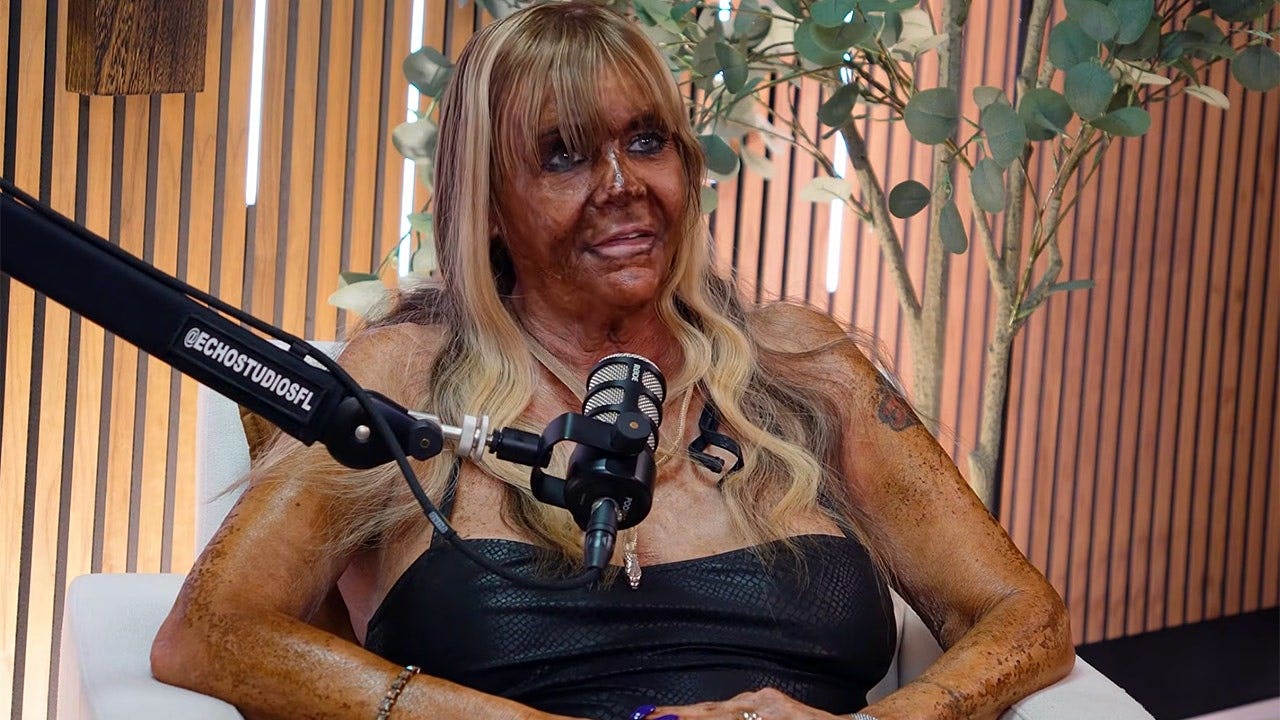
Some names fade with time, but Patricia Krentcil’s has a strange staying power, largely because she looks like no one else on television or in a courtroom. Even now, more than a decade after she first became a household name, her unmistakable orange-brown complexion still stops people in their tracks. It is that very skin tone—the one that earned her the nickname “Tan Mom”—that she says recently put her in the crosshairs of federal immigration agents. Krentcil, now living in Florida, appeared on the podcast Light. Tan. Up. with actor Tom Arnold and recounted a tale that feels almost too surreal to be true. She claimed that as she was leaving a restaurant with her girlfriends, U.S. Immigration and Customs Enforcement agents stopped her, looked her over, and asked whether she was an American citizen. The question alone was enough to make her head spin. But what followed, according to Krentcil, was far more alarming: she says the agents were moments away from handcuffing her and taking her away to some unknown destination, all because her tan was so deep that they apparently didn’t believe she was born in this country. It’s a story that blends absurdity with genuine fear, and it has reignited the public’s fascination with a woman who has always been impossible to ignore.
2. The Encounter That Shook Her
Krentcil described the alleged incident with a mixture of indignation and lingering trauma. She said the moment unfolded casually enough, with her and her friends stepping out of a restaurant, when suddenly the ICE agents appeared. She recalled being asked if she was an American citizen, a question that struck her as both bizarre and insulting. She answered yes, but that didn’t immediately resolve the situation. According to her, the agents continued to scrutinize her, and the tension escalated to a point where she genuinely believed she was about to be taken into custody. “Because I was so tan, they were about to handcuff me … and take me away. God knows where,” she alleged. The fear in her voice was palpable as she described what went through her mind in those moments. She remembered thinking about the notorious vehicles that immigration enforcement often uses to transport detainees, and the terrifying uncertainty that follows. “Once you get in those trucks, you don’t know where you’re going anymore,” she said. For Krentcil, who built a public persona around boldness and defiance, the encounter reduced her to a vulnerable woman who had to fight to keep her freedom. She said she was scared but held her own, and eventually managed to walk away from the situation. But the experience left a mark, and she didn’t hold back in accusing the agents of racial and ethnic profiling. In her view, the treatment she received was proof of a broader, uglier pattern. “But they’re very racist about color and nationalities and stuff like that,” she claimed, adding that the whole ordeal was terrifying.
3. The Original Tan Mom Phenomenon
To understand why this story has resonated so strongly, it helps to remember just how famous Krentcil became in 2012. She was living in New Jersey at the time, and her life changed overnight when she was arrested and charged with second-degree child endangerment. The accusation was shocking: authorities alleged that she had brought her five-year-old daughter into a tanning bed with her. The child reportedly arrived at school with sunburns, and that triggered a child welfare investigation. The story exploded in the media, and suddenly Krentcil was everywhere—on news shows, in tabloids, and all over the internet. Her deeply bronzed skin, which looked almost unnatural under television lights, made her an easy target for jokes and memes. She became a cultural punchline, a cautionary tale about vanity taken to an extreme. But while the public laughed, the legal stakes were very real. Krentcil faced serious prison time if convicted. For months, she maintained her innocence, insisting that her daughter had simply been playing outside and had never entered the tanning bed. The case eventually went before a grand jury in Essex County, and in February 2013, that grand jury declined to indict her. The charges were dropped, and Krentcil was free. But the damage to her reputation was already done. She spent years trying to escape the shadow of that scandal, and even now, it remains the first thing many people think of when they hear her name.
4. A New Life in the Sunshine State
After the legal ordeal ended, Krentcil decided to leave New Jersey and start fresh in Florida. It was a natural move for a woman whose identity was so tied to sun and tanning. The Sunshine State offered her a place where she could be herself without the constant judgment of her former neighbors. She has continued to embrace her distinctive look, showing up at events, appearing on podcasts, and maintaining a presence in the strange world of tabloid celebrity. Her appearance on Light. Tan. Up. with Tom Arnold was just another chapter in that ongoing story. Arnold, himself no stranger to outlandish celebrity culture, seemed to understand exactly what made Krentcil compelling. She is unapologetically herself in a world that has often mocked her. And yet, beneath the jokes and the surreal circumstances, there is a real person with real fears. Her story about ICE agents didn’t come across as a publicity stunt. It felt like the confession of a woman who has spent her entire life being judged by the color of her skin, even if that color is self-inflicted. In Florida, she has found a measure of peace, but the encounter with immigration authorities reminded her that her appearance still has consequences, sometimes serious ones. She may be a celebrity, but in that moment, she said, she felt like just another person caught in a system that doesn’t always ask questions before it acts.
5. The Deeper Questions About Profiling and Identity
Krentcil’s allegations raise uncomfortable questions that go far beyond her own bizarre biography. In an era of heightened immigration enforcement, racial profiling is a serious and often controversial issue. But her story flips the script in an unexpected way. She is a white woman whose skin has been darkened by years of tanning, and she claims that this tan caused authorities to question her citizenship. If true, her experience would be a stark example of how arbitrary and superficial such judgment can be. It suggests that ICE agents may not have been profiling for race as much as for skin color itself—a distinction that is both absurd and deeply troubling. Tanning, after all, is not a crime. Having dark skin is not a crime. But for Krentcil, the physical trait that made her famous nearly became the reason she was detained. She used the word “racist” to describe the agents, and while some may dismiss her comparison, her fear was real. She spoke about the terrifying reality of immigration trucks, a symbol of the unknown that haunts so many undocumented immigrants. For a woman who has spent years living in the public eye, being powerless in that moment was a shock. It reminded her, and her listeners, that no one is fully protected from the machinery of the state. Whether or not every detail of her account is verifiable, her story serves as a powerful reminder of the human stakes involved in immigration enforcement.
6. An Unresolved Story
As with many things involving Patricia Krentcil, the truth of this latest tale remains cloudy. She did not specify when or where the encounter took place, and Fox News Digital was unable to independently confirm her account. ICE also did not immediately respond to requests for comment, which means we are left with only her word and her emotional retelling. But that, in some ways, is exactly the point. Krentcil built her public life on being a character that people couldn’t look away from. Her story, whether fully accurate or embellished in the telling, captures something essential about the strange intersection of fame, fear, and identity in modern America. It is a tale of a woman who has never fit neatly into any category, who has been judged and mocked and now, she says, nearly arrested for the way she looks. For Krentcil, the encounter was terrifying, and she wants us to know that. She wants us to understand that even someone with her outlandish persona can feel vulnerable. And in hearing her out, we are forced to confront our own assumptions about who belongs, who is seen as foreign, and how quickly appearances can turn dangerous. Whether you believe her or not, her story is impossible to forget—much like the woman at its center. She may be the Tan Mom, but in her own telling, she is also a survivor, still holding on, still talking, and still refusing to let anyone put her in chains.