


Pump.fun Flips the Revenue Script Against Hyperliquid — Even as Prediction-Market Odds Slide for a $100 HYPE by 2026
A Collision of Two Very Different Crypto Models
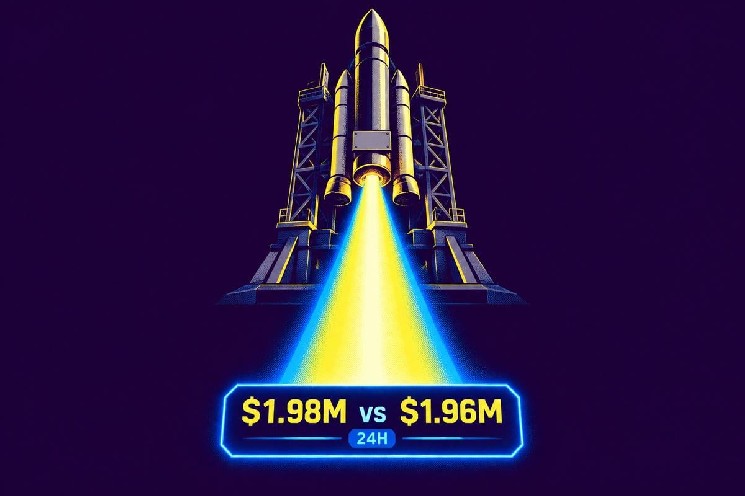
Revenue leadership in the decentralized world is a moving target, and this week it has produced a result that caught market watchers off guard. Pump.fun, the Solana-based memecoin launchpad that made token creation as easy as publishing a post, has closed out the latest 24-hour revenue window ahead of Hyperliquid, the decentralized perpetual-futures exchange that operates on its own dedicated layer-1 chain. At first glance, the result might pass for a routine changing of the guard. In truth, it is far more interesting than that — it is a collision between two fundamentally different platform models. Pump.fun is built on instant token issuance and retail speculation, monetizing the meme economy with a fee on every launch and every trade. Hyperliquid is engineered for leveraged conviction, generating revenue from the constant opening and closing of derivatives positions that turn market opinion into measurable volume. Both strategies have proven enormously successful in their respective lanes. Pump.fun has become the front door to crypto for a generation of speculators who treat culture as an asset class, while Hyperliquid has become the venue of choice for traders who measure edge in basis points and latency in microseconds. The fact that the two now occupy neighboring rows on the protocol-revenue leaderboard is a study in crypto’s strangest symmetries and sharpest contrasts. It also sets up a practical question: which kind of revenue is more indicative of the industry’s trajectory — the kind produced by creative virality, or the kind produced by persistent, leverage-fueled trading? The latest data offer a nuanced answer. The comparison between them spans two different platform models, which makes a raw head-to-head imperfect, but the numbers are nonetheless revealing about the underlying state of crypto activity. For a market that has spent much of the cycle wondering whether retail would ever return, watching the memecoin engine out-earn a derivatives powerhouse is a definitive — if unscientific — answer: the appetite for risk is alive and well.
Hyperliquid Holds a Firmer Line in the Seven-Day Revenue Comparison
For all of Pump.fun’s 24-hour bravado, Hyperliquid still controls the longer window. In the seven-day revenue comparison, Hyperliquid retains a lead that, while it has narrowed, keeps the derivatives platform firmly at the top of the weekly revenue table. The distinction between the 24-hour and seven-day metrics is far from academic. A one-day revenue snapshot can be inflated by a solitary viral moment — a token launch that captures the collective imagination of thousands of traders and sends bonding-curve purchases surging in a concentrated burst. It is fireworks. Seven-day revenue, by contrast, is the hum of an engine. Hyperliquid’s weekly tally tells a story of continuous, compounding activity across its perpetual-futures markets. Perps traders are in the market every single day, extending positions, hedging risk, and rotating in and out of trades according to real-time price action. That kind of activity is not hostage to internet culture; it is anchored to a marketplace in which users participate because they want price exposure, not because a meme has suddenly achieved critical mass. Hyperliquid built its revenue stack on that durable engagement. Protocol revenue, as the metric is known, measures platform activity rather than token-price performance, and in Hyperliquid’s case it demonstrates the structural advantage of offering leveraged products: traders who use leverage tend to trade more frequently, and more frequent trading translates into a steadier fee stream. Market participants who follow these leaderboards often caution against overreacting to a single 24-hour print; the more consequential signal is the one that survives a week. On that measure, Hyperliquid’s position atop the table appears secure for now — even on a day when the spotlight belonged to a launchpad running on pure viral momentum. The comparison, in other words, cuts both ways: daily revenue is an excellent gauge of contemporaneous energy, but the weekly look is what separates a genuine trend from a temporary spike. As the cycle matures, it is precisely this sustaining power that may define which model captures the next wave of users.
Prediction-Market Pricing Softens on HYPE’s 2026 Milestone
While the revenue data captured what was happening in the present, elsewhere markets were quietly adjusting their expectations about Hyperliquid’s most widely watched moon shot. Prediction-market pricing for HYPE to reach a $100 target by December 31, 2026 — a milestone once considered a plausible extension of its post-launch ascent — has slipped meaningfully. Over roughly the same 24-hour window in which Pump.fun was stealing the revenue headline, the prediction market’s YES probability for that specific outcome dropped from 36% to 27.5%. In probabilistic terms, that is not a gentle nudge; it is a repricing that removed nearly a quarter of the existing confidence in the contract. Prediction markets function as a live, tradable census of opinion, aggregating the views of participants with real money on the line. When a probability moves this quickly, it is usually because a meaningful cluster of traders concluded that the original thesis is no longer as compelling as it seemed at the prior price. The movement in the HYPE contract does not necessarily signal doom for the asset; such pricing is sensitive to time decay, the trajectory of spot prices, the condition of the broader market, and the perceived likelihood of sustained capital inflows. But the slide from 36% to 27.5% aligns with a narrative of mounting caution — a narrative that coexists with the platform’s robust revenue performance. This is the most interesting part of the picture: a platform can generate abundant economic activity in the present while the markets that price its future simultaneously grow more conservative. In this case, the year-end market pricing suggests that traders are keeping their enthusiasm for an aggressive HYPE rally in check. The NO side of the contract is now a firm favorite, and that alone is a data point worth watching as the calendar grinds toward 2026. Whether the probability stabilizes, recovers, or continues to fade will tell observers a great deal about the market’s shifting appetite for risk.
Memecoin Engagement Is the Story Behind Pump.fun’s Daily Lead
So what explains Pump.fun’s daily revenue advantage? The short answer is engagement. The platform’s revenue performance is a direct reflection of user interest and activity in the memecoin sector, where attention remains one of the most reliable currencies in all of crypto. Pump.fun’s model creates a frictionless pathway from idea to tradable asset, and that has made it a magnet for a particular kind of market participant — someone quick, creative, and highly sensitive to narrative shifts. When a token captures the collective interest of the community, the resulting trading activity can generate thousands of transactions per hour, with fees accruing on each one. That is exactly how a launchpad can produce a daily revenue total rivaling, and in the latest snapshot exceeding, a platform with the trading depth of Hyperliquid. The daily lead stands in direct contrast to Hyperliquid’s higher revenue total across the longer comparison window, but the contradiction is more apparent than real. The two platforms operate on different rhythms. Memecoin traders rotate through jokes and concepts at breakneck speed, and their money rarely leaves the ecosystem — it simply migrates from one token to the next. Hyperliquid’s users, by contrast, operate on a more deliberate cadence, opening and closing positions based on strategy rather than sentiment. Pump.fun’s ability to monetize that relentless rotation is itself a sign of growing maturity in the memecoin segment. What was once dismissed as a sideshow has become a substantial revenue engine in its own right — one capable, on any given day, of outpacing one of decentralized finance’s most successful exchanges. It may not be a durable competitive advantage over a multi-week horizon, but it is undeniably a formidable one in the moment. For anyone trying to measure the temperature of retail crypto interest, that is a signal impossible to ignore. The users are not merely present; they are transacting with an intensity that, at least on a daily basis, rivals the most sophisticated corners of the derivatives market.
Reading the Divergent Signals: Protocol Revenue vs. Predictive Pricing
The critical nuance in this moment is that the two data points are measuring fundamentally different things. Protocol revenue is a backward-looking record of the economic activity that has already taken place — the fees, the settlements, the trading volume that has accumulated on a platform. It answers the question: What are users actually doing right now? Prediction-market probability, by contrast, is a forward-looking artifact — a live price on the likelihood that a specified outcome will occur. It answers a very different question: What do traders believe will happen by a certain date? Conflating the two is a common mistake, and it leads to readings that are alternately too bullish and too bearish. A platform can show booming activity and still see its token’s future appreciation priced with declining confidence. That is not a paradox. It means the market is making a distinction between operational health and price potential. In the case of Hyperliquid, the pairing of strong seven-day revenue and a fading probability on the 2026 milestone suggests a view that is more nuanced than either number alone: the business may be healthy, its revenue resilient, but the route to a triple-digit token price may be less certain than it once looked. Pump.fun, meanwhile, demonstrates that the retail-facing sector continues to attract real capital and real trading interest — even if no formal market is pricing its own long-term odds. The lesson for observers is straightforward. For revenue watchers, every metric must be attached to a time frame before it becomes useful. For token analysts, prediction-market probabilities provide a transparent, real-time complement to the ledger. In this particular snapshot, neither story is complete without the other. Indeed, it is the gap between where money is moving and where confidence is building that hints most clearly at the shape of the next market phase.
What the Next Phase of the Cycle Will Reveal
Taken together, the two signals paint a portrait of a crypto market at an interesting inflection point. The 24-hour revenue result gives Pump.fun a notable talking point and intensifies the conversation about how durable memecoin economics can actually be. But with Hyperliquid still occupying the higher ground over seven days, the broader data argue that diversified, derivatives-driven trading continues to provide the foundation for the sector’s economic output. Prediction markets add a third layer of texture, reminding everyone that present strength and future expectations are not the same thing. The traders who price the $100 HYPE contract will keep watching both the token’s trajectory and the macro backdrop; the probability could drift lower or recover just as quickly, depending on how events unfold. For the wider ecosystem, the important takeaway is the sheer diversity of the signals now available. A mature market is one in which no single metric tells the entire story. In that sense, the face-off between Pump.fun and Hyperliquid is the perfect symbol for this cycle: attention-driven speculation and leverage-driven finance, trading places at the top of the revenue podium, each demonstrating its own distinct kind of strength. The coming weeks will show whether Pump.fun’s daily triumph becomes a prelude to weekly parity or simply a flash of brilliance in the permanent churn of crypto volatility. Either way, for market participants, keeping one eye on the revenue tables and the other on the prediction-market screen has never been more relevant — or more revealing. With memecoin engagement still showing no signs of exhaustion, and prediction-market traders growing more disciplined in their pricing, the only certainty is that the rankings will change again. The next seven days, to paraphrase an old trading adage, will tell the real story.
Article produced with the assistance of artificial intelligence and reviewed by the editorial team.