



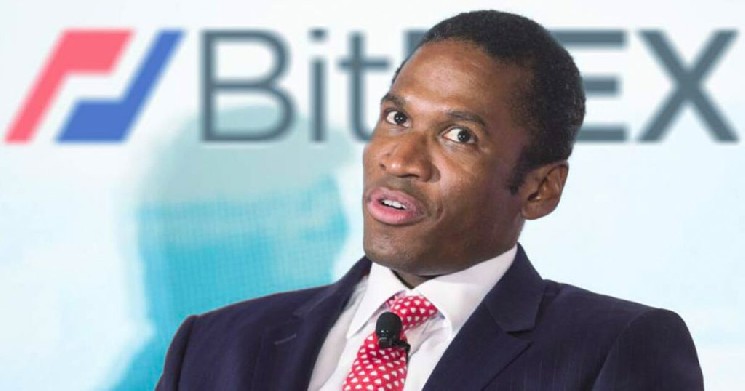
Arthur Hayes Cuts Altcoin Positions, Warns Crypto Market Needs ‘One More Fall’ Before Next Rally
High-Profile Token Transfers Stir Sell-Off Speculation
Arthur Hayes, the BitMEX co-founder and one of the most closely watched figures in the cryptocurrency market, has set off a fresh wave of speculation after a series of blockchain transactions caught the attention of on-chain observers. The digital trails show that Hayes moved millions of dollars worth of altcoins to market makers and over-the-counter trading platforms — destinations that are frequently associated with large-scale selling. Among the assets reportedly transferred were 1.89 million ETHFI, valued at approximately $1.23 million; 546,609 AERO, worth about $398,000; 120,000 PENDLE, approximately $244,000; and 3 million ZAMA, which came to roughly $214,000. Combined, those four transfers amount to more than $2 million in digital assets. In a market where whale activity is constantly scrutinized, the moves were enough to stir immediate conversation. Market makers and OTC desks serve as the institutional plumbing of the crypto ecosystem. They allow large holders to enter or exit positions without placing massive orders on public exchanges. But they are also the venues where tokens often go when professional investors are preparing to sell. The fact that Hayes’s assets were directed through these channels immediately raised questions about his short-term outlook. Within hours, social media channels were filled with speculation that the well-known investor was trimming his portfolio. Some interpreted it as straightforward profit-taking. Others saw it as a warning about market conditions.
‘We May Need to Fall Before We Rise’
Any ambiguity about the intent behind those transfers was put to rest when Hayes addressed the market directly. In a public statement, he said that Maelstrom, his investment firm, had closed all positions in its directional trading portfolio. He acknowledged that the firm had exited after profiting from investments in Ethereum (ETH), Ethena (ENA), Uniswap (UNI) and various other altcoins. For those unfamiliar with the term, a directional trading portfolio is different from a long-term holding portfolio. It consists of positions opened with a specific view on where prices are headed in the near term — up or down. When a trader closes that book, it does not necessarily mean they are abandoning the asset class. It means they no longer see a clear edge in the current setup. Hayes was quick to explain his reasoning. He believes that short-term risks continue to linger in the cryptocurrency market, driven by an unsettled macroeconomic environment and persistent geopolitical tensions. He stated, in effect, that the market may need to suffer through another downturn before it is ready to enter a sustained upward trend. As he put it, “We may need to fall before we rise.” That one sentence captures the essence of his current stance. He is not predicting the end of the crypto cycle. He is saying that the cycle might still have one more painful chapter to write before the next leg up can begin. For that reason, Hayes noted that investors who prefer to wait are not planning to open new positions until clearer signals emerge indicating that the risk has diminished.
Why the Market Is Paying Attention to a Whale’s Exit
To understand why Hayes’s decision carries so much weight, it is necessary to appreciate his position in the crypto world. Hayes is not just another trader with a public account. He co-founded BitMEX, a derivatives platform that played a major role in the mainstreaming of cryptocurrency trading. Over the years, he has built a reputation for making bold, often contrarian market calls. His essays on Bitcoin, monetary policy and financial markets are widely read, and his commentary regularly influences sentiment across the industry. When he decides to reduce exposure, other market participants tend to take notice. The mechanics of the latest transfers make the message even clearer. Sending assets to market makers is a common prelude to distribution. These firms provide liquidity and are willing to buy or sell tokens at any time, which makes them natural partners for large holders looking to exit discreetly. OTC trading platforms serve a similar purpose. They enable block trades to be negotiated privately, away from public order books, so that a large sale does not trigger panic selling or sharp price swings. By using both market makers and OTC desks, Hayes appears to have deliberately engineered an orderly exit. He did not simply dump the tokens on an exchange. He made sure the sales could be absorbed without unnecessary market disruption. That strategic approach is consistent with his background as a former institutional trader. It also suggests that, while Hayes is reducing risk, he is not expecting an immediate catastrophe. He is simply positioning himself for a wide range of possible outcomes.
Macro Uncertainty and a Growing Call for Patience
Hayes’s cautious stance has not developed in a vacuum. The cryptocurrency market is wrestling with an unusually complicated macro backdrop. Inflation remains an issue in several major economies, even as growth shows signs of slowing. Central banks have been navigating a delicate path between fighting inflation and avoiding recession. Meanwhile, geopolitical tensions have added another level of unpredictability to global markets. In such an environment, risk assets like cryptocurrencies often struggle to maintain upward momentum. Investors become less willing to hold volatile positions, and money tends to flow toward safer havens. Hayes has repeatedly shown that he understands these dynamics better than most. His decision to wait on the sidelines is, in many ways, an acknowledgment that the current macro cycle is not friendly to aggressive crypto exposure. He is not alone in that assessment. In a related market commentary, a Chinese analyst called for “patience” regarding Bitcoin and altcoins, warning that acting too quickly could be dangerous in a market that remains highly sensitive to external shocks. The analyst’s message meshed neatly with Hayes’s own statement: sometimes, the most profitable move is to do nothing. That may sound simple, but it is not easy to implement in a market that rewards constant activity. Yet more professional investors are beginning to embrace the idea that patience is not a weakness. It is a strategy. By holding off on new purchases, they are preserving their option to buy at better prices when conditions improve.
What the Latest Signals Mean for the Altcoin Market
The broader implications of Hayes’s move go beyond one investor’s trading book. When a prominent trader closes a directional portfolio, the market reads it as a signal that the immediate risk-reward tradeoff has deteriorated. For altcoins, which tend to be more volatile than Bitcoin, such signals can have an outsized impact. If other large holders follow Hayes’s lead, selling pressure could build in the tokens he highlighted. But there is another way to interpret his actions. Hayes did not say that crypto was dead. He said that the market may need to fall before it can rise. That is a very different message. He still sees a future for digital assets. He still believes there will be a sustained rally at some point. He just does not want to pay the price of getting there too early. His strategy is to preserve capital now so that he can deploy it when the next opportunity appears. In the meantime, the market will be left to wrestle with a classic question: Is a famous investor taking profits because he knows something bad is coming, or is he simply being prudent after a good run? The answer probably lies somewhere in the middle. Hayes has always been a risk manager first. His decision to sell is not necessarily a prediction. It is a reflection of how he evaluates probabilities in an uncertain market. For retail investors, the lesson is to avoid becoming emotionally attached to any single position or narrative. The market is dynamic. The investment strategies that work are often the ones that adapt to changing conditions.
Waiting for a Clearer Entry Point
Looking ahead, the next phase of the cryptocurrency market may depend on how long the current period of caution lasts. Hayes has made it clear that he will not be in a rush to return. He is waiting for signals — macroeconomic, geopolitical, technical or otherwise — that indicate the risk environment has cleared. When those signals appear, he is likely to move quickly. Until then, he is comfortable holding capital in reserve. This approach is not without costs. Standing aside during a surprise rally can be frustrating. But for an investor with Hayes’s track record, capital preservation is paramount. The crypto market is famous for rewarding discipline and punishing impulsive behavior. By taking profits and stepping back, Hayes is demonstrating a level of emotional control that many retail traders struggle to replicate. His latest statement serves as an important reminder that even the most bullish investors know when to reduce risk. It is also a reminder that no one has a crystal ball. The market could rally tomorrow, or it could fall sharply in the coming weeks. What matters, Hayes seems to be saying, is the ability to adapt. For now, the most prudent stance may be to watch, wait and avoid the temptation to force trades in an uncertain environment. This article is for informational purposes only and should not be interpreted as investment advice. Every investor should conduct their own research and make decisions based on their individual financial situation and risk tolerance.