


1. A Bigger, Braver Return
There’s something exciting about watching a show find its footing and then decide to go for broke in its second season. That’s exactly what The Rainmaker is doing. When the legal drama returned to USA Network for a sophomore run, the cast and creative team knew they couldn’t just repeat what worked. They had to raise the bar. Milo Callaghan, who plays young lawyer Rudy Baylor, put it simply: “We think [this time around it is] bigger and better. The scope of it is so much larger.” That isn’t just industry talking. You can hear the pride in his voice, the sense that the cast has stopped worrying about whether the show will work and started enjoying the fact that it does. P.J. Byrne, who plays a key member of the legal team, agreed with that sentiment, saying the group is “so good” now that they’ve truly gotten the hang of each other’s rhythms. There’s a warmth to their interviews, an easy banter that suggests the friendship we see on screen isn’t entirely manufactured. Byrne also teased that “the stakes have been raised,” which might sound like another cliché in the world of television promotion—except when Callaghan explained what that actually means for the story. It’s not just about bigger explosions or fancier suits. It’s about vulnerability. It’s about children. It’s about the kind of cases that keep you awake at night even after the script pages are turned. That’s not a gimmick. That’s a mission.
2. The Classic Story at Its Core
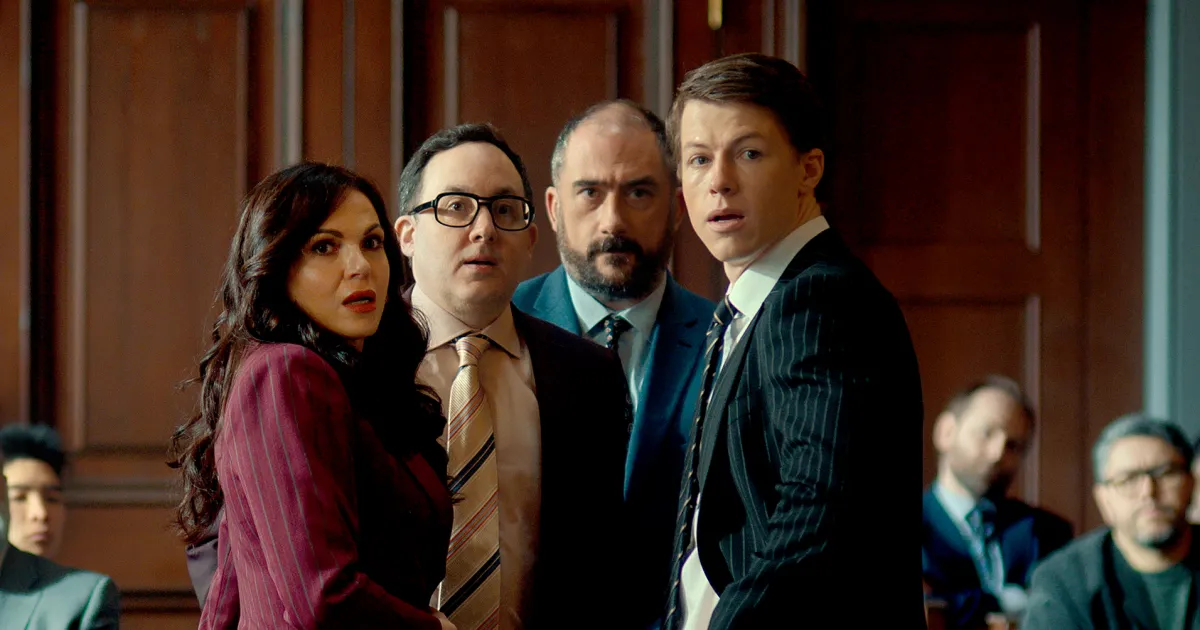
For those who haven’t read the book or seen the 1997 movie, The Rainmaker is based on John Grisham’s beloved 1995 novel of the same name. It centers on Rudy Baylor, a freshly minted lawyer with dreams of corporate glory. But almost immediately, Rudy is fired from his prestigious white-collar law firm—a devastating blow for someone who was supposed to be on the fast track. Left with few options, he links up with a scrappy, unconventional ambulance chaser named Bruiser Stone, played by Lana Parrilla. The pairing is unlikely, to say the least. Rudy is earnest, idealistic, and a little naive. Bruiser is streetwise, pragmatic, and completely comfortable operating in the gray areas of morality. Together, they go head-to-head against Rudy’s former employer, transforming the professional relationship into a personal war. If that setup sounds familiar, it should. The book was adapted into a blockbuster film by Francis Ford Coppola, starring Matt Damon as Rudy and Mickey Rourke as Bruiser. There’s a reason why Grisham’s story has stuck around for so many years. In its simplest form, it’s the dream of every underdog: the kid with nothing, or close to nothing, taking on the establishment and refusing to blink. But USA Network’s version is not just a cover song. The show makes several changes to the source material, allowing it to breathe and evolve for a modern audience. Rudy isn’t just a character in a suit. He’s a young man struggling with moral questions that don’t have easy answers. Bruiser isn’t just a comic relief sideliner. She’s a woman with her own history, her own wounds, and her own way of seeing justice. The series uses the bones of the known story to build something new, and that’s why fans of the novel and newcomers alike can sit down and find something meaningful in it.
3. The Heart of Season Two
If you had to pick one word to describe what makes season two of The Rainmaker stand apart, it would be empathy. Callaghan opened up about the emotional center of the new episodes, revealing that “the cases that we’re dealing with—it’s hard to top the David and Goliath formulation of season 1 but we’re leaning into the plight of childhood and children this season.” That’s a significant shift. Instead of bank fraud or corporate conspiracy, the writers are turning their attention to something arguably more urgent: the juvenile detention system in America. It’s not the kind of story that immediately makes you think of summer television entertainment. But it’s the kind of story that matters. As Callaghan put it, “It is about the juvenile detention system in America. We all felt like we could meet that and interact with that material in a really organic, authentic way because it felt so hard hitting.” You can almost imagine the writers’ room, papers spread across the table, everyone aware that they were touching on real lives and real failures within the justice system. The season follows that storyline “from episode one to episode 10,” so this isn’t a one-off issue-of-the-week approach. It’s a full-season commitment to exploring how the law treats its youngest and most vulnerable citizens. That decision gives the entire show a sense of weight and urgency. When Rudy and the team walk into a courtroom, they’re not just arguing about money. They’re arguing about childhood, about hope, about what kind of society we want to be. It’s vulnerable, delicate, and at times heartbreaking, but it’s also what makes the show feel so much more than just another legal drama.
4. Elevated in Every Way
There’s a moment in every series when you can feel the production team have started to trust themselves. The lighting is sharper. The costumes fit better. The performances feel less like acting and more like living. Parrilla noticed this immediately, saying, “Season 2 feels elevated on every level. In every department as well, from how we look to how the show looks. We are more seasoned in our characters.” That sense of seasoning is crucial. In season one, the actors were still exploring who these people were and how they operated. Now, they know these characters the way you know an old friend. They know what Bruiser would order at a diner. They know what Rudy would do when he’s nervous. They know the way a collective sigh feels after a long take. That kind of familiarity doesn’t make the actors lazy—it makes them braver. They’re willing to try new things, to reach for complicated emotions, to let silence speak where words used to be. And the visual upgrade is real. The show looks more expensive, more cinematic, more alive. But let’s not forget that The Rainmaker also refuses to be boxed into one genre. Byrne laughingly described the show as “a comedy, a drama, a detective show,” and added, “It’s an accident show, it’s a thriller. I get scared a lot.” That might sound like too many ingredients in one pot, but the balance is the secret sauce. One minute you’re laughing at the absurdity of a legal loophole, and the next you’re gripping the armrest as a discovery threatens to change everything. It mirrors real life, where joy and fear are often tangled together. The show doesn’t have to choose. It thrives in the overlap.
5. The Case That Changes Everything
One of the most anticipated elements of the new season is the storyline involving Bruiser’s ex-husband. Parrilla teased that “there’s a lot that happens with that case,” which feels like the understatement of the year. Season one established Bruiser as a confident, smart, somewhat cynical woman who has built her career in the messy corners of the law. But behind that armor, there’s a personal history that we’ve only glimpsed. The introduction of an ex-husband on the scene creates friction, tension, and an entirely new emotional layer to the show. For Rudy, it complicates his working relationship with the woman who gave him a chance. For Bruiser, it forces her to confront parts of her past that she’d rather leave buried. It also gives the legal team a case that feels deeply personal, where winning isn’t just about fees or reputation—it’s about reclaiming a story, understanding a mistake, maybe even healing. What’s particularly compelling about the season-long arc is how interconnected everything becomes. The juvenile detention case, the ex-husband complications, Rudy’s ongoing struggle with the ghosts of his old firm—these storylines don’t exist in separate bubbles. They overlap and collide, creating a narrative web that feels true to the messiness of real life. You don’t get to choose which piece of your past walks into the courtroom. You just have to deal with it. That’s what makes The Rainmaker feel human. It’s not about perfect heroes or clear-cut villains. It’s about people who are trying their best, failing often, but staying in the fight.
6. Why It Matters Now
The Rainmaker might be set in the often glamorized world of lawyers and courtrooms, but its heart is in the same place that Grisham’s novel touched decades ago: compassion for the people the system forgets. Whether it’s a young man with no money, a woman whose reputation has been shaped by rumors, or a child caught in the gears of a massive detention problem, the show asks us to look closer. It asks us to think about who deserves a second chance and who gets the benefit of the doubt. Callaghan’s praise for the case at the center of the season is telling. “It is the plight of the most vulnerable people in society,” he said, and you get the sense that he isn’t just reading a press release. He’s invested. The cast clearly believes that entertainment and social awareness don’t have to be enemies. You can be thrilling and thoughtful at the same time. You can make people laugh while also making them uncomfortable with the truths of the justice system. You can create a detective story that doubles as a moral lesson. In a media landscape filled with flashy distractions, that kind of intentional storytelling stands out. The Rainmaker airs on USA Network on Fridays at 10 p.m. ET, and it’s the kind of show that rewards your attention. You don’t have to be a law expert to understand it. You don’t have to have read the book to fall for the characters. All you have to do is care about people, justice, and the idea that even the smallest voice can bring the house down. This season, that idea isn’t just a motto. It’s the whole reason the rainmaker is back.