


For Erika Kirk, time has become a second injury. Every court filing, every hearing, every proposed date on the calendar is another reminder that the man accused of murdering her husband is still awaiting trial—and that her family’s healing is being held hostage by legal logistics. In newly revealed court documents, Erika is asking a judge to reject the defense’s request to push the trial of Tyler Robinson to 2029. Her attorney, Jeffrey Neiman, filed a response obtained by Us on Thursday, October 22, in which he argues with both legal precision and deep emotional clarity that delay is not justice. “Every additional day of delay carries the weight of all that Charlie’s murder has taken from his family, especially his two young children who were just 3 and 1 years old when their father was murdered and would be 7 and 5 years old by the time a verdict is handed down under the Defense’s proposed schedule,” Neiman wrote. That single sentence captures what the legal battle truly means to Erika: not just a fight over docket management, but a mother watching her children grow up in the shadow of violence, waiting for a resolution that may not come until they are old enough to fully understand what happened to their father. The children, now still so young that grief is an abstract concept, would be entering elementary school and approaching middle childhood by the time a jury might finally speak. For Erika, the wait is not abstract. It is a constant, grinding ache, made worse by the knowledge that the accused’s own strategy appears to be built on the sheer volume of evidence against him.
The defense’s proposed timetable is staggering in its length. Robinson’s legal team has requested that trial begin in the third quarter of 2029, with quarterly motion hearings until then “specifically devoted to assessment of the continuing viability of beginning trial during the third quarter of 2029.” In plain language, they are asking the court to keep the case alive for years without committing to an actual start date, checking every few months to see whether the trial remains feasible. Their stated reasons include the need to prepare for “critical” jury selection and to coordinate with expert witnesses. But to Erika and her legal team, those reasons ring hollow. Neiman called the 2029 target “a timeline which is grossly out of line with comparable cases” and argued that the defense’s core justification for delay is deeply perverse: the prosecutors have “such an overwhelming amount of evidence” that the defense needs extra time to respond to it. Neiman described that position as having “no legal basis,” pointing out that the existence of strong evidence should not be a reason to slow down a murder prosecution. Instead, Erika’s team is asking the court to set a trial no later than the government’s proposed readiness date of October 4, 2027. That date is still far away—two years from now—but it would mean the children would be five and three when a verdict is reached, not seven and five. It would mean Erika could begin to close this chapter of her life while her children are still young enough to be protected from the worst of the public narrative. It would mean the family could start to rebuild, instead of waiting in limbo for a future that may never feel whole again.
Neiman’s filing goes beyond scheduling arguments and speaks directly to the trauma inflicted by every postponement. “Each hearing induces anxiety, pain and mourning,” he wrote. The Kirk family, he said, “deserves to have this matter resolved expeditiously.” That is a powerful plea from a family that has already endured the unthinkable: the murder of a husband and father at an event organized by Turning Point USA, a moment that should have been about ideas and engagement but instead turned into a nightmare of gunfire and loss. Erika’s children will not remember their father’s voice clearly; they will know him through photographs, stories, and the grief of the people who loved him. Every month that passes makes it harder for them to hold onto whatever memories they have. Charlie was killed when the youngest was only one year old—an age when a child barely understands the world, let alone the permanence of death. By the time the defense is ready for trial, that baby will be a child with a full awareness of what happened, forced to sit through the reality that someone took her father away. Erika is asking the court to spare her children that prolonged, painful wait, to let them grow up with an answer rather than an open wound. The legal system often treats time as a neutral factor, but for the Kirk family, time is anything but neutral. It is a countdown of lost birthdays, missed bedtimes, and absent father figures, each day a reminder that justice has not yet come.
There is also a public interest in moving this case forward, and Neiman did not shy away from it. He warned that the delay would give “conspiracy theorists, trolls, click chasers and rage-baiters” fertile ground to exploit the uncertainty and spin tales that undermine confidence in the State of Utah and its justice system. In an age of viral misinformation, a murder case with a politically charged backdrop is an easy target for those who thrive on chaos. Every continuance, every quiet hearing, every year without a verdict becomes an invitation to fill the vacuum with speculation, falsehoods, and manufactured outrage. Neiman also reminded the court that taxpayers are bearing an unprecedented financial cost as the trial date is pushed further and further into the future. The cost of security, expert witnesses, court personnel, and legal representation does not decrease with time; it multiplies. A trial that begins in 2027 will be expensive. A trial that begins in 2029 will be even more so, and the public will be asked to pay for a delay that Erika’s team believes is unjustified. These are not abstract policy concerns. They are real costs—financial and social—borne by a community that has already been shaken by a public killing. The court’s decision about the trial date will shape not only the Kirk family’s future, but the public’s confidence that the system can respond to violence with swift, fair accountability. A hearing on the timetable is scheduled for Friday, October 23, and the stakes could hardly be higher.
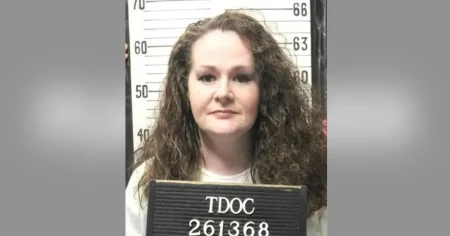
The case itself is grim. Tyler Robinson, 23, is accused of fatally shooting Charlie Kirk during a 2025 university event for the nonprofit Turning Point USA. Robinson has pleaded not guilty to seven counts, including aggravated murder and felony discharge of a firearm causing serious bodily injury. These are charges that carry life-altering consequences, and prosecutors have indicated they intend to seek the death penalty if Robinson is convicted of the murder charge. That reality adds a heavy layer of complexity to the proceedings, because capital cases are notoriously lengthy and require exhaustive preparation, especially when the stakes are literally life and death. Defense attorneys often need years to investigate, consult experts, and prepare for a trial that could end with their client being sentenced to die. Robinson’s team is likely to argue that the complexity of the case, the need for meticulous jury selection, and the importance of a fair trial justify the 2029 timeline. But Erika’s legal team counters that the prosecution’s readiness date of October 2027 already accounts for those concerns. In their view, the defense is not trying to ensure a fair trial; it is trying to delay the inevitable, perhaps hoping that memories will fade, evidence will weaken, or public attention will move elsewhere. The court must now weigh the defendant’s right to adequate representation against the victim’s family’s right to closure. It is an impossible balance, made more painful by the fact that both sides can claim legitimate interests. But for Erika, there is no balance. There is simply her husband’s absence and her children’s unanswered questions.
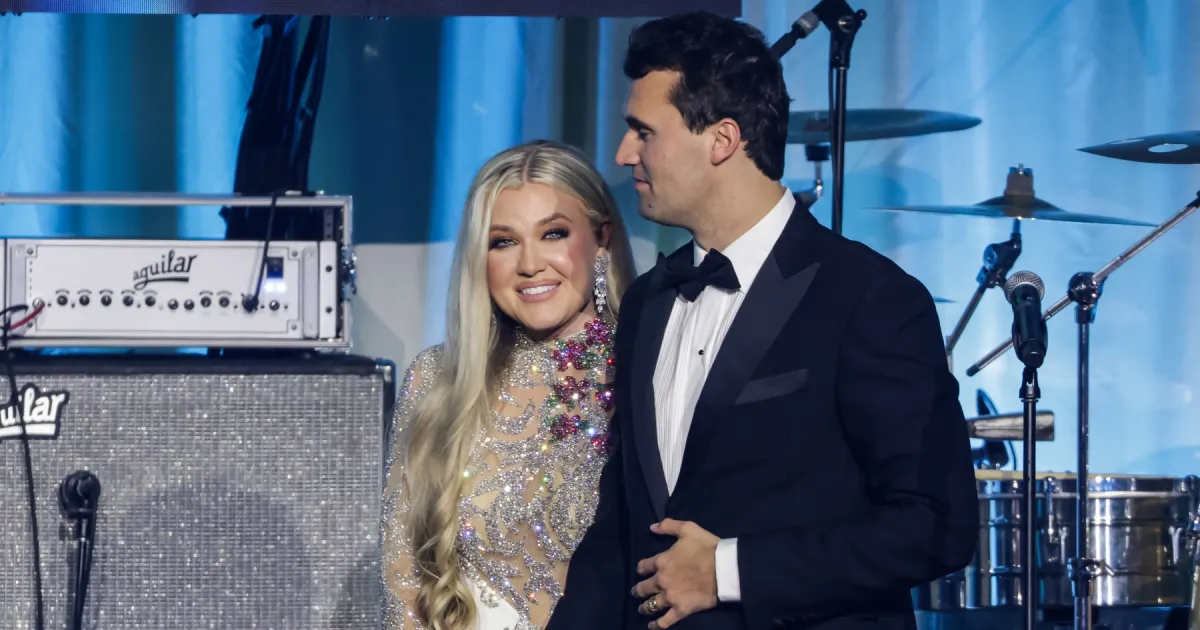
Yet amid the legal maneuvering and the fury over deadlines, the most striking part of Erika Kirk’s story is her capacity for grace. At Charlie’s memorial service in September 2025, Erika revealed that she has forgiven the man accused of killing her husband. “I forgive him because it is what Christ did,” she said, drawing a deep breath before delivering the kind of statement that most people could never imagine uttering after such a loss. “The answer to hate is not hate.” Those words hang over the entire case. Erika is not asking for vengeance; she is asking for resolution. She is not demanding that Tyler Robinson be denied his day in court; she is demanding that her family not be forced to wait for years on end while justice slowly grinds forward. Her faith has given her the strength to forgive, but it has not erased her grief. It has not made her immune to the pain of watching her children grow up fatherless. It has not stopped her from fighting for a trial date that will allow her family to move forward. In that sense, her legal challenge is not a contradiction of her forgiveness—it is an extension of it. She wants the truth to be spoken, the case to be decided, and the process to be completed, so that her family can finally begin to heal. She has already done the hardest thing a person can do: she has let go of hatred. Now she is asking the court to let go of unnecessary delay. Whether the judge will side with her urgency or the defense’s need for time remains to be seen. But one thing is certain: Erika Kirk’s voice, shaped by both anguish and mercy, will not be silenced.