



Paul Lucas was thirty-seven years old, newly married, and living in Dudley, a town in the West Midlands of England. He worked as a local government officer, and he had every reason to believe that the ordinary rhythms of his life—work, home, love, plans for the future—would continue undisturbed. Then, in 2022, he noticed something beneath his foreskin that he could not explain: a growth that looked like a small cauliflower. It was strange, but not immediately frightening. He told himself it was probably a fungal infection, the kind of thing that would clear up with the right cream or tablet, and he bought medication online rather than making an appointment. His body, however, refused to cooperate with that story. A discharge began, and it smelled like spoiled fish. Severe pain settled into his groin. His urine stream changed in a way he had never experienced before, becoming weak or erratic or somehow unfamiliar. His wife, Nicky, was not fooled by his hopeful self-diagnosis. She insisted that he see a doctor, and when he did, the doctor confirmed his worst fear: penile cancer. The word cancer hit him like a physical blow. He later said he was terrified by the word alone, and that he thought it was the end of him. He knew nothing about penile cancer at that point, and what he learned sounded horrendous, especially the possibility that treatment could mean losing part of his penis. At thirty-seven, newly married and still young, he could not imagine how he would survive that. The future he had been building with Nicky seemed to collapse in an instant. He was not just afraid of death; he was afraid of being mutilated, of becoming less of a man, of becoming a burden to the woman he loved.
In October 2022, Paul went into surgery believing that doctors would simply remove the head of his penis, because that was where the growth had been. He had braced himself for that outcome, painful as it was, and he thought he would wake up with his body mostly intact. Instead, he woke to a different reality. The catheter tube told him something was wrong. He suspected the truth before anyone said it aloud. Twenty-four hours after the operation, a doctor confirmed it: his entire penis had been removed, in a procedure called a penectomy. There was, he admitted, a strange relief in knowing that the source of his pain was gone; the cancer had caused him incredible amounts of pain and discomfort, and in that way, the surgery felt like an ending of suffering. But the emotional weight of it did not hit him fully until he was home. On his second night back, Nicky changed his bandage, and he finally allowed himself to look at what remained of his body. He hid his face under a pillow and cried. He told his wife she could leave him if she wished, without guilt, because she had a life to live and he felt useless, no longer a man in the way he had always understood himself. Nicky did not leave. She stayed. She helped wash his body, changed his dressings and catheter, and went with him to appointment after appointment. Paul said the operation did not destroy their marriage, but he struggled with a deep and persistent guilt. He believed he had ruined her sex life, that he had trapped her in a sexless relationship, and he could not see a way out or forward. He loved her too much to want her to suffer, but he could not imagine life without her either.
The surgery changed Paul’s daily life in ways he had never anticipated. His urethra had been rerouted, which meant he could no longer stand to urinate. He had to sit down, and public men’s toilets became a minefield of indignity. Many were filthy, he said. There was often no toilet paper. The stalls were few, the locks were broken, and he felt exposed and humiliated every time he needed to go out. He began to avoid leaving the house whenever possible. He also sought therapy, not because he thought it would fix his body, but because he needed help accepting his new reality. Little by little, he started to believe that life could still exist after loss. Then, in July 2023, he received the call that changed everything: he was cancer-free. He did not need further treatment after the surgery, and he considered himself lucky in an unlucky way. But his body was still radically different, and the future still felt uncertain. Doctors told him there were options for creating a new penis, but the idea seemed so far-fetched that he never really believed it would happen. Reconstruction sounded like a fairy tale, not something that happened to ordinary people who lived in the West Midlands. When his doctor explained the procedure, it sounded like something from Star Trek, almost too futuristic to be real. There was, however, one major obstacle. He needed to lose nearly one hundred pounds before he could undergo the operation. Paul got to work in early 2025. He was tired of living with regret before it even happened. In ten years, he told himself, he did not want to look back and think, what if? So he changed his habits, lost the weight, and prepared himself for the most ambitious medical journey of his life.
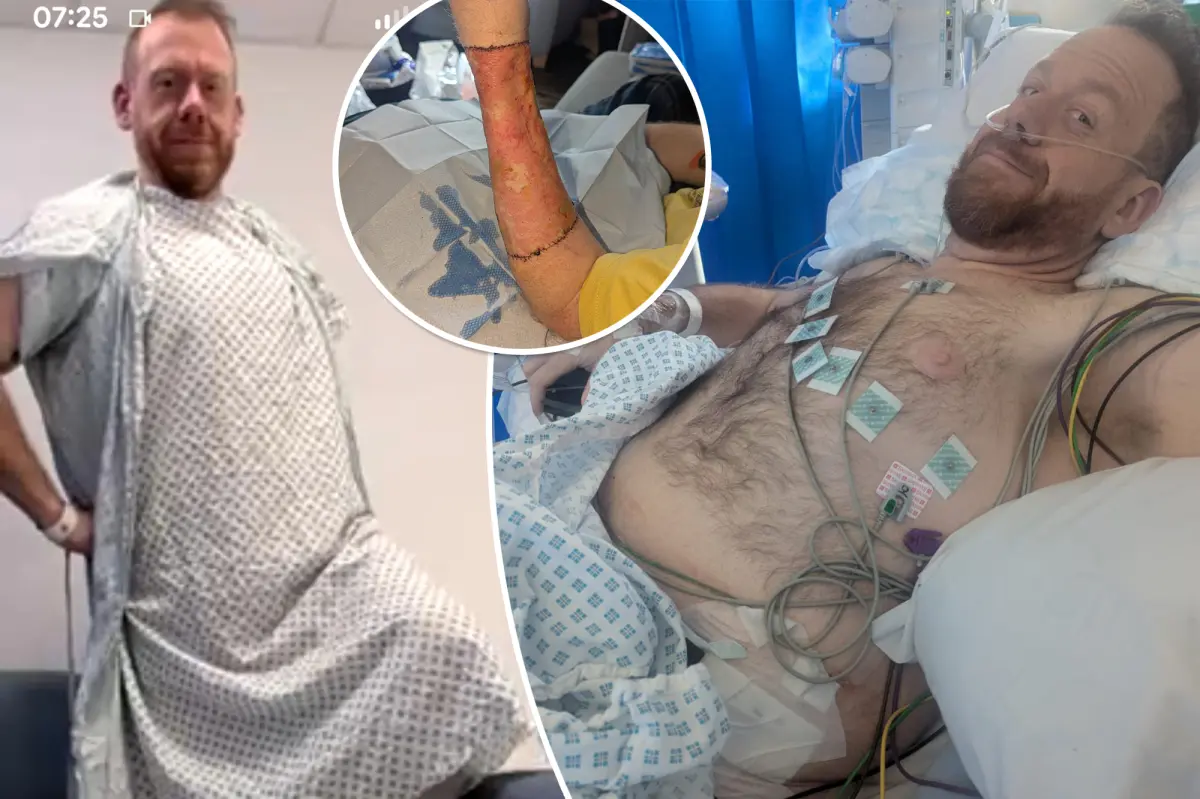
He chose a complex three-stage reconstruction, knowing it would not be easy but believing it was the only way he could feel whole again. The first stage was designed to create the new phallus and urethra. The second stage would create the glans and sculpt it so that it looked more realistic. The third stage would fit an inflatable erectile device. For his first operation, in March 2026, surgeons at University College Hospital used a technique called radial forearm flap phalloplasty. They took skin and tissue from his left forearm to build the new phallus, and they used another section of the same tissue to construct a new urethra, what Paul described as a tube within a tube. Over the course of nine hours, they also took nerves and an artery from his arm and connected them to the remaining nerves and blood vessels in his genital area. There was an unexpected bonus because Paul had lost so much weight: the excess skin from his stomach was used to reconstruct his forearm, which gave him what he jokingly called a bonus tummy tuck. The recovery, however, was long and nerve-racking. Nurses repeatedly checked on his new phallus, which had to be propped at a forty-five-degree angle for the first two weeks to make sure blood was flowing properly. He had a few minor setbacks, including small infections, but nothing that threatened the whole reconstruction. When he finally got to properly see and feel his new body, he found an unusual comparison: it looked like an anteater’s nose, he laughed, and it felt soft and warm to the touch. The reconstruction was not finished. He hoped his final surgery would take place in the spring or summer of 2027, but for the first time in years, he felt like he had a future he could look forward to. The road had been long, but it was leading somewhere.
Sensation was slowly returning to his new penis, and with it came strange and surprising feelings. Paul described experiencing zaps, almost like tiny electric shocks, in his groin and in different parts of the reconstructed tissue as nerves began to grow into their new home. It was not pleasure, at least not yet, but it was proof that his body was alive and reconnecting itself. He hoped that eventually he would regain full erotic sensation, although he knew it would take a few years. And remarkably, in the middle of all that uncertainty, Paul and Nicky had already had sex using his reconstructed penis. He was honest about the experience: his sensation had not returned, and complete erotic feeling was still far away, but it was an incredible and very emotional experience the first time they used his new penis to make love. It was not just physical. It was a declaration that their marriage was not broken, that intimacy could survive cancer and surgery and all the months of doubt. The act meant something far deeper than pleasure. It meant that Paul was still a husband, still a man, still capable of being loved and of loving in return. Nicky had stayed beside him through the worst of it, and now they were rebuilding their life together, one small step at a time. He no longer felt like a spectator in his own body. He finally felt happy in his body again, he said, and attractive for Nicky. For years he had looked at himself and seen only what was missing. Now he could look at himself and see what was possible. The reconstruction had given him more than a new organ; it had given him back his sense of presence in his own life.
Perhaps the biggest change was not in Paul’s body but in the way he understood himself. He had once believed that losing his penis meant losing his identity as a man. At first, he said, a total penectomy seemed like the end of the world. But eventually it made him more considerate, more empathetic, and closer to his wife. He learned that a man is more than what is between his legs. He learned that his wife loved him for who he was, not just for what his body could do. Now he has a message for other men facing penile cancer, a disease that affects nearly 2,300 men each year, according to the American Cancer Society. He would tell his past self not to doubt himself. He would say that a man is more than what is between his legs, that your wife loves you for you, and that it is not just about sex. He would want them to know that although the experience has been awful, it is possible to come out the other side changed for the better. Paul believes he is a better person now. His relationship with Nicky has never been stronger. He has been through something unspeakably difficult, but he has also discovered a depth of love and resilience he did not know he had. He is not the same man he was before the cancer. In many ways, he is glad. The cancer took part of his body, but it could not take his marriage, his courage, or his capacity to grow. Instead, it taught him what truly matters, and it gave him a story of survival that he now hopes will help other men find their own way through the dark.