


Paragraph 1 – A Life Cut Short and the Cookie That Changed Everything
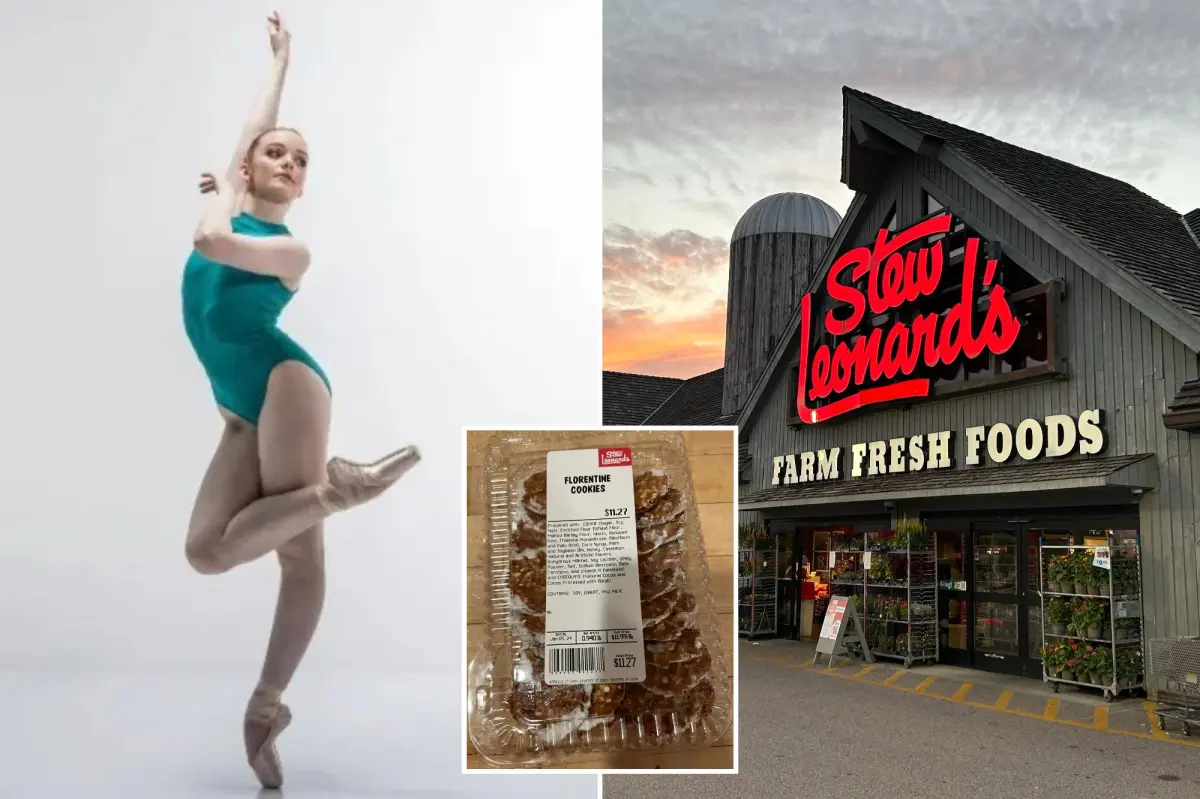
Orla Baxendale was the kind of young woman whose presence seemed to promise a future full of light and movement. At just twenty-five years old, she had already traveled far from her childhood home in Manchester, England, to chase a dream that most people only dare to whisper. In 2018, she moved to New York City on a scholarship to study at The Ailey School, one of the most prestigious training grounds for dancers in the world. She threw herself into the demanding life of a professional performer, working with choreographers, appearing in productions at Lincoln Center, and dancing at New York Fashion Week. Her family, friends, and colleagues saw someone who was not only gifted but fiercely dedicated, someone who had the kind of discipline and passion that could carry her to the top of her art. But on a cold January evening in 2024, that future was abruptly and heartbreakingly erased. Orla attended a social gathering in Connecticut, where she ate a vanilla Florentine cookie from a box bearing the Stew Leonard’s brand name. The cookie looked innocent enough, a sweet treat among many. But it contained peanuts, and Orla had a severe, life-threatening allergy to peanuts. The packaging did not list peanuts as an ingredient. Within moments, her body began to shut down in anaphylactic shock. Someone used an EpiPen in a desperate attempt to save her, but as her family’s attorney later explained, the severity of her allergy made the emergency injection ineffective. Orla Baxendale died that night, not because she had been careless, but because a simple label had failed her. Her death would not only break the hearts of everyone who loved her; it would also expose a chain of responsibility, a tangle of corporate communications, and a legal system that sometimes shields individuals from personal liability in ways that feel profoundly unsatisfying to those left behind.
Paragraph 2 – The Court’s Ruling: Individual Employees Are Protected, but the Companies Must Answer
In the aftermath of Orla’s death, her family and estate filed a sweeping wrongful death lawsuit, seeking accountability not just from the companies that made and sold the cookie, but from the people who ran them. The lawsuit named Stew Leonard’s, the famous dairy and grocery chain, as well as Cookies United, the Long Island-based wholesaler that actually manufactured the cookie. It also named individual employees and executives, including CEO Stew Leonard Jr. himself. The family’s argument was straightforward: someone in that chain had to know that the recipe had changed, that peanuts had been introduced into a product that was previously safe, and that the label had not been updated. Someone had to be responsible for the emails that were allegedly sent, for the warnings that were allegedly ignored, and for the systems that failed to catch a deadly error. But on October 15, Waterbury Superior Court Judge Kimberly Massicotte issued a ruling that dramatically narrowed the case. Under the Connecticut Product Liability Act, or CPLA, the judge found that Stew Leonard Jr. and other grocery employees could not be personally sued for wrongful death arising from the product. The statute, which is designed to streamline product liability claims against manufacturers and sellers, generally protects individual officers and employees from being named as defendants in their personal capacity when the claim stems from a product’s design, manufacture, or labeling. It is a legal doctrine that treats the company, not the person, as the responsible party, even when the person was the one who allegedly made the decision or failed to act. The judge’s ruling did not, however, erase the case entirely. The product liability claims will still proceed against Stew Leonard’s Holdings LLC, Stew Leonard’s Danbury LLC, and Cookies United. The companies themselves remain in the fight. But for Orla’s family, the dismissal of the individual defendants felt like another insult layered onto an already unbearable loss. They had wanted to look the CEO in the eye and force him to answer personally for what had happened to their daughter. Now, under the law, they would have to settle for holding the corporation accountable instead.
Paragraph 3 – The Backstory: A Recipe Change, a Missed Email, and a Deadly Silence
The tragedy did not happen in a vacuum, and the facts that emerged after Orla’s death painted a complicated and troubling picture. The cookie in question was a vanilla Florentine, a delicate, lace-like confection that had been sold under the Stew Leonard’s private label. At some point, the recipe changed. Cookies United, the wholesale manufacturer, said that it had swapped out soy nuts for peanuts and that it had notified Stew Leonard’s of this change in July 2023, months before Orla ever took a bite. According to reports from Allergic Living, the manufacturer claimed to have emailed several employees at the grocery chain, including some who were later named in the lawsuit, to inform them that peanuts had been added. The problem, the family alleged, was that those emails were never acted upon. No one updated the label. No one flagged the danger. No one paused to consider what a new ingredient might mean for customers with severe allergies. Stew Leonard’s, for its part, pushed back with a very different story. The company maintained that Cookies United had made the ingredient swap without properly alerting the chain’s chief safety officer, suggesting that the responsibility lay with the manufacturer, not the grocer. It was a classic legal finger-pointing exercise, with each side insisting that the other had dropped the ball in a way that proved fatal. From the outside, the most striking thing was how preventable the whole tragedy seemed. If a single email had been read and acted upon, if a single label had been printed with the word “peanuts,” Orla might still be alive today. Instead, a young dancer with a brilliant future was gone, and the only thing left was a legal battle over who should pay for the mistake. The judge’s ruling did not settle that underlying question, but it did determine who could be sued. For the employees and executives who had been named in the original complaint, it meant a measure of personal relief from the lawsuit. For the family, it meant that the battle would be fought against faceless corporate entities rather than the individual human beings who had allegedly received those warnings and done nothing.
Paragraph 4 – The Legal Fight Continues: Attorneys Push Back Against Procedural Delays
The road to accountability has been anything but smooth. The case has already seen multiple rounds of motions, amendments, and procedural battles, and the frustration is evident in the words of Orla’s estate attorney, Howard Hershenhorn. When the judge first dismissed the claims against individual executives and employees in September, Hershenhorn and his team did not simply accept the loss. They amended the lawsuit, again naming Stew Leonard Jr. and other employees, but this time framing the claims under the Connecticut Product Liability Act, the very statute that had just been used to dismiss the previous version. It was a strategic move, an attempt to find a legal path around the obstacles in their way. But the judge would not budge. The October ruling made clear that the CPLA shields individual employees from personal liability in this kind of case, and that the claims against those individuals could not survive, no matter how they were pleaded. Yet Hershenhorn made it equally clear that the fight was not over. He accused Stew Leonard’s of doing “nothing to progress the case forward except for obfuscate and attempt every potential procedural maneuver.” His language was sharp, almost confrontational, reflecting the deep emotional stakes of the case. “We’re having none of it,” he told Allergic Living, “and we’re right back in their face at every point to make sure this never happens again.” He also zeroed in on what he saw as the root cause of the tragedy: a systemic failure at the grocery chain. According to Hershenhorn, Stew Leonard’s did not have any systems in place to guarantee that the ingredients inside a product were accurately listed on the label. There were no fail-safes, no double-checks, no verification process that could have caught the discrepancy between what was in the cookie and what was printed on the box. In his view, this was not a simple accident or a one-time oversight; it was a reckless disregard for the safety of customers with food allergies, and it was only a matter of time before someone got hurt. The legal process may have forced the family to redirect their claims away from individual employees, but it did not dampen their determination to hold the company accountable in the most forceful way possible.
Paragraph 5 – A Wider Reckoning: Other Customers, a State Settlement, and the Need for Change
Orla’s story resonated far beyond the courtroom. When the news of her death broke nationally, it struck a chord with anyone who has ever had to read a food label with fear, anyone who has ever had to ask a restaurant whether a dish contains nuts, anyone who has ever lived with the knowledge that a single bite could be fatal. The response to the tragedy was immediate, and it did not stop at sympathy. Hershenhorn revealed that other Stew Leonard’s customers had contacted his firm after hearing about Orla’s death, sharing their own stories of labeling problems they claimed to have experienced at the grocery store. These reports painted a troubling pattern, suggesting that the failure that killed Orla may not have been an isolated incident. For the family’s attorney, that was both a validation of their concerns and a sobering reminder that the problem was bigger than one cookie. The legal and regulatory consequences also began to mount. As part of a settlement with the state, Stew Leonard’s paid $50,000 to Connecticut’s Department of Consumer Protection and donated an additional $200,000 to a nonprofit focused on food allergy research and anaphylaxis awareness. The money was a step, but it could not bring Orla back, and it could not erase the grief of a family on the other side of the Atlantic. The donations and fines were, in many ways, a symbol of a system trying to make amends, but they also raised an uncomfortable question: how much is a life worth? Orla was not a statistic, not a legal claim, not a line item in a settlement. She was a daughter, a sister, a friend, a dancer whose body had been her instrument and whose passion had been her fuel. The financial penalties might satisfy regulators and appease public outrage, but they could never restore what was lost. What they could do, perhaps, was force the grocery industry to take a hard look at its own practices, to invest in better systems, to train employees more thoroughly, and to treat the labeling of allergens as a matter of life and death rather than a bureaucratic afterthought.
Paragraph 6 – Looking Toward Trial: Orla’s Legacy and the Search for Justice
The case is not over. It is scheduled to go to trial in Waterbury Superior Court in May 2027, more than three years after the day Orla ate that cookie. The long timeline is typical of complex product liability litigation, but for the family, it means years of waiting, years of reliving the details of their daughter’s death, years of wondering whether the justice system will finally deliver the accountability they have been seeking. The claims against the individual executives and employees have been dismissed, but the case against the companies remains very much alive. Stew Leonard’s Holdings LLC, Stew Leonard’s Danbury LLC, and Cookies United will all have to answer for their roles in the tragedy. The trial will be an opportunity to put the facts before a jury, to let witnesses testify about the emails, the recipe changes, the labeling failures, and the internal processes that allowed a deadly ingredient to slip through undetected. It will also be a chance for Orla’s family to confront the institutions they believe let her down, even if they cannot confront the individuals who stood in their place. In the end, this story is not just about legal doctrines and corporate liability. It is about a young woman whose life was filled with promise and whose death was completely preventable. It is about the thousands of people with food allergies who navigate a world that is often indifferent to their needs, who trust that the words on a package are true, and who sometimes pay the ultimate price when that trust is betrayed. Orla Baxendale’s name may become attached to a court case, but her real legacy should be a safer food system, one where a label is never a guess, where an email about a dangerous ingredient is never ignored, and where a dancer with a bright future does not have to die because someone forgot to ask whether the recipe had changed. That would be the most fitting memorial of all.