


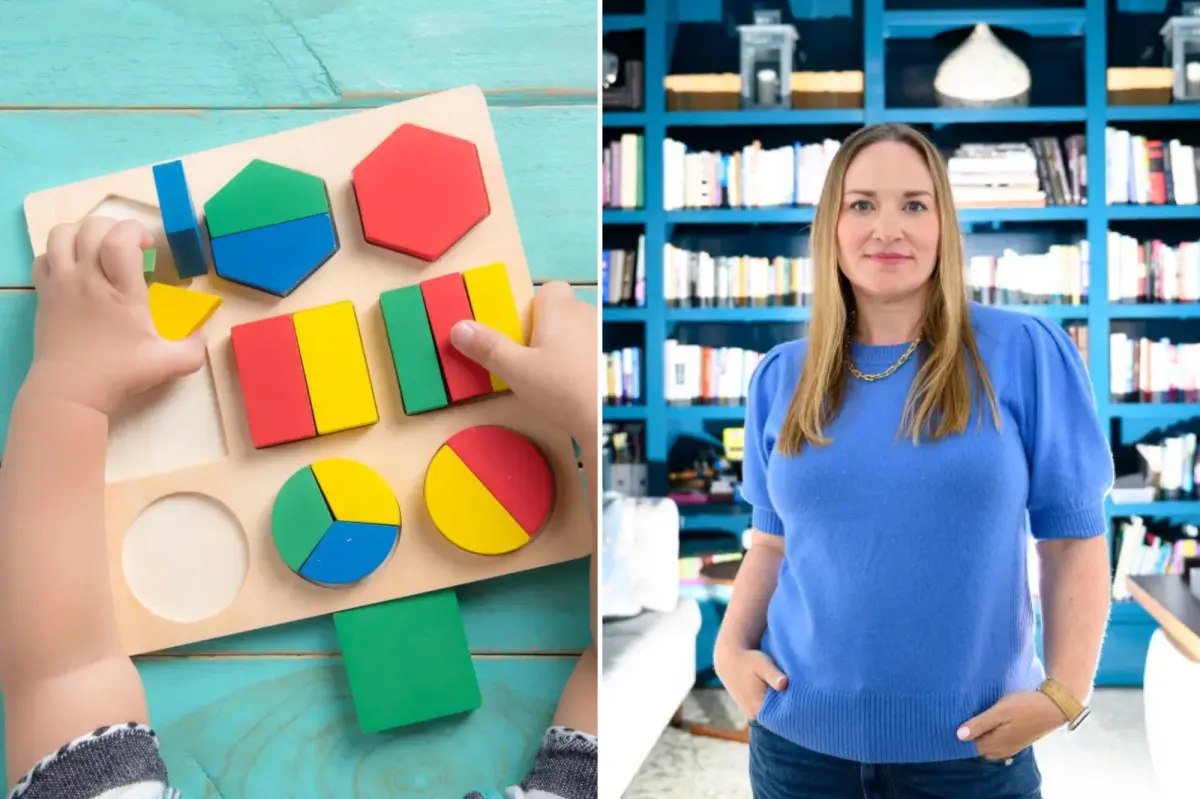
Jessica lives in California’s Bay Area, one of the most expensive places in America, and she has six children ranging in age from 6 to 19. She has a nanny who works Saturdays, gives that nanny access to her Amazon account, and jokes that her older kids are “test pancakes” — the first children she learned on before she figured out what she was doing. It would be easy to roll your eyes at her. But the thing she says has gotten the most criticism isn’t the nanny or the family joke. It’s that she has had each of her six kids undergo a nine-hour, $8,000 neuropsychological evaluation, which she calls “recreational.” That word is strange but also revealing: recreational suggests something you do for fun, or at least voluntarily, not because you have to. For her, the evaluations are exactly that. She is not responding to a crisis. She is trying to understand her children the way a data scientist understands a complicated system. “I am a total data person,” she says. “I want to know how each kid’s brain works, what are their strengths, what are their weaknesses.” Imagine being able to buy a detailed map of your child’s mind — how they process language, how they handle frustration, how they learn best, what their hidden struggles are. That is what Jessica did, six times, at tens of thousands of dollars. To her, it is not showing off or hovering. It is a gift she can give her children and herself. And in a world where parenting so often feels like guesswork, the idea of having real answers can be intoxicating. But it also raises uncomfortable questions about privilege, anxiety, and what we owe our children beyond what we can buy them.
Neuropsychological evaluations were never meant to be a luxury item. For decades, they were reserved for children who were truly struggling — kids who couldn’t read, who were failing school, who were having violent outbursts, who showed clear signs of autism, ADHD, or serious learning disabilities. The point was to figure out what was wrong and how to help. Today, however, well-off parents are increasingly requesting these evaluations for children who are doing okay, or even doing well. They want extra time on standardized tests, including private school admissions exams in places like New York City. Or they want a better understanding of how their child thinks. The cost is steep: usually between $5,000 and $10,000, spread over multiple days of testing. The process involves watching kids solve puzzles, work with blocks, read, do math, answer questions, and try to focus. Parents and teachers fill out long questionnaires. It is an exhaustive peek into a child’s cognitive and emotional life. And it’s happening against a backdrop of rapidly rising diagnoses of ADHD and autism. According to CDC surveys, fewer than 6 percent of children aged 3 to 17 had an ADHD diagnosis in 1997. By 2024, that number had more than doubled. Autism was identified in 1 in 150 children in 2000; by 2022, it was 1 in 31. Some of that increase is because of better awareness, better screening, and broader diagnostic criteria. But it has also created a culture where parents look at normal childhood behavior — the lost homework, the tantrums, the spaciness — and wonder whether it is actually a disorder. When a child is disorganized, people now say “executive dysfunction.” When a child is socially awkward, people wonder about autism. The result is that a tool once meant for severe problems is becoming a routine part of affluent parenting, a kind of cognitive wellness checkup that promises to give your child an edge.
For Jessica, the evaluations produced real, concrete insights that changed how she parents. One of her children, she learned, is an auditory learner but a verbal processor. That sounds like jargon, but it mattered in practice. When that child repeated everything back to her, she used to find it annoying. Now she understands that repetition is how he absorbs information. “So it wasn’t just that he was repeating everything back to me, it’s how he learned,” she says. Another child was discovered to have facial blindness, or prosopagnosia, which means she cannot read emotions on people’s faces. That is a difficult condition to live with, especially for a child navigating friendships and school. Jessica says, “We now know she needs us to say how we are feeling, and not just make a face and assume she can read that.” For two of her children, the evaluations uncovered dyslexia. One was diagnosed with ADHD. All three now get extra time on tests. That accommodation can make an enormous difference: it doesn’t make the test easier, but it makes it more fair. It gives a child with a reading disability the chance to show what they know without being punished for how slowly they read. Jessica also says her older kids are “test pancakes” because she learned from them, and by the time her youngest children are the same age, she knows what to look for. There is something honest in that metaphor. She is not pretending to be a perfect parent or that she has all the answers. She is saying that knowledge is power, especially when it comes to the messy, beautiful, frustrating business of raising a child. It is hard to argue with that. But it also raises the question: should this kind of understanding be available only to families who can pay thousands of dollars for it?
Katie Davis, a clinical neuropsychologist based in New York City, is one of the loudest voices warning against the trend. She has spent years doing these evaluations, and she has watched them change. A decade ago, she says, she saw a child who didn’t seem to need an evaluation about once a month. Now, roughly 40 percent of the children she tests are “neurodevelopmentally completely normal.” She is blunt about what has happened: “The whole concept has been twisted and bastardized.” Davis has just published a book called “Actually, You’re Fine,” which is focused on over-diagnosis of children. She says more and more parents come to her looking for special provisions, particularly extra time on exams, including the tests used for private school admissions in New York City. “It is these middle- and upper-class families who are paying a ton of money for private evaluations, thinking the services will buoy their kids to the top of the pack,” she says. Sometimes parents are angry when she does not give them the diagnosis they were hoping for. But Davis has a strict standard. “I have a very strict bar for recommending disability services and disability accommodations, and my bar is consistent with the legal requirements,” she explains. She believes that even when an evaluation does not uncover a disability, it can still provide useful information about a child’s learning style or emotional patterns. But she is worried about what happens when ordinary human variation becomes a medical condition. “It is very common for parents to come in and say, ‘My kid is so disorganized, my kid is so dysregulated,’” she says. The real question is whether that child has ADHD or is just a high schooler who thinks AP chemistry is really hard. “Not every kid is an A-student in every class, and not every kid is an A-student at every school,” she says. “It doesn’t mean the kid is neurodivergent.” That may be the hardest thing for parents to hear: sometimes your child is fine, and fine is okay.
Dr. Sanam Hafeez, clinical director and CEO of Comprehend The Mind, a medical group in Queens that conducts neuropsychological assessments, sees the trend from a different angle. She has noticed a significant increase in parents who come in on their own, not because a doctor sent them, but because they saw something on social media or heard about it from a friend. “I think people see this on social media, and they say, ‘I want it too,’” she says. Yet unlike Davis, she does not believe the practice is inherently wrong. She compares a neuropsych eval to an annual physical. “We get our blood work done every year, but we don’t look at what is inside the brain,” she says. There is something appealing about that idea: getting a complete picture of your child’s mind, not because something is broken, but because you want to understand what you are working with. “Figuring out their learning style, what they are susceptible to, it’s a good idea,” she adds. Hafeez is not dismissing the concerns about over-diagnosis, but she sees the demand as a reflection of our times. Parents are anxious, overloaded, and desperate to do the right thing. A neuropsychological evaluation feels like a way to be proactive rather than reactive. It takes the guesswork out of parenting and replaces it with data. That is exactly what makes it seductive. But Davis would caution that data can also become a way to avoid accepting the messiness of life. Parents often come in convinced that their child has a serious problem because they cannot tolerate the idea that their child is struggling, or failing, or just average. But struggling is part of growing. Not every difficulty is a disorder. Sometimes a child is disorganized because they are overwhelmed. Sometimes a child is anxious because they are being pushed too hard. Sometimes a child is not an A-student because school is hard, and life is hard, and no amount of testing will change that. A diagnosis should not be a shortcut around pain. It should be a door to help, not a label to wear.
For parents whose children have genuine learning disabilities, the growing popularity of these evaluations can feel like a mockery. One mother of two sons with diagnosed learning disabilities said it plainly: “It’s not a badge of honor. It’s not like having the best tutors or schools. It’s a serious tool for kids who actually have problems.” That anger is understandable. When a child is truly struggling, an evaluation is not a luxury; it is a lifeline. It is what allows them to get services, accommodations, and understanding. Seeing wealthy parents treat that process as a form of brain spa, or use it to gain an edge on a test, can feel insulting. It also creates a practical problem: if private evaluations become standard for affluent kids, schools may be flooded with accommodation requests. Teachers may become skeptical. Children who genuinely need help may have to wait even longer. Jessica, however, has no regrets. She did the evaluations for all six of her children, and she would do it again. “It’s really a gift we can give our children and ourselves,” she says. In many ways, she is right. There is nothing wrong with wanting to understand the people you love. The problem is that we have built a system where that understanding is for sale, and only some families can buy it. If we truly cared about children’s brains, we would not leave it to wealthy parents to pay $8,000 for answers. We would make support available to everyone, in every school, for every child who needs it. We would also protect the meaning of a diagnosis. We would remember that a diagnosis is not a trophy, not a status symbol, and not a way to guarantee success. It is a way to help. And the most human thing we can do is to look at a child and say: you don’t have to be a puzzle to be loved. But in a competitive, frightening world, it is hard to resist a detailed map of the mind. That is why Jessica’s choice is so complicated, so understandable, and so troubling all at once.