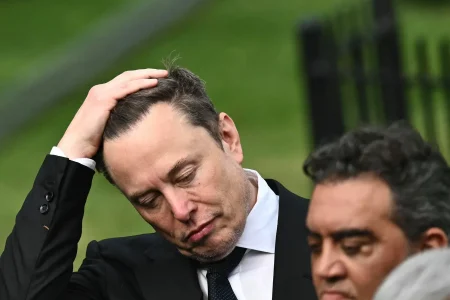


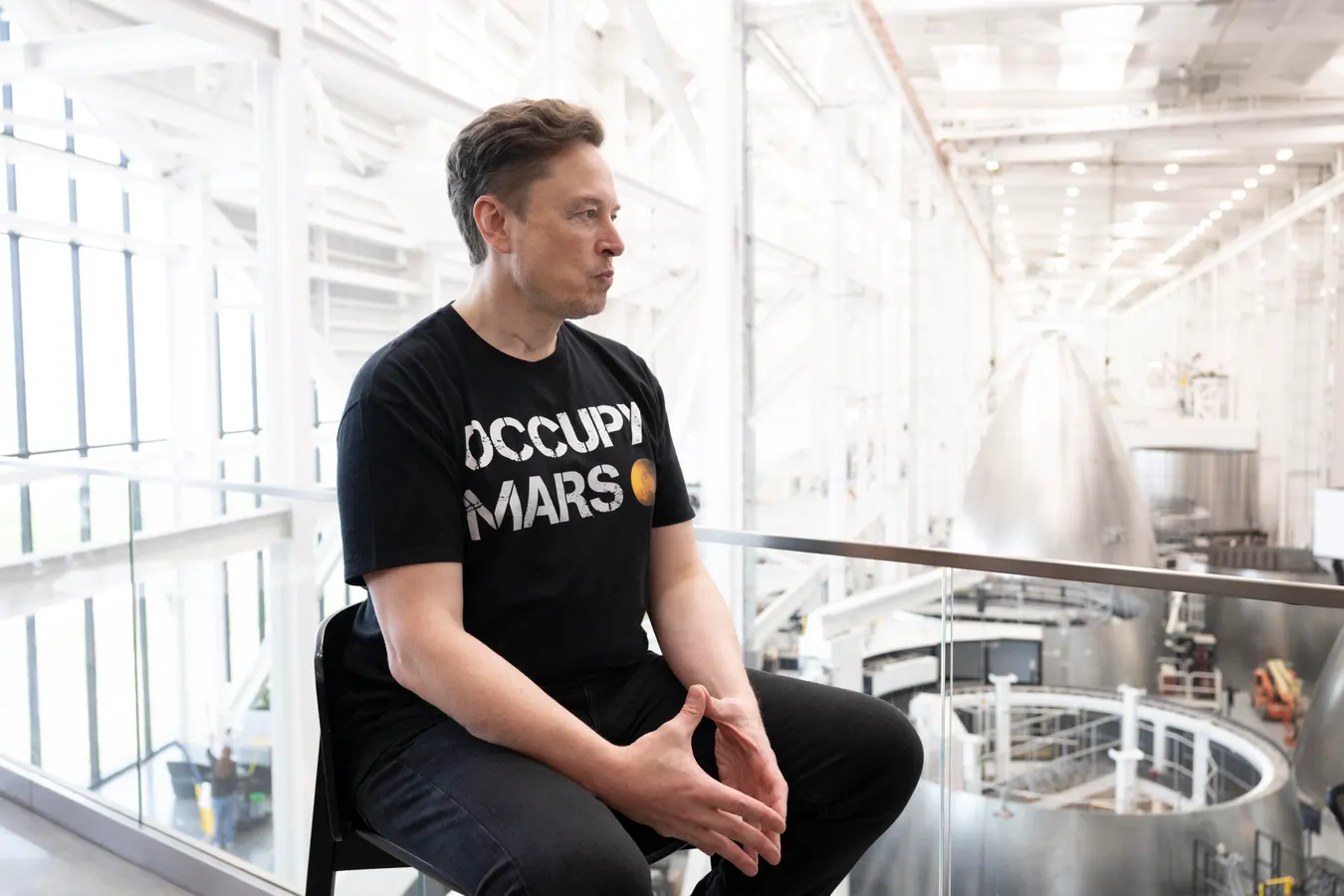
It starts with a number that feels impossible to wrap your head around: 72 million. That is roughly the number of children living in America today, and Elon Musk—the first person in history to be called a trillionaire—announced on a Monday morning that he plans to give one of his SpaceX shares to each of them sometime next year. If that actually happens, it would be a gift worth somewhere in the neighborhood of $10.5 billion, based on the company’s closing stock price on Friday. For most human beings, ten billion dollars is more money than we can even picture. It could fund schools, hospitals, clean water, housing, and hope for generations. But for Musk, whose estimated net worth has fluctuated between a mind-bending $909 billion and the trillion-dollar mark, it is a drop in the ocean. It is less than one percent of what he owns. It is, as even his most cynical observers would admit, a spectacularly generous gesture—if it were real. But the problem is that with Musk, the gap between grand announcements and actual results has grown into an almost predictable canyon. The world has watched him promise, tweet, pledge, and declare, only to see the follow-through vanish into a fog of legal fine print, shifting timelines, and quiet silence. So the first question is not whether this latest pledge sounds wonderful. It always does. The question is whether he will actually do it.
To understand why people are skeptical, you have to look at the long, frustrating history of Musk’s giving. In 2012, he signed the Giving Pledge, a public promise by the wealthiest people in the world to give away at least half of their fortunes before they die. It was a noble, dramatic commitment, and it made headlines around the world. But in the years since, the actual amount of money that has left Musk’s hands and reached people in need is staggeringly small. Forbes estimates that Musk has given away roughly $500 million since he created his first charitable foundation in 2002. That sounds like a lot, until you realize that it is just 0.05 percent of his current fortune. By comparison, he has spent more than $650 million on political contributions in just the last two election cycles—$290 million primarily supporting Donald Trump in 2024, and another $366 million backing Republicans in the upcoming midterms. In other words, Musk has given more to politics than to the poor, the sick, and the hungry, combined, over more than two decades. He has transferred about $8 billion of Tesla stock into his own charitable foundations, which sounds like progress. But nearly all of that money is still sitting there, idle, in accounts controlled by his own organizations. It has not been spent on anything. It has not built a school, cured a disease, or fed a child. It is just parked, waiting, and the only thing it has reliably done is raise questions about whether the entire exercise is more about image and taxes than about actual generosity.
Then there is the pattern of broken promises. In 2021, Musk tweeted that he would give $6 billion to the United Nations World Food Program—enough to end world hunger, according to the organization—if it could show him a plan for how the money would be used. The WFP did exactly that. They presented a transparent, detailed proposal explaining how the funds would save millions of lives. Musk never gave the money. There was no dramatic explanation, no apology, no follow-up. Just silence. Around the same time, he made another big promise: he would fund repairs to water systems in Flint, Michigan, for any home where contamination levels exceeded federal safety standards. Flint was, and still is, a community that suffered through a man-made water crisis that poisoned children. People there were desperate for help. Musk ended up giving $500,000 for water filters in schools—a meaningful amount for a school district, but nowhere near the comprehensive fix he had promised, and not to the families waiting for their pipes to be replaced. You can almost hear the exhaustion in the voices of people who have watched this cycle repeat itself: the grand announcement, the applause, the headlines, and then nothing. It is easy to be generous with words. It is much harder to actually write the checks, especially when the check is large enough to make a real difference in the lives of millions.
What does the money that Musk has given away actually go toward? In recent years, the Musk Foundation has distributed about $1 billion according to its most recent tax returns. But a closer look shows how much of that was not true giving. Around $592 million was funneled to another Musk nonprofit called the X Foundation, which is supposed to eventually operate an independent, STEM-focused primary school, secondary school, and university. As of its latest tax filing, the X Foundation had spent only $879,000 on that mission. That’s less than one percent of what it received. Another $96 million went into something called donor advised funds, which are essentially charitable bank accounts that allow the donor to claim a deduction now and decide later who actually gets the money. There are no disclosure requirements, no deadlines, no obligation to ever give it out. So when people ask where Musk’s philanthropy really goes, the answer is complicated: a large portion of it goes to other Musk entities, and then sits there. It may satisfy the IRS’s requirement that private foundations distribute five percent of their assets each year, but it does not satisfy the moral obligation that comes with being the richest person on Earth. Forbes tries to count only the money that can actually be confirmed to have reached its final charitable recipients, and by that standard, Musk’s lifetime giving is shockingly small. The real gifts that have made it out into the world include $108 million to the X Prize Foundation and $55 million to St. Jude Children’s Research Hospital, which are genuinely good causes. But compared to the scale of his wealth, and the scale of his promises, they are tiny.
It is hard to ignore the possibility that Musk’s philanthropy is driven, at least in part, by practical benefits rather than pure altruism. Timing tells the story. In 2021 and 2022, Musk donated about $7.9 billion worth of Tesla stock to his Musk Foundation—exactly the same years he was selling tens of billions of dollars in Tesla shares to fund his Twitter acquisition and cover the cost of expiring stock options. Donating appreciated stock to a private foundation allows a taxpayer to offset up to 20 percent of their adjusted gross income, which can produce enormous tax savings. In the nineteen years before that, he had sold only about $617 million of Tesla stock and donated only $264 million to the foundation. The correlation is hard to call a coincidence. There is also the matter of reputation. Musk made his latest announcement at a time when the political pressure was rising, with midterm elections just weeks away and his own allies looking for a reason to celebrate him. It also came shortly after another major AI company announced it would place five percent of its stock into a public benefit fund, and after SpaceX President Gwynne Shotwell and her husband pledged two million SpaceX shares to what have been described as “Trump Accounts”—a gift worth nearly $300 million. In that context, Musk’s promise of one share to every American child looks less like a spontaneous act of generosity and more like a way to stay in the spotlight, to make sure he is seen as the most bold and visionary giver in the room, to capture the imagination of the public just when he needs it most.
If Musk keeps his word this time, his lifetime charitable giving would increase roughly twentyfold overnight. It would be the largest single gift he has ever made, and one of the largest in American history. But even then, he would still have given away only about one percent of his net worth. That is a remarkable number to hold in your head: the richest person in the world, the man who signed the Giving Pledge, the man who promises to give a share of space to every child in America, would finish the year having given away one cent for every dollar he owns. And even that would put him in the middle of the pack among the four hundred richest Americans. The people who have given away significant portions of their wealth—Warren Buffett, Bill Gates, MacKenzie Scott—have done so with a consistency and sacrifice that Musk has not come close to matching. Scott, for example, has given away billions of dollars with no strings attached, quickly, quietly, and often without even naming the organizations receiving the gifts. Musk has chosen a different path. He has built a foundation that mostly holds his own stock, transferred money back and forth between his own nonprofits, made promises that evaporate, and used the language of charity to enhance his image. Perhaps this time will be different. Perhaps the shares will actually land in the hands of seventy-two million children, and perhaps those children will grow up with a wealth they never expected. But the sad truth is that the people who need his help the most have learned to wait, and to doubt. They have heard the big numbers before. They have seen the headlines and the hashtags. What they have not seen, yet, is the money. And until they do, the promise remains just another sound in a long string of echoes—hope, but not help.