



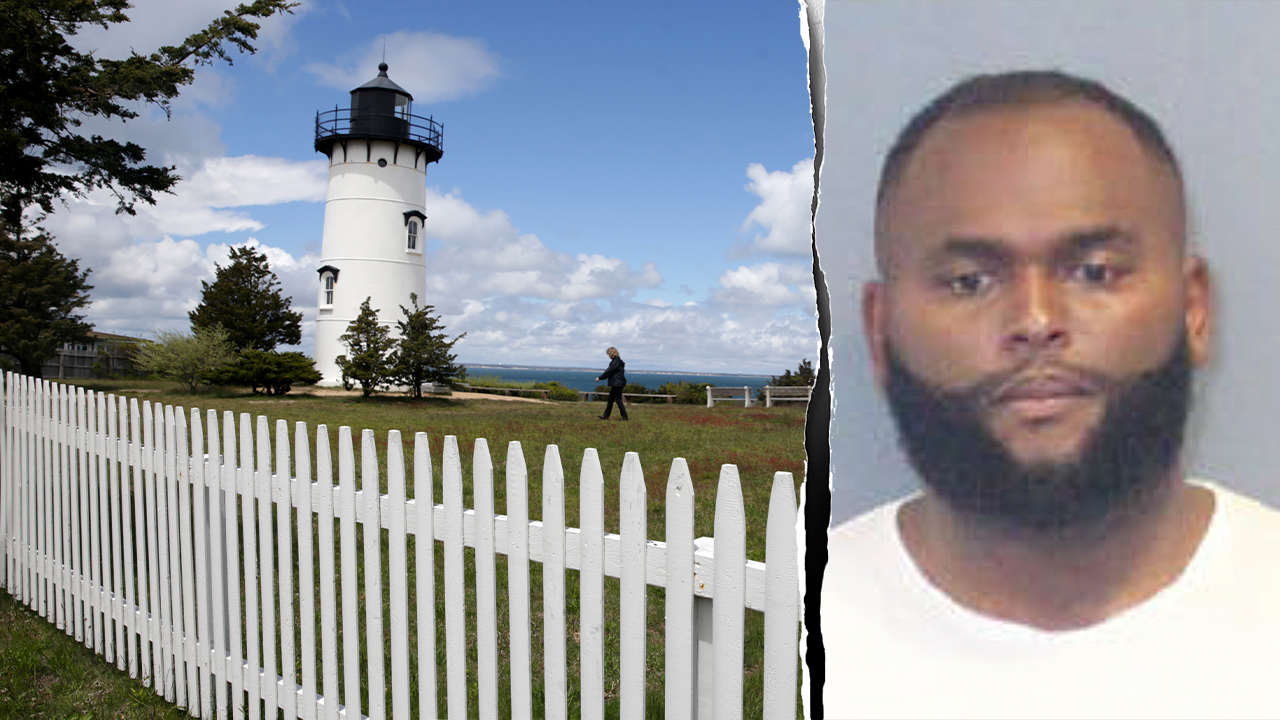
On a warm August night on Martha’s Vineyard, the salt air usually carries a feeling of safety, relaxation and escape. But at around 1 a.m., that quiet was broken by two frantic 911 calls reporting a naked woman in distress on the road outside the Massachusetts State Police barracks. When officers arrived, they found a young visitor from Ireland dazed, bruised and terrified. She told them she had gone to a bar called The Ritz in Oak Bluffs, an upscale waterfront community known for its beauty and as the place where former President Barack Obama owns a home. She had been approached by a man, and after that her memory went dark. She woke face down and naked, she said, inside the state police barracks, with a man holding her down while she kicked and screamed. When she asked for water and he stepped away, she ran for her life—down two flights of stairs, out of the building and along the roadside until someone finally stopped to help. Police noticed bruises on her legs and a red mark on her neck. Days later, the man accused of that attack was identified as Edward Brown, a 27-year-old security official at an elite Boston school. Brown pleaded not guilty, but the charge alone sent shockwaves through the island and far beyond. He had been staying at the barracks as a guest of his college friend, Trooper Ryan Costello, who was stationed on the Vineyard for the summer. For a woman who had crossed the ocean expecting charm and adventure, the island had become the setting of a nightmare that she would carry home to Ireland.
At Brown’s arraignment, Assistant District Attorney Courtney Scalice presented a graphic and painful account. The victim told investigators that she had been followed around The Ritz by a Black man in a white hat. She had no clear memory of how she ended up at the state police barracks, but the pieces of the puzzle began to come together. A bouncer at The Ritz remembered Brown, although he did not know his name. He knew only that Brown was friendly with state troopers, and he had a photo. On Aug. 29, Oak Bluffs police sent that photo to Trooper Ryan Costello, who identified the man as Brown and said they had been friends since college. But it was not until Sept. 11 that Costello’s attorney turned over screenshots of text messages between the trooper and Brown. According to prosecutors, those messages had never been provided to law enforcement before that date. They were, to put it mildly, revealing. Brown allegedly gave shifting accounts of the night: first he said he never brought a woman to the barracks; then he said she came inside but left on her own; then he claimed he left her in an Uber and she never entered the building. In another message, he allegedly wrote to Costello, “I’m at the barracks with this chick, is that okay?” Costello, who was not there at the time, replied “okay.” Brown then asked where to find condoms and added, “Beers after I slam.” The casual cruelty of those words, written while the alleged victim was unconscious or barely conscious, made the case feel all the more chilling.
The investigation did not stop at text messages. Police obtained a search warrant for Brown’s Uber account and found a ride that matched the timeline: a trip that took place about half an hour before the 911 calls. The Uber driver told investigators that he had picked up a Black male matching Brown’s description and a very young-looking white female, and that he drove them to the state police barracks. The driver described the woman as appearing heavily intoxicated, while the man was not. That detail is particularly disturbing because it suggests a deliberate and calculated journey, not a random encounter on the street. Prosecutors also learned that Boston police had four police reports from two of Brown’s former girlfriends, who said he had been harassing them between March and August of this year. Those reports had not resulted in criminal charges, but they became part of the broader context in which the rape allegation would be examined. Brown was finally arrested on Oct. 9 at Boston Latin Academy, where he worked in school security. Police said they found suspected cocaine in his wallet during the arrest. In jail records, he was listed at 5 feet 11 inches and 260 pounds—a physical presence that only emphasized the vulnerability of the woman who said she had kicked and screamed beneath him. The arrest itself, in a school, in front of students and colleagues, added another layer of public shock. A man whose job was to protect young people was now being led away in handcuffs, accused of a violent crime.
Meanwhile, the woman at the center of the case had returned home to Ireland. She had undergone a sexual assault examination, and investigators recovered male DNA samples suitable for comparison. The distance made her participation in the case more complicated, but it did not lessen the seriousness of the charges. Brown, for his part, entered a plea of not guilty. His defense lawyer, Anthony Ellison, said in a statement that Brown denies the allegations and “maintains full faith in the legal process.” Ellison also reminded reporters that “there are always two sides to every story” and promised that a zealous defense would be mounted. At the arraignment, Brown tried to speak twice, but both his attorney and the judge advised him not to. He was ultimately released on $10,000 cash bail, despite prosecutors requesting $50,000. The judge ordered him to stay away from the victim and any witnesses, and he is scheduled to return to court on Dec. 11. If convicted, Brown faces up to 20 years in state prison and would be required to register as a sex offender. For a 27-year-old with a career in school security, the potential consequences are life-shattering. For the woman in Ireland, the legal outcome will carry a different weight: it will either confirm that her account was believed and that justice can reach across an ocean, or it will leave her with the devastating sense that the system failed her all over again.
Beyond the criminal case, the incident has forced an uncomfortable institutional reckoning. The idea that a sexual assault could happen inside a Massachusetts State Police barracks, with a civilian guest staying as a friend of a trooper, raised serious questions about safety, oversight and judgment. Oak Bluffs Police Chief Jonathan Searle was careful to state that the Massachusetts State Police had no involvement in the Oak Bluffs Police Department’s investigation. Yet he acknowledged that court-authorized search warrants had been executed at the barracks as part of the case. A search of the building did not recover the victim’s clothes or phone, leaving a significant evidentiary gap. Massachusetts State Police Colonel Geoffrey Noble called the allegations “deeply troubling” and promised full cooperation with the criminal investigation. He also announced an internal review of applicable policies, visitor authorization procedures and compliance with established requirements. The most immediate policy change came quickly: the Massachusetts State Police no longer allows guests to stay in police housing on Martha’s Vineyard or Nantucket as a result of this case. That one-sentence rule change represented a quiet admission that something had gone wrong—not only in the alleged attack itself, but in the culture that allowed an outsider to sleep inside a barracks and treat it like a place for late-night encounters. State police are now forced to ask hard questions about what they knew, when they knew it, and why text messages were not turned over earlier. Public trust in law enforcement depends on transparency, and the next stage of the case will test whether that trust can be repaired.
At its core, this story is about a broken night in a beautiful place. Martha’s Vineyard is known as a refuge for the wealthy and the weary, a place where presidents and teachers, students and tourists, go to feel safe and carefree. But violence does not respect postcards. A woman from Ireland came to the Vineyard to experience something new, and she left with a memory that will haunt her. A man who wore a security uniform at a school now stands accused of a brutal assault inside a police barracks, a setting that should have been the safest place on the island. His alleged texts—asking where the condoms were, saying “Beers after I slam”—painted a picture of entitlement and disregard that is almost unbearable to read. Yet the legal process must still run its course, and Brown remains presumed innocent until proven guilty. The defense will have its opportunity to challenge the evidence, and the jury or judge will weigh the testimony carefully. But the details already public, including the Uber ride, the bruises, the 911 calls and the shifting stories, will be difficult to explain away. There is no single fix for the harm done to the victim, and no sentence can truly restore what she lost. But her courage in reporting the attack, in submitting to a forensic exam and in cooperating with investigators from thousands of miles away, deserves recognition. The hope is that the justice system will handle her case with compassion and rigor, and that the changes prompted by this scandal will make police housing safer and more accountable for everyone. Whatever the outcome, the woman who ran down those stairs, naked and desperate, has already made sure that the silence was broken.