


The Weight of a Stamp
Imagine standing in a busy airport terminal, the hum of travelers around you, when a single mark on your boarding pass changes everything. For Mariam Jukaku, that moment arrived in 2012 at Detroit Metropolitan Airport, when she discovered the letters “SSSS” printed across her ticket—the dreaded Secondary Security Screening Selection designation. In that instant, she learned that her name had been entered into a federal terrorism database, marking her as a “known or suspected terrorist” in the eyes of the government. What followed was a humiliating ordeal of pat-downs, chemical swabs, and intense scrutiny, all while ordinary passengers moved past her toward their gates. She had done nothing wrong, at least not in any way that would be explained to her, and yet she was being treated as a potential threat. This is the reality that her brother-in-law, Michigan Senate candidate Abdul El-Sayed, is now confronting on the campaign trail, insisting that Jukaku was caught in a system that presumes guilt rather than innocence. It’s a story about family loyalty, about the arbitrary power of government watchlists, and about the deeply personal consequences of national security policies that operate in the shadows.
The Long Shadow of a List
Jukaku’s placement on the federal Terrorism Screening Database was not an isolated incident but part of a broader pattern that critics say has ensnared countless innocent Americans, particularly those with Muslim-sounding names. While the government rarely confirms why someone lands on such a list, the circumstances surrounding Jukaku’s designation paint a complex picture. She had been an editor at the University of California, Los Angeles’s Al-Talib publication, a student newspaper that, according to reports, had three key advertisers shut down by federal authorities over suspected terrorist ties—a fact Jukaku spoke about openly at the time. Years earlier, in 2007, she had encountered law enforcement while taking photographs of federal facilities as a graduate student at Syracuse University. These pieces, seemingly innocuous on their own, may have contributed to her designation. The lawsuit she joined in 2016, championed by attorneys from the Council on American-Islamic Relations, sought to challenge the very existence of this secretive system. Though the class action was ultimately dismissed in 2017, and a second suit seeking an injunction saw initial success before being reversed by the 4th Circuit Court of Appeals in 2021, the legal battle highlighted a troubling reality: individuals placed on these lists often have no idea they’re on them, no chance to defend themselves, and no clear path to removal.
Politics and the Personal
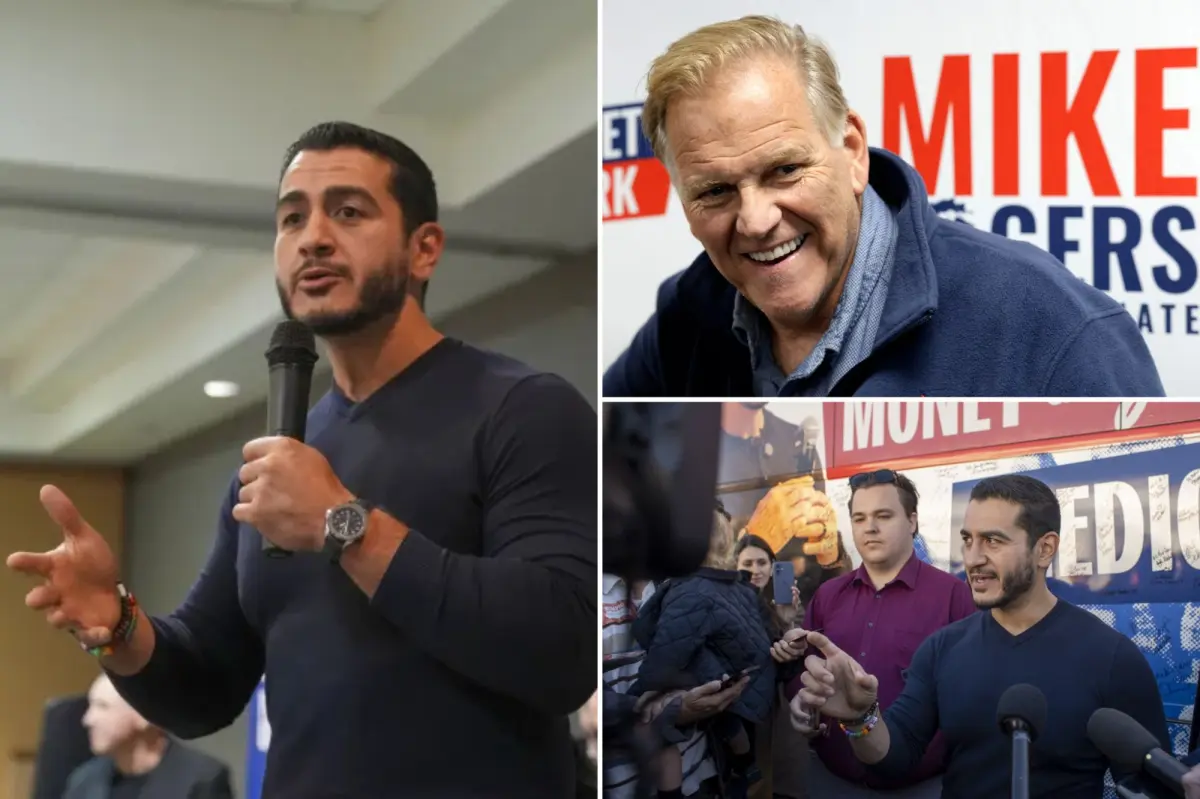
For El-Sayed, this controversy is not merely a legal matter but a deeply personal one that has collided with his ambitious Senate campaign against Republican Mike Rogers. When asked about his sister-in-law’s situation, El-Sayed’s response was immediate and unequivocal: “She did nothing wrong and was captured on that and then sued and got off.” His defense of Jukaku is rooted in a broader critique of the national security infrastructure that, he argues, unfairly targets people based on their names and backgrounds. “You’ve got this system where folks are guilty until proven innocent because they’ve got different kinds of names,” he told Fox News, pointing a finger at the very infrastructure that his opponent helped shape during his time in Congress. The irony is not lost on El-Sayed, who sees in his sister-in-law’s ordeal a cautionary tale about the erosion of due process. Even high-ranking officials are not immune—former Director of National Intelligence Tulsi Gabbard herself landed on a Transportation Security Administration watchlist, allegedly due to her travel patterns abroad. The watchlist, it seems, does not discriminate between the powerful and the ordinary, yet it remains a tool that operates with little transparency and even less accountability.
The Complexity of Family
But the scrutiny of El-Sayed’s family extends beyond Jukaku’s encounter with airport security. During his bruising campaign against Rogers, old tweets have resurfaced that complicate the narrative. In 2012, his half-sister, University of Chicago Professor Eman Abdelhadi, posted messages suggesting that their family was supportive of the Muslim Brotherhood—an organization designated as a terrorist group by Egypt, the United Arab Emirates, and Saudi Arabia, though notably not by the United States. The Brotherhood, known for its radical offshoots including Hamas, has long been a source of suspicion and controversy in American political discourse. For El-Sayed, these family connections have become ammunition for his opponents, who seek to paint him as having ties to extremist groups. Yet the reality is far more nuanced. Family members hold their own beliefs, and no evidence suggests that El-Sayed himself shares or endorses any such allegiances. Still, in the brutal arena of modern politics, the actions and words of a candidate’s extended family are often weaponized, forcing El-Sayed into the uncomfortable position of defending not only his sister-in-law but also navigating the complex web of his family’s history and associations.
A Confrontation at the Doorstep
The tension surrounding El-Sayed’s Muslim faith and family background came to a head during a recent voter interaction that captured the emotional stakes of his campaign. A voter named Tommy pressed El-Sayed directly, asking whether he would disavow the Muslim Brotherhood. El-Sayed’s response was immediate—”Sure. Yeah, absolutely”—but he didn’t stop there. He challenged the premise of the question itself, seeing in it a coded assumption about his loyalties. “You assume, Tommy, that because I am Muslim, that somehow, I would have allegiance to something that is not our Constitution,” he said, his voice carrying both frustration and weary familiarity. “That’s implicit in the question.” In that moment, El-Sayed invoked a powerful historical parallel: the skepticism that John F. Kennedy faced in 1960 when he ran for president as a Catholic, forced to repeatedly reassure voters that his faith would not dictate his decisions. The comparison speaks to a perennial American tension—the struggle between religious identity and national loyalty, between who we are and what we’re presumed to be. For El-Sayed, a physician and public health expert with an impressive resume, the constant need to prove his allegiance to the Constitution is a burden that his forebears in American politics never had to bear.
The Road Ahead
As El-Sayed prepares to face Rogers in a debate on Wednesday and rally with former President Barack Obama on Saturday, the contours of this race are becoming clearer. This is not merely a contest between two political rivals; it is a referendum on what it means to be a Muslim American in public life, on the limits of family loyalty in the face of political scrutiny, and on the ability of a candidate to transcend the suspicions that shadow him. The story of Mariam Jukaku, a woman who found herself on a terror watchlist without explanation, is emblematic of the broader challenges that El-Sayed seeks to address—a system that often treats people with certain names as guilty until proven innocent. It is a system that El-Sayed condemns, just as he condemns the implicit biases that surface in his encounters with voters like Tommy. But whether voters will embrace his vision or remain skeptical of his family’s associations remains to be seen. What is certain is that El-Sayed is running a campaign that forces difficult conversations about faith, family, and freedom—conversations that are as American as the Constitution he swears to uphold. In the end, his story, like Jukaku’s, is a deeply human one, about the desire to be seen for who you are rather than what you’re assumed to be. And it’s a story that will continue to unfold in the debates ahead, under the watchful eyes of voters who must decide what matters most to them.