


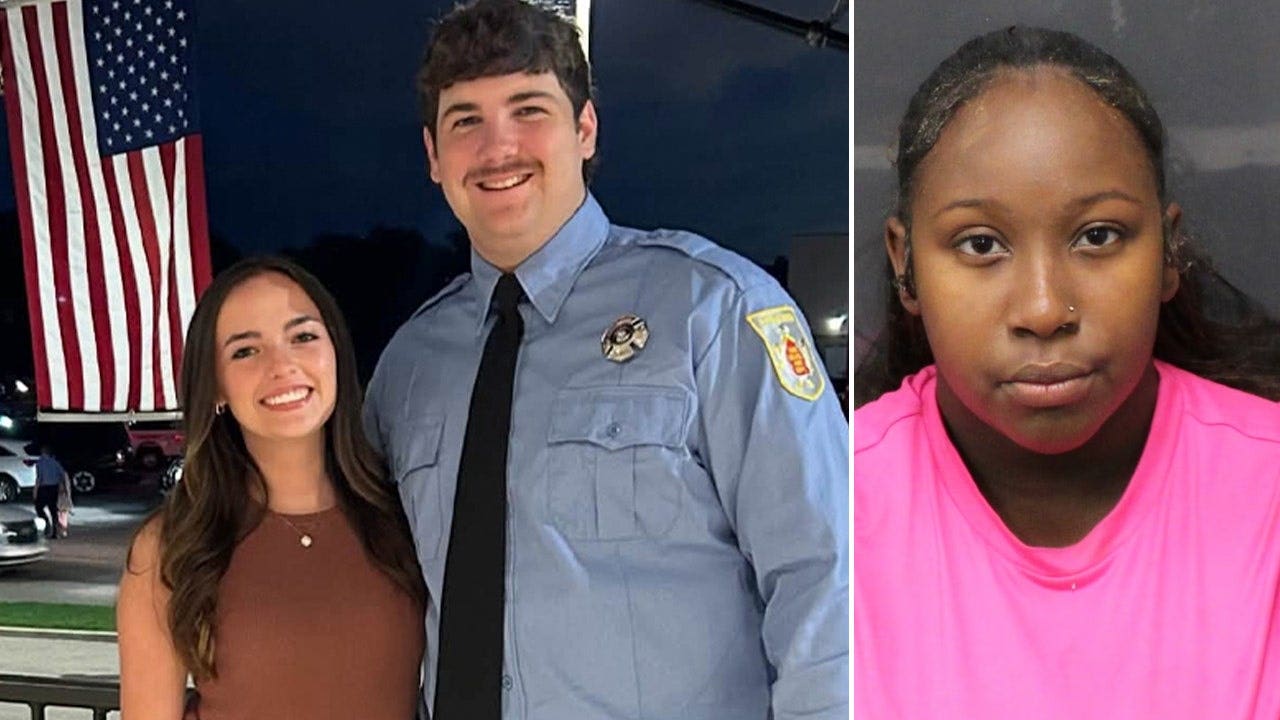
There are some stories that break your heart from the very first sentence, and the story of Leah Fonte and Shane Hirstius is one of them. The two 21-year-olds had been sweethearts since high school. They were engaged. They had their whole lives stretched out ahead of them like a long, bright road, filled with plans and promises and the quiet joy of building a future together. But early Sunday morning in Baton Rouge, Louisiana, that road came to a sudden and devastating end. Police say a vehicle driven by 20-year-old Mia Dawson veered off the road and struck Leah and Shane as they walked along the right shoulder of the road. Leah died at the scene. Shane was rushed to a hospital, where he died a short time later. It was 2:40 in the morning, a time when the world is quiet and the day has not yet begun. For the two young lovers, it would be the last morning they ever saw. For their families, it was the beginning of a nightmare. For the community around them, it was a loss so sudden and so senseless that words felt useless. They were not celebrities. They were not famous. They were just a young couple in love—a college student and a firefighter—walking down a road, maybe talking about their wedding, maybe planning their future, maybe simply enjoying the presence of one another. In an instant, all of that was gone. The university lost a promising student. The fire department lost a dedicated brother. The city lost two bright young souls. Grief, in this case, is not a private affair. It is shared by everyone who heard the news and felt the weight of it. It is the kind of loss that makes people hold their loved ones a little closer, that makes them think twice about the fragility of life. Because if two young people, full of hope and health and love, could be taken away in a heartbeat, then none of us are as safe as we think we are.
The details of the crash, as they have emerged, only deepen the tragedy. According to the Baton Rouge Police Department, the incident occurred at around 2:40 a.m. on Sunday, when a vehicle driven by Mia Dawson left the roadway and struck the two pedestrians who were walking along the right shoulder. It was not a case of a driver losing control on a curve or swerving to avoid an animal. It was, according to investigators, a case of a vehicle veering off the road entirely, into the space where two human beings were simply trying to walk from one place to another. The injuries were severe. Leah Fonte was pronounced dead at the scene, while Shane Hirstius was transported to a hospital, where he later died. Dawson, who is just twenty years old, was arrested in connection with the incident. She now faces a series of serious charges, including operating while impaired, reckless operation of a vehicle, hit-and-run driving, vehicular homicide, and vehicular negligent injuring. The fact that she was charged with vehicular homicide suggests that investigators believe impairment played a role in what happened. The additional charge of hit-and-run driving raises an even more troubling possibility: that after the impact, the driver did not stop, did not call for help, and did not face what had just happened. It is a grim set of circumstances, and the legal system will now work to determine exactly what occurred and what consequences should follow. But for the families of Leah and Shane, no verdict and no sentence can undo the damage. No courtroom proceeding can bring back the sound of their laughter or the warmth of their presence. The law can hold someone accountable, but it cannot heal the hurt. It can deliver justice, but it cannot restore the future that was stolen. In the days and months ahead, the case will move through the courts, drawing attention and scrutiny. But behind the legal language and the formal charges is a human story, one that cannot be reduced to a case number. It is a story of two lives ended too soon, of a community left in mourning, and of a decision made behind the wheel that changed everything for everyone involved.
Leah Fonte was more than a victim. She was a young woman with a name, a face, and a future that was just beginning to take shape. She was a senior at Louisiana State University, studying biological sciences, a field that speaks to a curious mind and a compassionate heart. She wanted to understand life, to explore the mechanisms of the natural world, and perhaps to use that knowledge to help others. She had worked hard to reach her senior year, and graduation was on the horizon. The pride that her family must have felt, watching her grow into the woman she had become, is impossible to measure. And then there was her love story. Leah and Shane had been together since high school, which is something remarkable in itself. To stay together through the changes and challenges of adolescence, to grow from teenagers into adults while still choosing each other every day, is a testament to the strength of their bond. Their engagement was a natural next step, a declaration that they intended to spend the rest of their lives together. Friends describe them as inseparable, the kind of couple who made everyone around them believe in love. They had the kind of ease and comfort that comes from years of shared history, inside jokes, and a deep understanding of one another. Leah was described as kind, intelligent, warm, and full of life. She had a smile that could light up a room, and she carried with her a sense of purpose that impressed everyone she met. Her professors saw a student with a bright future. Her classmates saw a friend who was always willing to lend a hand. Her family saw a daughter and sister who was about to embark on the next great adventure. Now, instead of walking across a graduation stage, her name will be spoken in memorials and remembered in the hearts of those who loved her. The university community has rallied around her memory, with LSU president Wade Rousse offering condolences on behalf of the entire LSU System. “We send sincere condolences to the Fonte family as they learn of Leah’s passing,” Rousse said. “We pray that God will comfort those she loved during this time of reflection and mourning.” Those words, formal as they are, carry the weight of an institution that lost a part of its family.
Shane Hirstius was the kind of person that communities depend on. He was a firefighter, and for him, that was not just a job or a title. It was a calling. The River Ridge Volunteer Fire Department, where he served, released a tribute that captured his spirit in a way that no news report ever could. “Shane was much more than a firefighter,” the department wrote. “He was a person with an enormous heart, an unforgettable smile, and a genuine passion for helping others.” Those are the words of people who knew him best, who stood beside him in the firehouse, who answered calls with him, who saw the way he gave himself to the work. Firefighting is not an easy profession. It requires bravery, selflessness, and the willingness to run toward danger when everyone else is running away. It requires hours of training, long shifts, and the emotional strength to handle situations that most people cannot imagine. Shane gave himself to that work completely. “He gave 110% of himself to his responsibilities as a first responder, always willing to step forward when someone needed help,” the tribute continued. “His dedication, compassion, and commitment to serving others represented the very best of what it means to be a firefighter.” To be described in those words by the people who worked alongside you is an extraordinary honor. It means that Shane was not just going through the motions. He truly cared. He was not looking for recognition. He was looking for ways to help. And he was just twenty-one years old, with a lifetime of service ahead of him. His death leaves an enormous void in the fire department, where he was more than a colleague—he was a brother. Fire stations are tight-knit families. They share meals, celebrate holidays, and mourn losses together. The loss of one of their own is felt deeply and personally. In the coming weeks, there will be memorials and tributes, fire trucks lined up in solemn processions, and uniforms worn with black bands across the badge. There will be honors and salutes and speeches. But the real loss is the one that will be felt in quieter moments: the empty chair at the station, the absence of a familiar voice, the calls that will never be answered. Shane gave his life to helping others, and in the end, it was his own life that was taken by someone who allegedly chose to drive while impaired. The irony is cruel. The pain is real. And the legacy he leaves behind is one of courage, dedication, and love.
The response from the community has been overwhelming, a reminder that even in the darkest moments, people find a way to come together. Friends have gathered to share memories of Leah and Shane, posting photographs and stories that celebrate their lives. Strangers have left flowers and messages at the scene of the crash, creating a makeshift memorial that grows larger with each passing day. The fire department has become a gathering place for those who want to honor Shane’s service, while Louisiana State University has offered grief counseling and support to students struggling to process the loss of their classmate. The families, understandably, have asked for privacy as they prepare to say goodbye to their children, but they have also expressed gratitude for the outpouring of support. In times like these, community becomes a lifeline. The same village that helped shape Leah and Shane is the same village that will now carry their memory forward. There is a certain power in collective grief. It does not erase the pain, but it makes it bearable. It is found in the casseroles left at the family home, the cards and flowers, the prayer circles, and the simple act of showing up. It is found in the stories that are told over and over again, keeping the dead alive in the hearts of the living. For the first responders who worked the scene that morning, there is also a particular burden. They arrived to find one of their own down, and no amount of training can prepare someone for that. They will need support too, and the firehouse will provide it, as it always does. The broader community, meanwhile, has been forced to confront the dangers of impaired driving. A night that began with a young woman behind the wheel ended with two families shattered. It is a harsh reminder that decisions made in a matter of seconds can have consequences that last a lifetime. As the legal process moves forward, the community will continue to watch, continue to mourn, and continue to ask the same question that always follows such tragedies: why? There may never be a satisfying answer. But in the absence of answers, there can be love. And love, in the end, is the only thing that can carry a community through the darkest of days.
In the end, the story of Leah Fonte and Shane Hirstius is not just a story about death. It is a story about love, promise, and the fragility of life. It is about two high school sweethearts who grew up together, who chose each other again and again, and who were looking forward to a future that was stolen from them in a single moment. Their deaths are a reminder that life can change in an instant, and that the people we love can be taken from us without warning. It is a painful lesson, but one that can inspire us to hold our loved ones a little closer, to say “I love you” more often, and to make the most of the time we have. It is also a reminder of our shared responsibility to one another. When we get behind the wheel, we are not just operating a machine; we are carrying the lives of everyone around us in our hands. The decision to drive while impaired is a decision that can end lives, and it is a decision that is always avoidable. The tragedy in Baton Rouge is a devastating example of what is at stake. No one can bring Leah and Shane back, but perhaps their story can serve as a catalyst for change—a reminder to be careful, to be sober, to be present. Perhaps it can inspire more people to speak up when they see someone about to drive drunk, or to call a ride for a friend. Perhaps it can lead to stricter enforcement or more education. But even if it does, it will not ease the grief of those who loved them. The best we can do is honor their memory. We can honor Leah by remembering her as a promising young woman who was on the verge of a bright future, a biological sciences student who wanted to understand the world and make it better. We can honor Shane by remembering him as a firefighter who gave everything to protect his community, a young man with an enormous heart and an unforgettable smile. And we can honor them both by choosing to be a little kinder, a little more generous, and a little more committed to the people we love. Their engagement was a symbol of hope, a promise of a future together. Though that future will never come to be, the love they shared remains. It lives on in the memories of their families, in the stories of their friends, and in the quiet moments when those who knew them stop to think about what might have been. The road where they walked that Sunday morning is quiet now, but it will never be empty. It will be a place where people pause, leave flowers, and remember. And in remembering, they will keep Leah and Shane alive. The world is a little dimmer without them, but it is also a little richer for having had them, even for such a short time. May they rest in peace, together, forever.