


Imagine waking before the world is fully awake—not for a flight or a meeting, but for the quiet thrill of seeing something with wings. You find a spot by the reeds, raise your binoculars, and wait. That patient pause, once considered the domain of retirees and dedicated nature lovers, has become one of travel’s most surprising new obsessions. Birdwatching is no longer a sidelined hobby; it is spreading its wings as a mainstream reason to book a trip. GetYourGuide, the global travel platform, noticed this shift early. In its Hidden Trends List for 2026, published last November, the company flagged birdwatching as “having a moment,” boosted by viral #BirdTok videos sweeping through social media. What looked like a passing curiosity, though, quickly proved to be something far more substantial. By last month, GetYourGuide reported a staggering 65% year-on-year increase in global bookings for birdwatching experiences between 1 January and 27 August 2026. As Anne Wallin, the company’s global trends and experiences expert, put it, birdwatching has “flown well beyond being a ‘Hidden Trend.’” She noted that travellers are rediscovering how to connect with nature and disconnect from daily hustle—whether standing among a flamboyance of flamingos in southern France or spotting rare birds without leaving their own city. There is something wonderfully undemanding about it. You don’t need to be an athlete or an expert. You just need curiosity, a little patience, and the willingness to look up.
The momentum, it seems, is only just beginning. Voyageurs du Monde, a French travel company known for tailored and inspiring journeys, has declared that the world is now “heading into the birdwatching era” and that 2027 is “set to be the year of birdwatching.” Their internal booking trends back up that bold claim: between July and October 2026, bookings for birdwatching holidays were 57% higher than during the first six months of the year. That isn’t a spike; it’s a transformation. Tom Barber, chief brand officer of Voyageurs du Monde, explained in an interview that his company has changed how they approach travellers. Instead of asking clients where they want to go, they ask what fascinates them. Increasingly, the answer is birds. “In an industry where slow travel is here to stay, and in a world where so much of life happens at speed and through a screen, there’s something wonderfully simple about stepping outside with a pair of binoculars and seeing what you can spot,” Barber said. That sentiment captures the deeper appeal of birdwatching in an age of constant notifications and rapid-fire itineraries. It offers an antidote to the algorithm: a live, unscripted performance that can’t be streamed or fast-forwarded. Every outing is a treasure hunt with no guaranteed payoff, and that uncertainty is exactly what makes it magical. The popularity of birdwatching holidays also signals a broader shift in tourism—away from checking off landmarks and toward experiencing a place through its wild inhabitants, seasonal rhythms, and small moments of stillness. Birds, in their daily migrations and daily habits, give travellers a reason to slow down, stay quiet, and really look at the landscape around them.
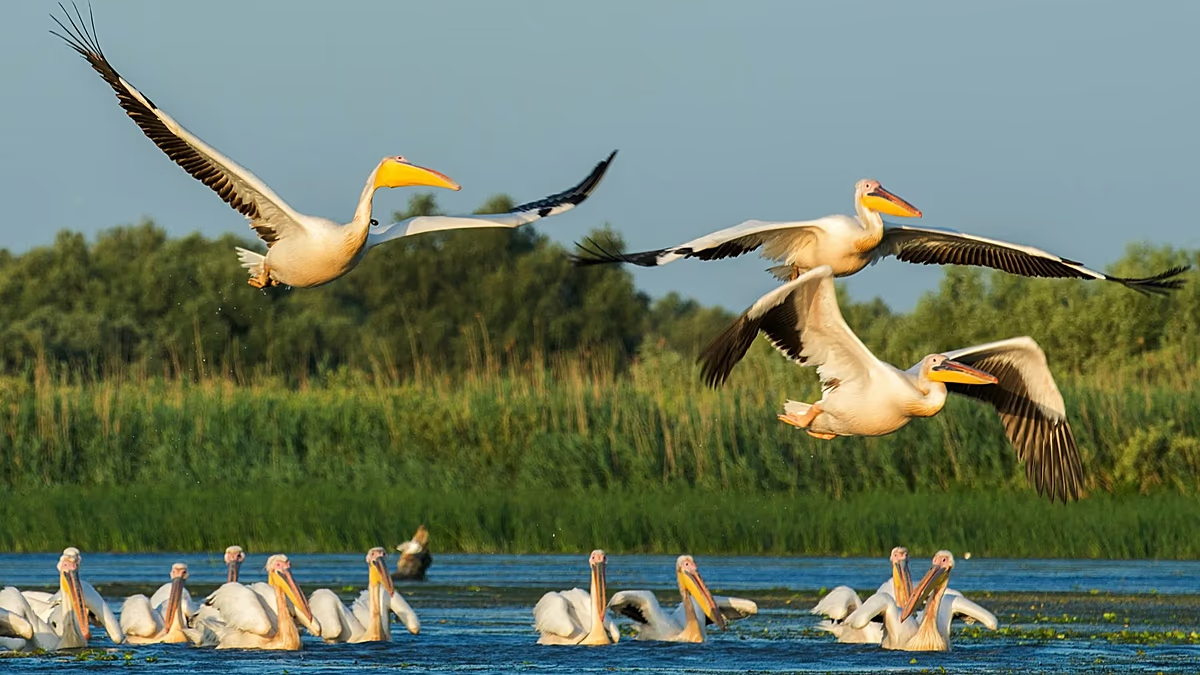
For those feeling the first flutters of interest, where should a beginner go? According to Tom Barber, Europe offers several excellent entry points that don’t require advanced skills—just a pair of binoculars and a willingness to wander. He recommends the Danube Delta in eastern Romania, a vast network of wetlands and waterways considered one of the most important wetland regions in the world. It is home to more than 300 species of birds, including enormous concentrations of breeding and migrating flocks. A single day on the Delta, Barber suggests, can give newcomers a “taster” of the birdwatching life. Another top European choice is northeastern Greece, which has been one of Voyageurs du Monde’s best-selling birdwatching destinations this year. The region sits along a key migration flyway and features a rich blend of wetlands and forests, making it an ideal habitat for a wide range of species. Barber advises going in the shoulder season, when the crowds are thinner and the birds around the lakes are especially active. If seabirds are more your style, Portugal deserves a spot on your list. With its long Atlantic coastline and position along the East Atlantic Flyway—a major migration route stretching from the Arctic to Southern Africa—Portugal offers exceptional opportunities for spotting birds out over the ocean and along the shore. The Portuguese islands of the Azores and Madeira are prime birdwatching territory as well, each with its own species and dramatic landscapes. And for puffin lovers, there is no better place than Iceland. The Westman Islands, off Iceland’s south coast, are home to the world’s largest puffin colonies. Imagine standing on sea cliffs in the cool northern air, watching those clumsy, colourful birds darting through the wind. It’s the kind of memory that no screen can capture.
If you prefer to plan your trip around proven birding hotspots, recent rankings offer plenty of inspiration. AllClear Travel’s study of the world’s 20 best birdwatching destinations evaluated sites based on recorded species, weather, airport proximity, and daily travel costs. Only two European locations made the global top 20—but both are absolute standouts. Ranked 19th in the world and first in Europe was the Falsterbo Peninsula, on the southwestern tip of Sweden. Long celebrated as a “hotspot for birders,” Falsterbo is a natural migration bottleneck, funnelling enormous numbers of birds through a relatively small area and offering spectacular views of passing flocks. The other European entry, at 20th on the global list, was Titchwell Marsh on England’s north Norfolk coast. This celebrated nature reserve is one of the UK’s most beloved birdwatching destinations, with hides, trails, and a dramatic shoreline that attracts a huge variety of species. In AllClear’s separate ranking of Europe’s top 15 birdwatching destinations, the list is wonderfully diverse. It runs from Falsterbo Peninsula in Sweden to Titchwell Marsh in England, then on to Fair Isle in Scotland, Kalloni Saltpans on the Greek island of Lesvos, Minsmere in England, Lake Kerkini National Park in Greece, Rutland Water in England, Slimbridge Wetland Centre in England, Bowling Green Marsh in England, Ria Formosa Natural Park in Portugal, Camargue in France, Ebro Delta in Spain, Hortobágy National Park in Hungary, Monfragüe National Park in Spain, and Loch Gruinart in Scotland. That concentration of English and Scottish reserves is no accident; the UK has a deep tradition of birdwatching, with accessible hides and well-managed wetlands that welcome newcomers and experts alike.
For those with more adventurous wanderlust, the global stage is even more dazzling. The AllClear study crowned Manú National Park in Peru as the world’s best birdwatching destination, followed closely by Tambopata National Reserve, also in Peru. These Amazonian jungles are alive with parrots, macaws, toucans, and hundreds of species that seem to glow in the canopy. Kenya’s Tsavo East National Park took third, offering sweeping savannahs where birders can spot everything from giant eagles to vivid bee-eaters while also enjoying the classic African wildlife experience. Brazil’s Pantanal, particularly around Porto Jofre, was ranked fourth, and is arguably one of the best places on Earth to see the bizarre and beautiful hyacinth macaw. Tiny Milpe Bird Sanctuary in Ecuador and Carara National Park in Costa Rica shared fifth place, both celebrated for their incredible biodiversity in compact, accessible spaces. Costa Rica also appears again at seventh with Corcovado National Park, a remote rainforest teeming with birds that feels like a world of its own. The list continues with Keoladeo National Park in India, Costanera Sur Ecological Reserve in Argentina, Kruger National Park in South Africa, Minca in Colombia, Dry Tortugas National Park in Florida, Yala National Park in Sri Lanka, Amboseli National Park in Kenya, Moss Landing in California, Cape May Point in New Jersey, Chobe National Park in Botswana, and Soberanía National Park in Panama. These destinations are more than just places to spot birds; they are ecosystems of extraordinary beauty, where the search for one rare species can lead you through cloud forests, mangroves, salt marshes, and riverbanks that you would never have discovered otherwise. For serious birders, such a list is a dream tick-sheet, a lifetime of dawns spent listening for unfamiliar calls and scanning the horizon with renewed wonder.
What makes this trend so heartening is not simply the growing number of twitchers and bird tour bookings. It’s the way birdwatching recalibrates our relationship with travel and with time. A birding holiday isn’t about rushing from monument to monument or curating the perfect Instagram feed. It’s about learning to let the landscape speak at its own pace—to trust that if you sit quietly long enough, something extraordinary will reveal itself. That could be the flash of a kingfisher’s wing, the haunting call of a curlew, or the unexpected sight of a rare migrant that has travelled thousands of miles to share the same stretch of wetland as you. It also democratises travel, because birdwatching can happen anywhere: in a city park, along a suburban canal, or from a hotel balcony overlooking a patch of garden. As the travel industry takes notice, expect more local guides, specialized itineraries, and community-led conservation efforts that make birdwatching a force for protecting the habitats these species depend on. Ultimately, birdwatching holidays remind us that the best travel experiences aren’t always the most crowded or famous ones. Sometimes they’re the quietest—the early mornings, the still lagoons, the patient moments when the world feels both vast and intimate. To borrow Tom Barber’s words, there is something wonderfully simple about stepping outside with a pair of binoculars and seeing what you can spot. That simplicity, in a complex and noisy world, may be exactly why birdwatching has found its moment. And like a migratory bird returning to familiar shores, it seems to be here to stay.