

The Scene and the Promise
On a bright Saturday morning in San Diego, with the ocean glinting in the distance and a row of cameras clicking in front of him, Republican gubernatorial candidate Steve Hilton stood at a podium and made a declaration that cut straight through the polite language of politics. Homeless encampments, he said, are not simply an eyesore or a statistic—they are a moral wound on the state of California, a daily reminder of a system that has spent billions while leaving tens of thousands of people to rot under tarps. With the sunlight catching his face and the urgency of a man who believes time is running out, Hilton unveiled a sweeping plan to clear every single homeless encampment in the state by the end of 2027. It was a bold, confrontational promise, the kind of statement that either makes a campaign or breaks it. But Hilton, a former political adviser turned grassroots advocate, seems to thrive on that kind of pressure. “No one is going to get their life back on track on the streets,” he said, leaning into the microphone. “We are going to get people off the streets and into places where they can actually get help.” For the crowd of supporters, business leaders, and curious onlookers gathered under the California sun, the message was clear: the era of tinkering around the edges is over. Hilton intends to treat homelessness like the emergency it is, with the kind of aggressive, deadline-driven urgency that has been missing from the state’s approach for decades. But for the skeptics watching from the sidelines, the question lingered like the morning fog—can he really do it, or is this another politician’s beautiful promise destined to dissolve in the realities of budgets, lawsuits, and the stubborn complexity of human suffering? Either way, no one could deny that Hilton had just injected a massive dose of energy into the gubernatorial race, and the cameras loved every second of it.
The Heart of the Plan: Homeless Recovery Centers
At the core of Hilton’s proposal lies a concept that sounds almost simple in its logic, yet radical in its implementation: a statewide network of Homeless Recovery Centers, places where people don’t just get a cot for the night but an actual pathway back into life. The prototype is the Sunbreak Ranch project in San Diego County, a facility that Hilton’s campaign points to as proof that the idea isn’t just a fantasy. These centers would be more than just warehouses with beds lining the walls. They would offer hot meals, warm showers, and medical care delivered by people who actually look you in the eye. They would provide drug treatment for those battling addiction and psychiatric care for those wrestling with mental illness, the invisible battles that so many on the streets carry alone. Job training would be woven into the daily routine, giving people the first taste of purpose and productivity they may have lost years ago. But perhaps the most human and quietly revolutionary part of the plan is the caseworker model: each person entering the system would be assigned someone whose entire job is to stand beside them, to navigate the confusing maze of paperwork, appointments, and setbacks, and to see them through to stable housing. This is not just about clearing the sidewalks, Hilton’s team insists—it is about rebuilding people one relationship at a time. For someone who has spent years being ignored, stepped over, and forgotten, the simple possession of a person who cares might be the most healing thing of all. Hilton himself framed it in stark, personal terms: leaving a single person to deteriorate in a tent is a disgrace, and the state has a responsibility to act not as a distant bureaucracy but as a neighbor who refuses to look away. The centers, in his vision, are the first step on a long walk home.
The Shocking Numbers Behind the Crisis
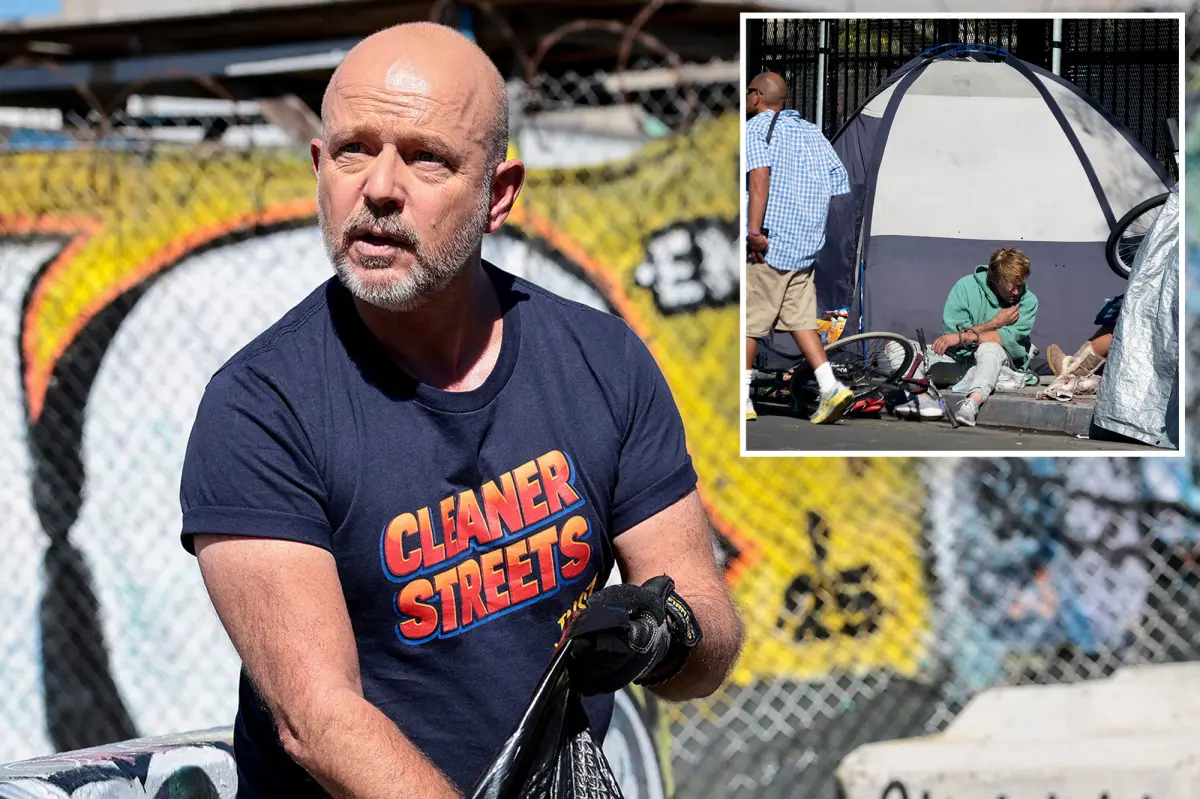
If there is one set of statistics that can break a person’s heart, it is the one Hilton cited at that San Diego podium. The U.S. Department of Housing and Urban Development’s 2025 count found that California is home to 181,934 homeless people, and of that staggering number, 115,583 were living without shelter at all—no roof, no four walls, no door to close against the wind. Try, for a moment, to picture that many human beings stretched out across the state, sleeping on grates, in doorways, under freeway overpasses, in tents that buckle in the rain. It is a population larger than many entire cities, and yet they have been rendered nearly invisible by the sheer scale of the crisis. Meanwhile, Hilton pointed out, California has allocated almost $24 billion to homelessness and housing in recent years. Let that number sink in: $24 billion, enough to fund small countries, enough to build entire towns, enough to change the course of thousands of lives. And yet, the state auditor found something deeply troubling: California failed to consistently track how that money was spent and what results it produced. Billions of dollars flowed out into programs, consultants, nonprofits, and pilot projects, but the trail often went cold. For the taxpayers who opened their wallets, it felt like tossing money into a void. For the people living on the streets, it meant the help they were promised never quite arrived. Hilton took that bureaucratic failure and turned it into the central argument of his campaign: we don’t need more money thrown at the problem; we need accountability, transparency, and a system that treats every dollar like a promise made to a vulnerable human being. It was a powerful message, and the crowd, weary of watching their cities sink into crisis while officials shrugged, seemed ready to believe it.
The Timeline: A Governor’s Ultimatum
Hilton didn’t stop at painting a picture of gloom; he offered a plan with teeth. In his first month as governor, he promised, he would sit down face-to-face with mayors and county leaders across the state and set public, non-negotiable deadlines for clearing encampments in their jurisdictions. This was not going to be a vague call for cooperation with a wink and a nod; these would be real timelines, announced in the bright light of public scrutiny, with the names of local officials attached. If those local leaders failed to act, Hilton was blunt: the state would step in and take over. The first big milestone would be Labor Day 2027, a date by which every local government would be expected to show meaningful progress. But the ultimate deadline, the one that gave the plan its dramatic edge, was December 31, 2027. By the end of that year, Hilton declared, every encampment in California would be a thing of the past. “By the end of 2027, every encampment will be cleared, and Californians will have their sidewalks and parks back,” he said. The words hung in the air, thrilling to some, terrifying to others. To his supporters, this was the strong, decisive leadership California has been desperately missing—a refusal to accept the unacceptable. To civil liberties advocates, it raised hard questions about where people would go, whether the recovery centers could possibly be built in time, and whether the threat of forced removal was really a solution or just a shuffling of the problem. But Hilton’s message was clear: he was not going to let a crisis of this magnitude be managed into eternity. The time for study commissions and pilot programs and grand workshops was over. The time for action had arrived, and he intended to lead it personally, with the full weight of the governor’s office behind every deadline.
The Emergency Powers and the Fight for Accountability
To make his vision reality, Hilton knows he will need more than just a kind heart and a strong speech; he will need legal muscle. His plan calls for declaring a homelessness emergency, a move that would allow the state to waive permitting barriers that often slow these projects to a crawl, cutting through red tape the way a knife cuts through fog. He also promised to enforce public camping bans—but carefully, only once suitable facilities are available for people to go to. In other words, his administration would not sweep a camp and simply dump people elsewhere; the sweeps would be paired with a real place to land, a bed, a warm meal, a caseworker, a chance. And he has a name for the bureaucratic watchdog he wants to unleash: Operation Zero Waste. This initiative would conduct a top-to-bottom audit of every homelessness program receiving state funds, hunting for inefficiency, waste, and outright failure. Programs that work would be scaled up; programs that fail would lose their funding, and that money would be redirected to the recovery centers and housing solutions that are actually moving the needle. It is a bold promise to take on the entrenched interests of the homeless-industrial complex, a phrase critics use to describe the tangled web of providers, advocates, and government agencies that have a financial stake in the status quo. Hilton’s choice of words—“Leaving people to deteriorate in tents is a disgrace”—struck at the heart of a moral fury that has been building in California for years. And as the news conference wrapped up, his opponent’s campaign, led by former U.S. Secretary of Health and Human Services Xavier Becerra, had no immediate response, leaving the stage entirely to Hilton for the day.
The Human Question Beneath the Politics
Beyond the press releases and the campaign spin, there is a deeper, haunting question that Hilton’s plan forces California to confront: what does it mean to truly care for the most broken among us? It is easy to love the idea of helping people from a distance, but much harder to sit with a man who hasn’t slept indoors in a decade, who smells of the street, who mutters to voices only he can hear, and tell him that he matters. Hilton’s plan seems to understand this on some level—the recovery centers are not just brick and mortar, they are a shift in perspective, a statement that every human being has inherent dignity, even the ones we prefer not to see. If his deadlines are met, California will change in visible, dramatic ways: cleaner sidewalks, safer parks, fewer tents in the shadows. But the true measure of success will be what happens quietly inside the recovery centers, in the small moments when a formerly homeless person gets his first job, or her own room, or simply the feeling of being seen as a person rather than a problem. Hilton has promised the restoration of sidewalks and parks, but the more profound promise is the restoration of lives. Whether he can deliver on that promise in the brutal, unforgiving timeline he has set is an open question, one that will be answered by the stubborn complexities of human nature, the limits of government, and the willingness of a whole state to change the way it thinks about its most vulnerable people. For now, standing in the San Diego sunshine, Hilton offered Californians something that has been in short supply: a bold, definitive answer to a crisis that has felt unsolvable. Whether that answer turns out to be wisdom or folly, one thing is certain—he has finally forced the state to have an honest, urgent conversation about the lives unfolding on its streets, and that alone might be the first spark of real change.