

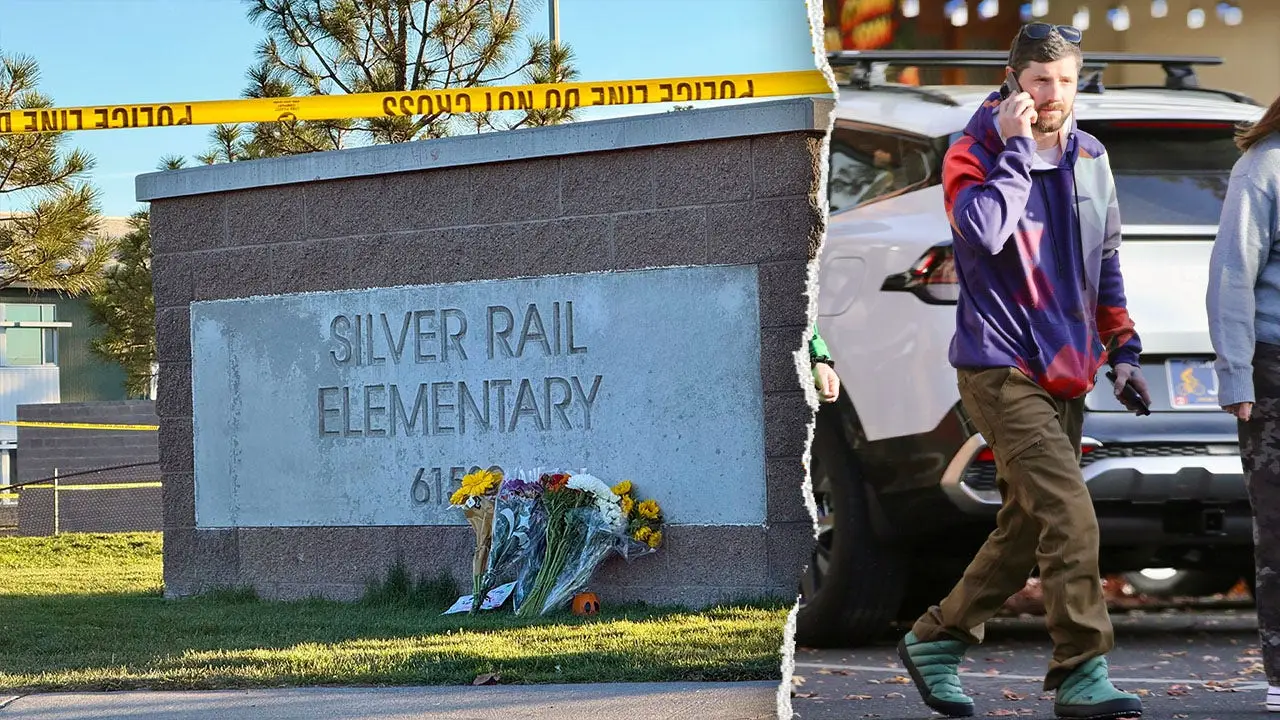
The quiet grief that settled over Bend, Oregon, this weekend was as immense as the Cascade peaks that frame the city. For the Bend-La Pine Schools district, the loss was almost too much to name: three young students, one beloved first-year teacher, and a community forever changed by an act of terror that shattered the innocence of an elementary school. In a social media message, the district spoke with raw and aching honesty, writing, “Our hearts are broken.” The sentence was followed by words of profound gratitude not for the normal rhythms of a school day, but for the courage of those who stood between children and a shooter. “They responded to an attack on their school in a way for which we are forever grateful,” the district said. Those words were not abstract or official. They were a tribute to the teacher who lost her life, to the staff member who threw a cellphone and tackled a gunman, to the learning specialist who engaged directly with the shooter, and to the countless ordinary people who rose to the most extraordinary moment of their lives. The shooting at Silver Rail Elementary School, located about 170 miles south of Portland, left families torn, first responders shaken, and a city desperately searching for how to mourn children whose futures were stolen in a matter of minutes.
Among the dead was Megan Lambert, 25, a special education teacher who had only joined the district this fall for her first teaching job. She had walked into Silver Rail full of hope, ready to give her best to students who needed her most. In its tribute, the district remembered her as a bright light for “students, family, and our community,” adding, “She will be missed beyond words can express.” Those words are the kind used when grief is too big for language. Lambert was in the earliest chapter of her career, the kind of teacher who likely stayed after class, learned each child’s name, adjusted lessons for little hands, and believed every child, regardless of ability, deserved a champion. Special education is not simply a job; it is a calling filled with patience, empathy, and a particular kind of love. Lambert answered that call with a fresh heart. The news of her death rippled far beyond Bend, carried by social media and news reports, but it is in the memory of her students and colleagues that she will live on. The district’s tribute did not list her credentials or accomplishments; it simply said she was a bright light. Sometimes that is enough. A first-year special education teacher walks into her classroom with an abundance of idealism and leaves behind a community shattered by her absence. She did not get the chance to collect decades of memories, to watch her students grow, or to celebrate a hundred small victories. But in a matter of weeks, she left an imprint deep enough that a school district publicly declared it could not find enough words to contain the loss.
The district’s gratitude extended to Becky Drury, an inclusion educational assistant who was injured during the attack and is currently recovering. In the midst of chaos, Drury’s focus was not on her own safety but on the children she was there to support. “We continue to wrap our arms around Becky Drury,” the post continued, using the image of a family hugging one of its own. That image is powerful: a community physically enfolding a woman who gave everything in her job, holding her close as she begins the long road of healing. The post also honored a learning specialist who “responded with extraordinary courage and engaged directly with the shooter.” That person, unnamed, acted not out of tactical training but out of a fierce, protective love. “We are so thankful for her safety and forever in her debt,” the district said. There is a kind of heroism that exists only in the flash of a threat, when a human being calculates in milliseconds that the lives of children are worth their own life. Bend Police Chief Mike Krantz put a name to it on Friday: “The teacher… was willing to stand and fight for her children. I think we all recognize that that is true heroism. She almost certainly helped avoid more bloodshed.” The teacher threw a cellphone, tackled a gunman, and somehow survived. In that moment she was every teacher, every mother, every guardian; she was the living proof that love can be a weapon against violence.
Another hero emerged in the form of Kaylub Giamanco, 36, a father of two Silver Rail students who was simply on his lunch break when he saw the nightmare unfolding. Giamanco spotted the teenage gunman entering the building with a shotgun. Most people would freeze, or call for help, or run. Instead, this father retrieved a legally secured .40-caliber pistol from his car, pursued the shooter into the school, and fatally shot him. There is no official training for what Giamanco did. There is no job description that requires a parent to become a one-man defense team. But when his children were inside that building, every other consideration vanished. He responded as a dad first and everything else second. Community members and authorities have commended Giamanco for his action, and while his name has been shared widely, the emotional weight of what he did is impossible to capture. He confronted a gunman with the same instincts that make a father check on a crying child in the middle of the night, only magnified by the stakes of a school shooting. His presence likely saved lives. He will carry this day with him for the rest of his life, just as the children and staff who survived will. Giamanco’s name now belongs to the broader story of Bend’s tragedy, but in the hearts of the families he protected, he is simply a hero father who refused to let evil have the final word.
The victims who did not survive included 5-year-old Rhoam Summer, along with two other children, ages 8 and 11, whose families requested their names not be publicly disclosed. It is almost unbearable to write those ages next to the word “victim.” A 5-year-old is supposed to be learning letters, making friends, and laughing at playground games. An 8-year-old is building forts and believing in the impossible. An 11-year-old is on the edge of adolescence, full of questions and dreams. They are not supposed to be statistics, and they are not supposed to be mourned in front of a school that should have felt safe. Their families asked for privacy, and we should honor that with the same tenderness they deserve. Also wounded in the attack were a 7-year-old girl and Becky Drury, both of whom are recovering. A child should never have to face what that little girl faced. Neither should a teacher that loved her. In Bend, a growing sidewalk memorial outside Silver Rail Elementary has become the spiritual heart of a grieving city. Mourners have brought flowers, offered prayers, and written messages of support in chalk. The chalk is an especially heartbreaking medium: it can be washed away by rain, just as these little lives were washed away too soon. But the message remains, scrawled in bright colors and wobbly letters, saying what adults cannot always say: We are sad. We love you. We will not forget you. Those sidewalk moments are a small ritual of humanity, a way to turn unbearable grief into a shared act of caring.
There is no way to neatly summarize the meaning of Tuesday’s violence in Bend. It is a story of a school district that lost three young students and a teacher, and it is also a story of impossible courage, of a father who ran toward gunfire, and of a teacher who fought with her bare hands to protect children who were not her own. The district’s words — “forever grateful,” “forever in her debt,” “missed beyond words” — are not clichés. They are the language of people trying to hold onto the light when the darkness is overwhelming. In the coming weeks, counselors will walk the hallways of Silver Rail, friends will gather in living rooms, and the city of Bend will slowly learn how to breathe again. There will be funerals for children that should have had decades of birthdays. There will be a memorial for a young teacher whose career barely began. And there will be continuing questions about how to prevent another community from feeling this exact pain. But for now, the people of Bend are doing the only thing they can: they are wrapping their arms around each other, honoring the heroes who acted with extraordinary courage, and refusing to let the memory of their children and teacher be reduced to a headline. They are leaving flowers on the sidewalk, writing names in chalk, and repeating those two quiet phrases that hold both grief and gratitude: “Our hearts are broken,” and “We will never forget.”