

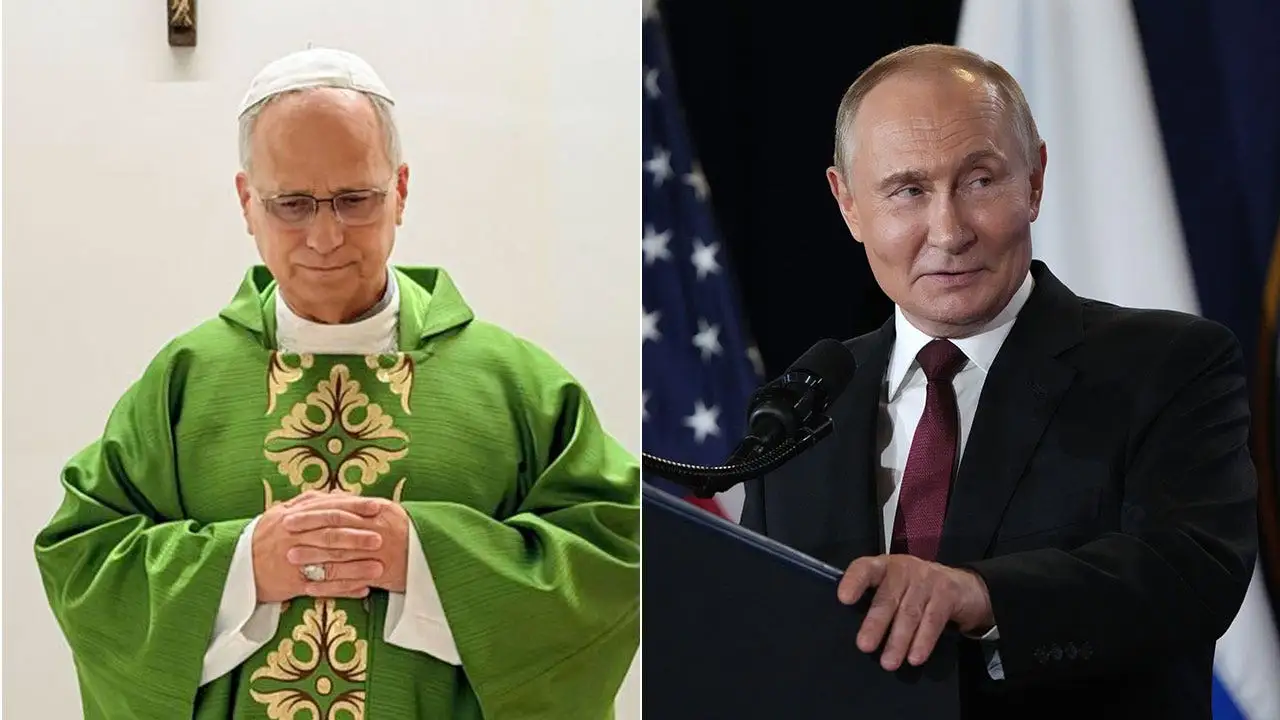
From a hospital bed in Rome, in the quiet, fragile hours after major surgery, Pope Leo XIV did something that spoke louder than any formal address or diplomatic communiqué. He picked up the telephone and called Vladimir Putin. The image is striking: a 71-year-old pontiff, still recovering from the removal of a lobe of his right lung, using his diminished strength to reach across the world and plead for a ceasefire in a distant, battered Ukrainian city. The Vatican’s statement following the call made the purpose unmistakably clear. The Holy Father expressed deep concern about the grave humanitarian situation in Oleshky, a city in the Kherson region under Russian control. He asked for an immediate ceasefire to allow food and medical assistance to reach trapped civilians and to permit the voluntary and safe evacuation of the population. He reaffirmed the Holy See’s commitment to dialogue and peace. It was a moment of moral authority exercised from the most human of positions—a man in a hospital gown, still sutured and sore, reaching out to a leader whose hands, in the eyes of much of the world, are stained with the blood of an unjust war.
The city Pope Leo chose to focus on is not one of the war’s most famous front lines, but it is one of its deepest wounds. Oleshky sits in the Kherson region, on the eastern bank of the Dnipro River, and has been under Russian control since early in the invasion. Its name may not feature in every news bulletin, but for the people still living there, the catastrophe is absolute. According to the Vatican and humanitarian observers, no food deliveries have been permitted into the Russian-controlled city since May. That is not weeks, but months of deprivation. The city has been left without electricity, without gas, without running water. The hospital is barely functional, a shell of a medical institution where even the most basic procedures become impossible. Civilians—many of them elderly, sick, or too frightened or unable to leave—face a daily struggle not just for comfort, but for survival. They have been reduced to waiting. Waiting for bread. Waiting for medicine. Waiting for someone with power to decide that their lives matter more than political objectives. The pope’s phone call was, in essence, a plea for those people to be seen. It was not abstract geopolitics. It was about water, about food, about allowing a grandmother to die with dignity rather than in a city that has become a tomb. The Vatican’s words were measured, but the situation they described was one of extraordinary severity—a humanitarian emergency unfolding quietly behind the fog of artillery and rhetoric.
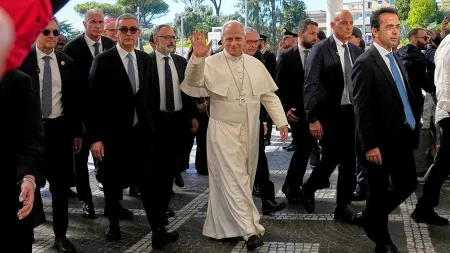
That the pope made this call at all is remarkable, especially given where he was making it from. Just days earlier, Pope Leo XIV had received a diagnosis of lung cancer. The news, delivered to the world with a kind of blunt Vatican honesty, sent a tremor through the Catholic Church and far beyond. He was taken to the Gemelli Hospital, the same Roman clinic that has cared for popes before him, and underwent surgery to remove the lower lobe of his right lung. For many men his age, such a procedure would be a life-altering, terrifying ordeal. But the pope’s demeanor, as captured in the first images released after the operation, suggested a man refusing to be defined by his illness. In those photographs, he was seen standing at a makeshift altar inside the hospital, celebrating Mass in a small chapel that had been arranged for him. He wore his white cassock, his posture steady, his face composed. The images were carefully chosen, no doubt, but they also conveyed something real: a pastor who understands that his ministry does not pause because he is in pain. The doctors’ updates reinforced this impression. His personal physician, Luigi Carbone, along with the head of thoracic surgery, Dr. Stefano Margaritora, signed a medical bulletin describing “continued improvement.” They noted that his post-operative recovery was allowing him to carry out his normal daily activities completely on his own. For a man who had just undergone major cancer surgery, that was not just a good report—it was a small miracle of resilience and determination.
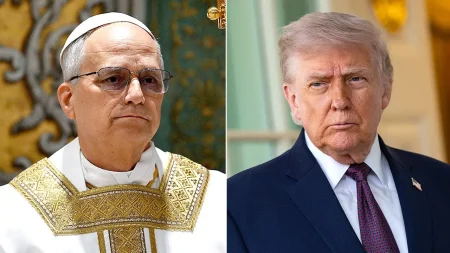
The pope’s recovery seems to be on track, and with it, his demanding public schedule. On Sunday, he is expected to deliver the traditional Angelus prayer service from the hospital or, if he grows stronger, from the Vatican itself. The Angelus is a ritual of connection, a moment when the pope stands at a window and offers a few words to the faithful gathered below. Even from a hospital chapel, the act of continuing that tradition is a signal that the papacy endures, that the institutional Church remains anchored to its spiritual rhythms despite the fragility of the man at its helm. Looking further ahead, the Vatican still plans for Pope Leo to travel to Uruguay, Argentina, and Peru beginning November 6. The trip has long been in the works, and his doctors have not yet said it must be cancelled. In a world where a single illness can upend a schedule, the fact that the pope is still expected to board a plane and embark on a multi-country pilgrimage is a powerful testament to his sense of duty. It also carries a kind of spiritual weight: the pope sees himself as a servant of the Church and of the world, and although his body is wounded, his mission is not. Meanwhile, expressions of concern and support continue to pour in from around the globe. Former President Donald Trump, who has been outspoken in the past about his relationship with the Catholic faith and its leaders, wished the pope a speedy recovery after hearing of the diagnosis. He also spoke highly of the pontiff’s brother, a human touch that reminded many that the pope is not just an institution, but a man with family, with loved ones, with a private life that exists alongside the crimson vestments and the weight of the tiara.
In Moscow, the reaction to the pope’s call was framed in a very different way. The Kremlin did not dispute that the conversation took place, but it offered its own interpretation of the catastrophe. Putin, according to the Kremlin, provided the pope with a “detailed explanation” regarding the Kyiv regime’s responsibility for the difficult humanitarian situation in Oleshky. In other words, the Russian leader sought to deflect blame onto Ukraine, a country that has been invaded, occupied, and subjected to the very unrelenting bombardment that has created such suffering in cities like this one. The Kremlin’s statement then added a more conciliatory note, saying that Putin supports “the Vatican’s intention to help create conditions for ensuring the safety of the local population and facilitating the delivery of essential supplies.” That may sound like an opening for peace, but it must be read carefully. On one side, you have a pope, weakened by surgery, calling for a ceasefire out of pure humanitarian concern. On the other, you have a Kremlin that has starved a city, cut off its water and power, made its hospital inoperable, and forbidden food deliveries for months, and then claims that the victims are actually responsible. It is a familiar pattern in this war: Russia often frames any Ukrainian resistance or Western support as aggression, while presenting its own brutal tactics as necessary, or even benevolent. The pope, with his instinct for dialogue, does not slam doors. He speaks to tyrants as well as to democracies, because he believes that words can soften even the hardest heart. But the answer from Moscow, while diplomatic in form, was unmistakably evasive in substance. The Ukrainian government, for its part, has long accused Russian forces of using starvation and siege tactics as weapons of war in occupied territories, and Oleshky has been cited as a textbook example.
What can we take from this quiet, almost surreal moment between a recovering pope and a war-hardened president? Perhaps it is the reminder that peacebuilding is not always done in grand summit rooms or at long conference tables. Sometimes it is done over the phone, from a hospital bed, in a voice still hoarse from anesthesia. The pope’s call is a kind of parable for our time: a leader who uses his body’s brokenness as an occasion to minister to a broken world. He did not wait to be fully healed before acting. He did not wait for the perfect political moment. He saw a city in agony, a population left without bread or medicine, and he reached for the phone. It is also a reminder of what the Church calls the “option for the poor”—the idea that the measure of any institution, religious or political, is how it treats the most vulnerable. In that sense, Oleshky is not just a city in Ukraine. It is a symbol of every place where human beings are used as pawns in geopolitical games, where food becomes a weapon, where hospitals are left to fail, and where the most basic amenities of life are denied for the sake of military advantage. The pope’s intervention may not stop the war. It may not change Putin’s calculations. But it does what a moral voice is supposed to do: it names the suffering, it calls for mercy, and it refuses to look away. As he lies in recovery, looking up at hospital ceilings, his thoughts are with the people of Oleshky, and with all the forgotten victims of war. And in that act, he reminds us that leadership is not about power, but about presence—especially during the darkest hours.