



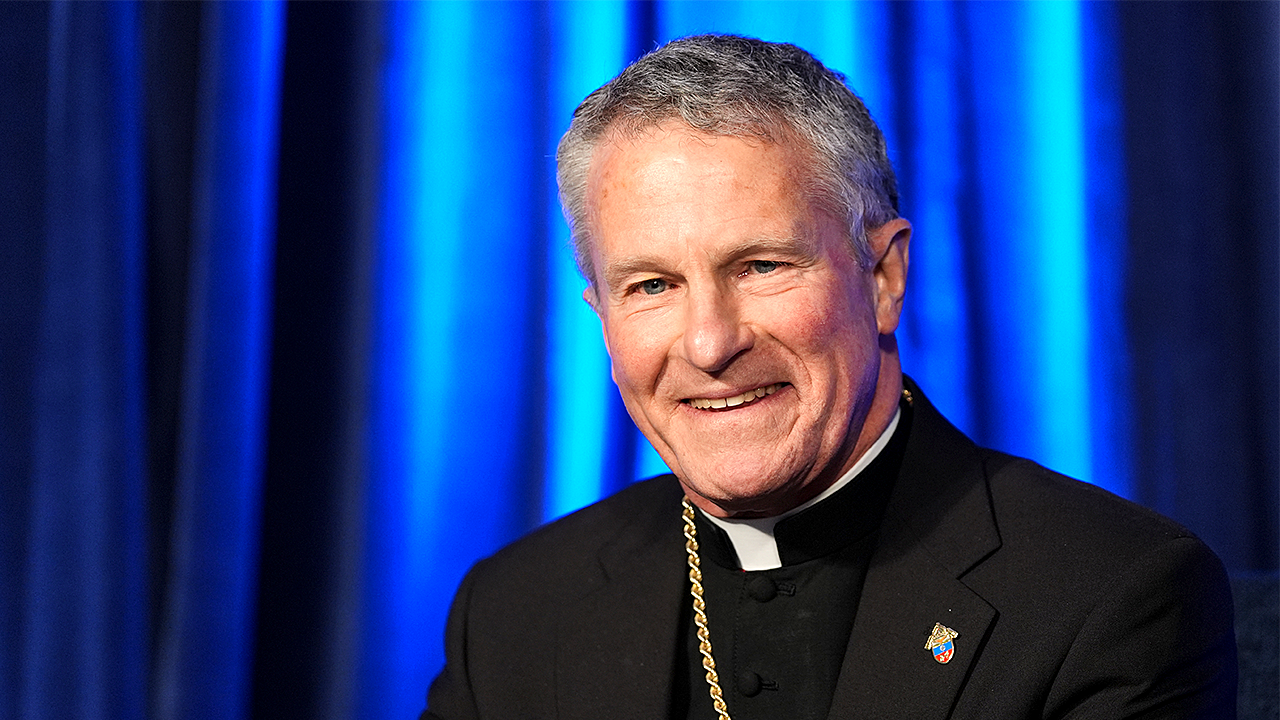
In the quiet corridors of military pastoral care, a prominent voice has risen in alarm. Archbishop Timothy Broglio, who oversees Catholic services for the U.S. Armed Forces, is asking Catholic soldiers to step away from a planned execution that he says violates the teachings of their faith. The case at the center of his plea is that of Nidal Malik Hasan, the former Army psychiatrist convicted of killing thirteen people and wounding thirty-two others in the 2009 attack at Fort Hood, Texas. Hasan is scheduled to die by firing squad on December 3 at 1 p.m. CST on the very base where the massacre occurred. It would be the first military execution by firing squad since 1945, and the first military execution of any kind since 1961. But what has intensified the controversy is not merely the method or the timing—it is the Pentagon’s unprecedented proposal to livestream the execution to the public. Broglio, who once presided over the funeral of Michael Grant Cahill, the only civilian killed in the attack, has spoken with the weight of personal grief and moral conviction. He is asking soldiers to request religious exemptions, and he is asking the nation to pause before turning death into a spectacle.
The plan, championed by Defense Secretary Pete Hegseth, has reopened painful wounds that many thought had begun to heal. Hegseth reportedly wanted the execution to happen at the exact time, day, and location of the shooting, and has argued that publicizing the execution would serve as a deterrent. But for many, the idea of streaming a man’s death—especially a man in a wheelchair, paralyzed and frail—evokes images not of justice but of cruelty. Hasan, now fifty-six, was shot by responding officers during the attack and has used a wheelchair since. The Fort Hood shooting was one of the deadliest attacks on a U.S. military installation in American history. In one horrific afternoon, a medical professional who had taken an oath to heal turned into an instrument of mass violence. The grief of the families has never fully subsided, and for them, the scheduled execution may bring a long-awaited chapter to a close. But the manner of that closing, broadcast live for the entire world to watch, has unnerved people across the political and religious spectrum. It has forced a difficult question: can justice be done without becoming something less than just? Can accountability be served without stripping away the basic dignity that even the guilty possess? Broglio’s questions echo that moral tension, asking whether exposing the public to Hasan’s death serves any true purpose or simply feeds a hunger for vengeance that degrades everyone involved.
Broglio’s statement is direct and personal. He remembers Cahill, and he acknowledges the heinous nature of Hasan’s crime. Yet he refuses to let that horror justify what he sees as a descent into barbarism. “His crime was heinous, but does exposing the public to his execution serve any purpose?” Broglio asked. He went further, instructing Catholics assigned to the firing squad to request to be excused from an action “contrary to the teaching of the Church.” Army regulations do allow for religious accommodations, but the mechanics of how the firing squad would be selected remain unclear. Broglio’s concern is not abstract. He is asking individual soldiers to make a deeply personal moral stand, to refuse to participate in an act their faith deems inadmissible. He also expressed worry about America’s standing in the world. “The U.S. military generally enjoys a good reputation in the world,” he said. “Is there really a value to throwing them in the same boat with terrorists by broadcasting the image of the execution of a man in a wheelchair to the whole world?” It is a striking phrase, and it reflects a broader anxiety that the United States, in seeking to punish a terrorist, might inadvertently imitate the very tactics it condemns. Broglio is not excusing Hasan, nor is he minimizing the grief of the families. He is asking the nation to consider what kind of example it wants to set, and whether public vengeance can ever be squared with the values of a society that claims to respect human dignity.
The archbishop is not alone in his concerns. The head of the U.S. Conference of Catholic Bishops, Archbishop Paul Coakley, expressed shock and sorrow at the plan, urging the nation to reconsider. “In no way can Hasan’s actions be condoned,” Coakley said, “but this decision is a barbaric promotion of a culture of death and must be reconsidered.” He warned that public execution would “undermine the moral fabric of our nation” and leave a blight on the conscience of its people. Meanwhile, Cardinal Pietro Parolin, the Vatican secretary of state, called the proposed broadcast “truly incomprehensible” and said it was “unacceptable to turn death into a spectacle.” Parolin noted that the Church’s opposition to the death penalty is total, describing it as incompatible with human dignity and ineffective as a deterrent. The language from the Vatican has been unusually strong, perhaps because the idea of livestreaming a killing feels so far outside the bounds of modern civilized society. Pope Leo XIV, the first American Pope, also reiterated the Church’s teaching on the death penalty in a social media post marking World Day Against the Death Penalty. “The death penalty is inadmissible because it is an attack on the inviolability and dignity of the person,” he wrote, without directly mentioning Hasan’s case. He emphasized that the common good can be protected without capital punishment, and that effective detention systems can protect citizens while still allowing the guilty the possibility of redemption. The Pope’s words, while general, clearly resonate with the specific situation unfolding in Texas. The Church’s message is consistent: even in the face of grave evil, the state should not become a killer, and it certainly should not put on a show of killing.
Political reactions have been equally divided, and even some conservative lawmakers have stepped forward to voice discomfort. President Donald Trump said Saturday he had not yet decided whether to allow the livestream plan to move forward, though he has reportedly expressed private doubts. Vice President JD Vance, a Catholic, said he would not watch the livestream if it were carried out, signaling his skepticism about the plan’s wisdom. Senator Thom Tillis, a Republican from North Carolina, spoke with bluntness that cut across party lines. “Public executions are what oppressive dictatorships like Iran and Afghanistan do,” Tillis said. “It should not be happening in America.” The comparison to authoritarian regimes is intended to be a wake-up calltons of democratic principles. The United States has not executed anyone by firing squad in nearly eight decades, and no government execution of any kind has ever been broadcast to the public. The mere fact that the Pentagon is considering such a plan represents a cultural shift that alarms many observers. They see it as part of a broader coarsening of public life, a willingness to trade away moral norms for the sake of spectacle. Others, however, may see the livestream as a form of transparency, a way to show that justice is being done. But supporters of the plan have been less vocal, perhaps because the optics are so difficult to defend. It is one thing to execute a convicted mass murderer in a private prison chamber. It is quite another to broadcast the image of a disabled man being shot by a squad of soldiers, in a public display that will live forever on the internet.
At its heart, this story is about the tension between justice and mercy, between punishment and dignity, between the desire for closure and the danger of becoming what we hate. The families of the victims have suffered unimaginable loss. Thirteen people went to Fort Hood that day expecting to serve their country, and they never came home. Their families have waited sixteen years for the legal process to run its course. They deserve recognition and respect for their pain. But the question of how to execute Hasan—or whether to execute him at all—is larger than one man’s guilt. It is a test of whether the United States can hold a person accountable without sacrificing its own moral identity. Many Catholic leaders have argued that killing Hasan, even in an execution chamber, would do nothing to restore the lives that were lost. It would only add another death to the ledger. And by livestreaming it, the government would be inviting the world to watch a human being die, turning a somber moment of justice into a piece of entertainment, a morbid spectacle that reduces both the executed man and the audience to something less than human. Broglio’s plea to Catholic soldiers is really a plea to the entire country: to think about what kind of nation we want to be at the moment we choose to end a life. It is a plea rooted in faith, but it speaks to a universal moral instinct. We do not have to approve of a single thing Hasan did to question whether the state should broadcast his death to the world. We can hold two thoughts at once: the crime was monstrous, and the response should not make us monsters too. As the execution date approaches, the nation faces a choice that will reveal far more about America than it will about Nidal Hasan. Will it be a country that looks away from killing in the dark, or one that stares unblinkingly at a public execution in the name of deterrence? The answer is not yet written. But the voices of conscience, from the Vatican to the armed forces, have already made themselves clear. They are not asking for Hasan to be forgiven. They are asking for him to be dealt with in a way that does not tear the soul of a nation to pieces. In the end, the livestream may be stopped, the execution may proceed, or the whole plan may be abandoned. But the moral question will remain, long after the last bullet is fired: is there any justice in turning death into a show?