


Korean Trading Halt and Leverage Quakes: Unpacking the Ripple Effects on Global Crypto Markets
When Margin Calls Trigger Avalanches
In the fast-moving world of leveraged trading, few mechanisms are as destabilizing as a cascade of forced liquidation orders. When investors trade on borrowed capital, exchanges and brokers keep a vigilant eye on collateral levels, automatically closing positions the moment an account dips below required maintenance thresholds. These forced sell orders are not isolated events; they tend to cluster. A sharp price drop in one asset triggers margin calls across thousands of accounts, and the resulting flood of sell orders pushes prices down further, drawing more accounts into the danger zone. The result is a feedback loop that feeds on itself, turning an ordinary correction into a violent, disorderly rout. It is precisely this type of volatility that market regulators have spent decades trying to contain — and yet the mechanisms they have built, from circuit breakers to temporary halts, are being stress-tested once again as global sentiment sours.
Seoul’s Sidecar Steps In
That stress was palpable in South Korea this week. At around 00:47 UTC on Monday, the Korea Exchange activated its so-called “sell-side sidecar” — a protective brake designed to soften sudden, one-directional selling. According to exchange officials, this marked the first time in roughly two months that the bourse had reached for this particular safeguard. The response was immediate: sell orders were temporarily suspended, giving market participants a forced pause in the midst of a tense session. Although the halt was brief, its symbolic weight was substantial. For traders watching from the outside, the deployment of a sidecar is a flashing signal that something has gone seriously wrong. Unlike everyday dips, this is the kind of development that catches the attention of institutional investors, retail day traders, and, increasingly, the global cryptocurrency community.
What Is Korea’s Sidecar Mechanism?
For anyone unfamiliar with the workings of Asian equity markets, the sidecar is a distinctly Korean innovation in financial engineering. It does not shut down the exchange entirely, as a full circuit breaker might. Instead, it interrupts the order-matching process for a short window — usually around one minute — when futures contracts linked to the KOSPI 200 index move sharply in either direction. If sell-side pressure surges beyond a predefined threshold relative to the previous day’s close, the system stops accepting new sell orders and briefly recalibrates. This gives anxious investors a moment to step back and reassess, preventing panic-driven trades from setting dramatically distorted benchmark prices. Regulators argue that such mechanisms promote stability, offering a cooling-off period without disrupting the overall continuity of trading. The fact that the Korean exchange turned to the tool for the first time in two months is evidence that recent selling pressure had escalated beyond what market participants could absorb smoothly.
Lee’s Warning: When Equities and Crypto Collide
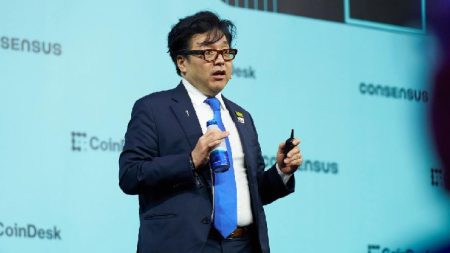
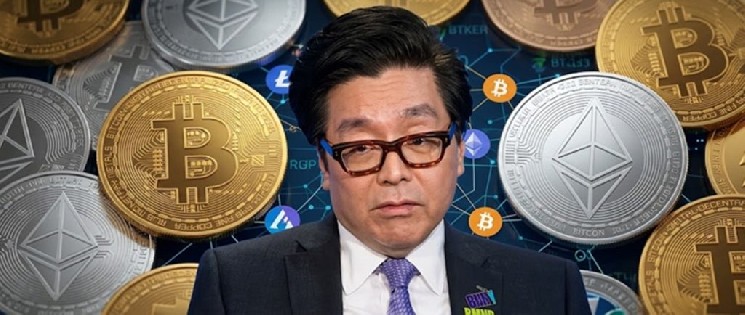
Against this turbulent backdrop, market analysts have been eager to trace the connections between traditional markets and the world of digital assets. In particular, remarks from industry commentator Lee have underscored the potential spillover from conventional financial selling into cryptocurrency markets. Lee warned that if liquidity drains out of equities, especially in a region as digital-asset-savvy as South Korea, crypto could be heavily exposed. The logic is straightforward: when investors face margin calls or need to raise cash quickly, they often unload their most liquid holdings. For a growing number of investors worldwide, that means disposing of major cryptocurrencies like Bitcoin and Ethereum, making these assets an early casualty of broader risk-off sentiment. Considering that South Korea has long been one of the most active crypto trading markets in the world — home to enormous retail participation and a deep culture of digital investing — a slump in the domestic stock market could have outsized effects on blockchain-based assets. Lee’s comments arrive at a moment when correlations between equities and crypto are being closely monitored by analysts seeking clues about where the next shock will emerge.
Does a Stock Slump Really Shake Crypto?
The critical question, of course, is whether a localized event on the South Korean stock exchange genuinely influences global cryptocurrency prices. The answer, not surprisingly, is layered. On one hand, digital assets trade around the clock on a truly international stage, with venues scattered from Tokyo to New York. A temporary suspension of sell orders in Seoul, while significant locally, may not have a direct mechanical impact on a market that never sleeps. Yet the transmission of fear is not limited to direct trading links. Crypto assets have increasingly moved in tandem with traditional risk instruments, particularly during macroeconomic shocks. Bitcoin’s correlation with tech-heavy equity indices has spiked notably during past selloffs, suggesting that investor psychology, rather than any concrete financial connection, often drives cross-market movements. Additionally, South Korean investors — known as the “ant army” for their energetic participation in everything from semiconductor stocks to Dogecoin — have historically reacted to domestic equity losses by reallocating capital from one speculative asset to another, or retreating to cash altogether. That behavioral dimension can quickly turn a Seoul-based correction into a global crypto phenomenon.
However, it would be a mistake to overstate the connection. A sidecar halt is a defensive reflex, a temporary measure that typically lasts just a few minutes to a few hours. It does not automatically portend a prolonged bear market or a crisis in the broader financial system. In some cases, such pauses do precisely what they are designed to do: restore order before panic takes hold. Moreover, the crypto market operates on its own fundamentals — ranging from network adoption and regulatory news to institutional flows and technological innovation. While sentiment shocks can depress prices in the short term, the long-term trajectory of digital assets remains driven by factors far beyond the floors of the Korea Exchange. Still, traders can ill afford to ignore the signal. When a major national exchange deploys its emergency braking system, it is a clear indicator that risk appetite is shrinking, and precious few asset classes remain completely immune in such conditions.
The Road Ahead: Volatility as the Only Constant
The activation of the sell-side sidecar serves as a blunt reminder that no market exists in isolation. Whether through leveraged trading liquidations in crypto, sharp equity declines in Asia, or ripple effects across global indices, financial fragility has a way of migrating across borders and asset classes. For everyday investors, the lesson is not to panic but to understand the machinery at play. Leverage magnifies both gains and losses, and forced sell orders can amplify declines in ways that even experienced traders struggle to predict. Industry safeguards like South Korea’s sidecar are valuable tools, but they are just that — tools. They cannot eliminate underlying risk; they can only slow it down long enough for the market to regain its composure.
As the global economy faces persistent uncertainty — over interest rates, inflationary pressures, geopolitical tensions, and a fast-evolving regulatory landscape — volatility is likely to remain a recurring theme. The connection between traditional markets and crypto assets will continue to deepen as the two ecosystems mature and converge. In the meantime, the best strategy for market participants is prudent risk management: keeping leverage at manageable levels, setting clear contingency plans, and maintaining a long-term perspective that does not get derailed by temporary distress in one corner of the economic world. After all, the sidecar eventually lifts, trading resumes, and the broader story of financial markets continues. It is always worth remembering, however, that every crisis carries a signal — and the one being sent right now is that caution, discipline, and careful diversification are more important than chasing short-term gains.
Disclaimer: This article is for informational purposes only and does not constitute investment advice. Cryptocurrency trading and leveraged trading involve substantial risk. Readers should conduct their own research and consult with a qualified financial professional before making any investment decisions.