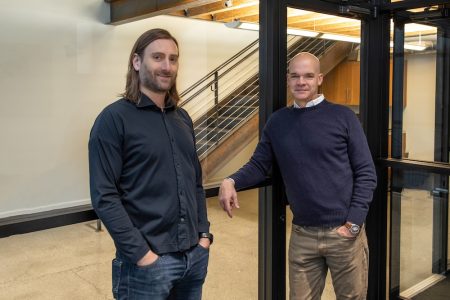


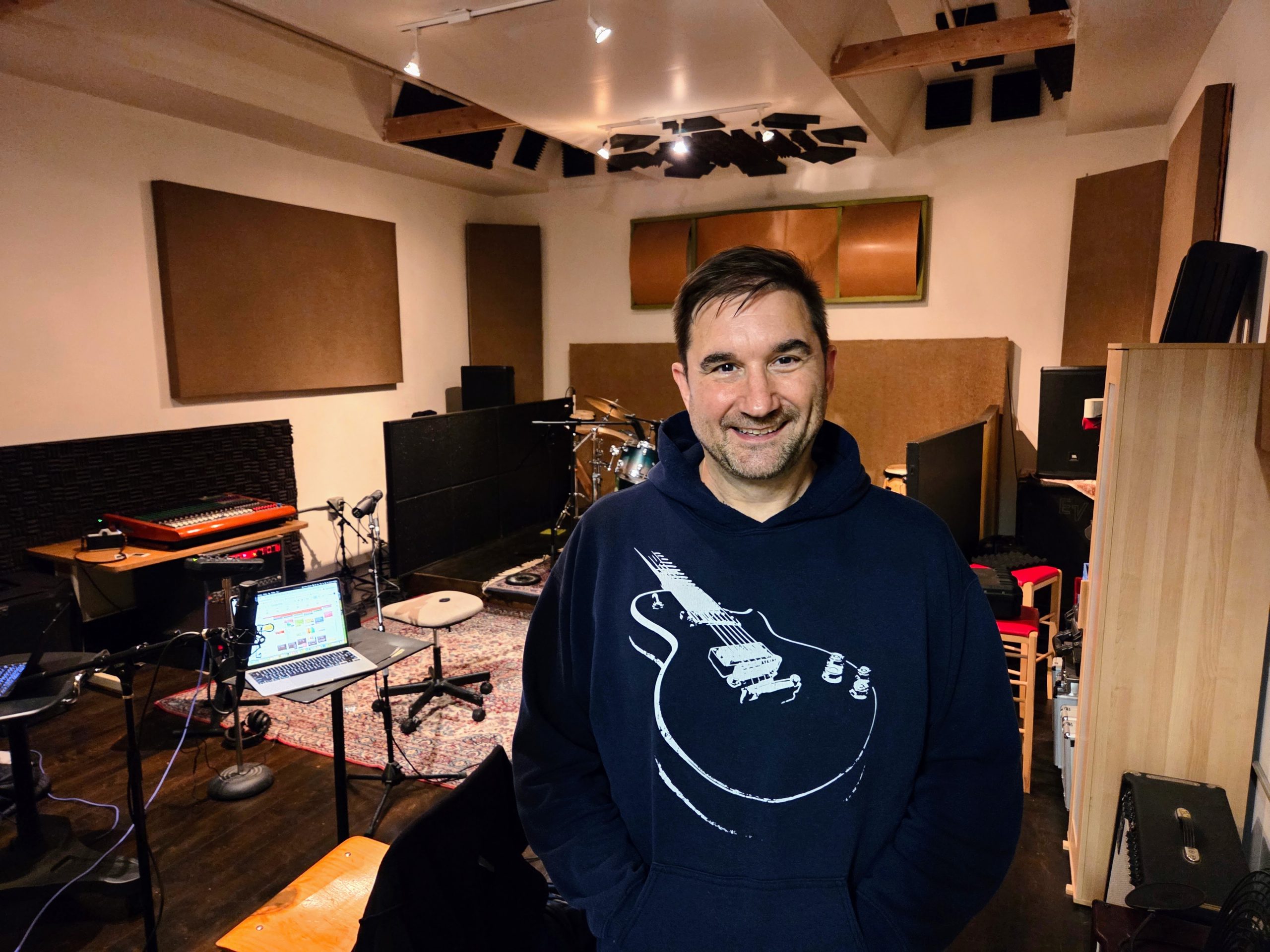
On a bright October morning in Seattle, the GeekWire Podcast set up shop somewhere you wouldn’t necessarily expect for a show about technology: Front Burner Studios, a working music studio tucked near the bustle of Pike Place Market. The date was October 10, 2026, and host Todd Bishop was welcomed by Seth Paul, the studio’s co-owner and the co-founder and CEO of Qinsay, a security startup. The setting was more than just a backdrop. In the control room sat a vintage Trident Series 70 console, a legendary piece of analog recording equipment that Paul had driven all the way from Detroit in the middle of winter. That single detail said a lot about the man and the episode. Here was someone who cared enough about preserving a piece of musical history to haul it across the country through snow, and who also happened to be leading a company in one of the most fast-moving, digital corners of the tech industry. The contrast between the warm, tactile world of analog sound and the cold, abstract world of cybersecurity was not lost on the conversation. It framed the entire episode as a meditation on the different ways people build things: with circuits and software, yes, but also with ears, hands, and an almost stubborn devotion to craft.
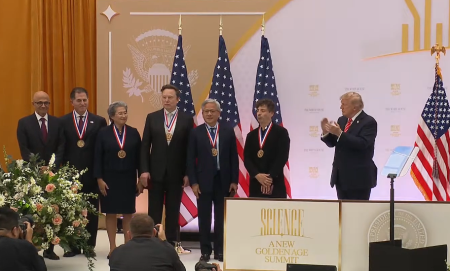
Before Paul joined the conversation, Bishop and the GeekWire crew dug into a pair of stories that, taken together, captured the strange contradictions of the moment in American technology policy. The White House had just announced a crackdown on Microsoft’s green-card sponsorships. Vice President JD Vance delivered that news, according to the episode, only hours before President Trump awarded Microsoft CEO Satya Nadella the National Medal of Technology and Innovation. The timing was striking. On one hand, the administration was tightening the rules that make it harder for a company like Microsoft to sponsor workers for permanent residency. On the other, it was honoring a man who had traveled through that very system on his way to becoming one of the most recognizable technology leaders in the world. Nadella’s story is well known in Seattle: born in Hyderabad, India, he came to the United States, arrived on an H-1B visa, eventually earned a green card, became a citizen, and rose through the ranks at Microsoft to become CEO. His journey is the American dream in a specific, tech-industry form. And yet, as Bishop noted, that same path is now being narrowed. For the thousands of engineers, researchers, and their families who are living through the uncertainty of the visa process, the news was not abstract. It meant longer waits, more anxiety, and in some cases, a future in America that may never arrive. The juxtaposition of the medal and the crackdown felt almost too on-the-nose: a celebration of an immigrant’s success alongside a policy that makes that success harder for the next generation to achieve. The conversation on the podcast didn’t try to resolve the contradiction. Instead, it sat with it, because for many listeners, the two headlines represented the two faces of American tech: one that welcomes and rewards global talent, and another that worries about it.
From there, the podcast turned to something more hopeful: Seattle-area startups raised a record $3.5 billion. The number alone would have been impressive a few years ago, but what stood out to Bishop and his guests was what that money is going toward. A huge share of the funding is flowing to companies that are building physical things, not just apps and platforms. Rockets. Satellites. Manufacturing equipment. This is a meaningful shift for a region that made its name on software and cloud computing. For years, Seattle was the place where you went to build the next great digital product. Now, it’s increasingly a place where founders are rolling up their sleeves and building things that will launch into orbit or come off an assembly line. The record number suggests investors see something real in this shift. It’s one thing to click through a thousand iterations of a user interface; it’s another to design a rocket that has to survive the violence of launch and the vacuum of space. The companies raising this money are taking on hard physics and harder logistics. They’re hiring machinists, aerospace engineers, and people who know how to weld. That’s a different kind of tech economy than the one Seattle has known, and it brings with it different risks and rewards. The money is a bet on the future, but it’s also a bet on the people who can make physical objects work. As the podcast pointed out, this isn’t just about venture capital. It’s about what happens after the funding round: factory floors, supply chains, and the long, unglamorous work of turning a prototype into something reliable. Still, there’s something inspiring about a region that has produced so much digital wealth now turning its attention to the stars.
One example of this hardware boom is Shield AI’s plan to build AI-piloted fighter jets in Des Moines, Washington. The phrase itself is enough to stop you in your tracks: AI-piloted fighter jets. Not drones, not remote-controlled aircraft, but planes where the artificial intelligence is the pilot. Des Moines, a small city just south of Seattle, isn’t the first place you’d expect to be at the center of that kind of project. And perhaps that’s why the city’s official FAQ takes pains to assure residents that the facility is not a data center. In the podcast, Bishop and his guests couldn’t help but take note of that line, and they understood it. Data centers have become a familiar and often unwelcome presence in Washington communities, with their noise, their power demands, and their hulking buildings. Saying “we’re not a data center” is a low bar, but it’s also a way of saying: we know what you’re worried about, and this is different. Of course, an AI-piloted fighter jet factory comes with its own set of questions. What will it mean for a quiet community to have a defense aerospace operation nearby? How will people feel about the noise, the security, and the secrecy that often comes with military work? And what does it mean to entrust a fighter jet to an algorithm? Shield AI is betting that autonomy can save lives, both by keeping human pilots out of harm’s way and by making aircraft smarter and more responsive. But for the residents of Des Moines, the promise of high-paying jobs and a place at the leading edge of aviation is likely mixed with a more complicated feeling. The FAQ is a small attempt to bridge that gap, to say: we’re part of your community, and we want to be good neighbors. Whether that works will depend on more than words. It will depend on what actually gets built, and how it feels to live next door to the future.
After the news, Seth Paul joined the conversation, and the tone of the episode shifted. Paul talked about Front Burner Studios with the kind of reverence that musicians reserve for their instruments. The vintage Trident Series 70 console is not just a piece of equipment; it’s a piece of history. It was built in an era when recording was a physical craft, when every knob and fader had a purpose, and when making an album required a room full of people and a deep understanding of signal flow. Paul’s decision to drive the console from Detroit to Seattle in the middle of winter says a lot about him. You don’t do that for a hobby. You do it because you believe that some things are worth preserving, even when it would be easier to buy something new and digital. That same philosophy carries over into his work as a startup founder. Paul talked about bringing a musician’s approach to the world of security startups. A musician listens before they play. They feel out the room, they respond to the other people on stage, and they understand that timing is everything. In a startup, Paul argued, you need the same kind of sensitivity. You can’t just push your product on people; you have to hear what they actually need. You have to be willing to improvise when things don’t go as planned. And you have to be comfortable with the fact that making something new is often messy, full of wrong notes and false starts, before it comes together. It’s a different way of thinking about leadership than the aggressive, data-driven style that dominates so much of the tech world. It’s more collaborative, more patient, and perhaps more humane. Sitting in the studio, surrounded by soundproofing and cables and the warm glow of the old console, it was easy to see why Paul might want to bring that feeling into his other work. The two worlds are not as separate as they seem. Both require you to trust your instincts, to work with other people, and to believe that something beautiful can be built from raw materials.
The episode ended with a return of the GeekWire Trivia Challenge, a segment that has become a favorite among listeners. It’s a chance to test your knowledge of the news, to compete with friends or just yourself, and to feel like you’re part of a community that cares about the details of the Pacific Northwest’s tech scene. The trivia questions are always a mix of serious and silly, and they serve as a reminder that not everything in technology has to be taken so seriously. After all, the same week that brought a record-breaking funding number and a high-stakes debate about immigration policy also brought the simple joy of asking people which Seattle landmark was featured in which movie, or how many data centers it takes to power a small country. The GeekWire Podcast has always understood that balance: the tech industry is full of weighty, consequential stories, but it’s also full of people who like to laugh, who love weird facts, and who find joy in the absurd. From the warm, creative space of Front Burner Studios, with its vintage console and its walls full of music history, to the hard news of government policy and aerospace manufacturing, the episode captured the full range of what it means to be part of the technology world in 2026. It’s a world of contradictions, but it’s also a world of possibilities. And as Bishop reminded listeners, you can catch all of it on GeekWire, whether you subscribe in Apple Podcasts, Spotify, or wherever you listen. The conversation, the stories, and the trivia are all waiting for you. You just have to press play.