

Paragraph 1: The Refrain and the Rebellion
When I first told people I was packing my bags for Los Angeles, the reaction was almost always the same: a knowing nod, then that dreaded sentence—“You have to have a car.” It was delivered like a universal law, as unbreakable as gravity or the Hollywood sign’s stubborn perch on the hills. The implication was clear: without four wheels and a growling engine, I might as well be trying to survive on Mars. But I’ve never been great at listening to rules, especially when my wallet is screaming. So I ignored the chorus, flew into LAX with a single suitcase and a stubborn streak, and have lived here for nearly nineteen years without ever owning a car. No lease, no insurance payments, no frantic searches for parking that costs more than dinner. And you know what? I’ve thrived. A conservative estimate says I’ve saved around $1,755 a year compared to a typical car owner in this city, which stacks up to over $33,000 since I arrived. That’s not chump change—that’s the down payment on a condo in a slightly less trendy neighborhood, or a lifetime supply of tacos. And had I been smarter with rideshare spending, I’d have saved even more. But I’m not here to brag about my frugality; I’m here to tell you that the naysayers were wrong. Living car-free in LA isn’t just possible—it’s sometimes glorious.
Paragraph 2: Why I Ditched the Driver’s Seat
My aversion to driving didn’t start in LA; it started years earlier in Minnesota, where the winters were long and the drivers were—let’s just say—aggressive. I was never a car guy, despite my secret, lifelong crush on the Corvette (if I ever win the lottery, it’s the first thing I’m buying). But even that dream machine couldn’t cure my rage behind the wheel. Every time someone cut me off, every slowpoke who camped in the left lane, every person who backed into a parking spot like they were fleeing a Target heist—I felt my Irish temper bubble up like a volcano. And that was in a state with, comparatively, light traffic. The thought of sitting in LA’s infamous gridlock, breathing exhaust fumes and watching my blood pressure spike, was enough to keep me out of the driver’s seat permanently. So when I moved in January 2008, I rented a Penske truck and made that 1,600-mile trip from the Midwest. That was the last time I touched a steering wheel. And I don’t miss it—not for a second. The freedom I found wasn’t on the open road; it was on a bus bench with a book in my hand, watching the city pass by at a slower, saner pace.
Paragraph 3: The Art of Getting Around
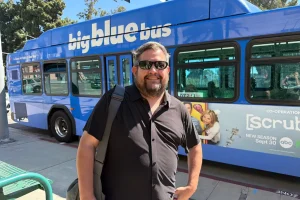
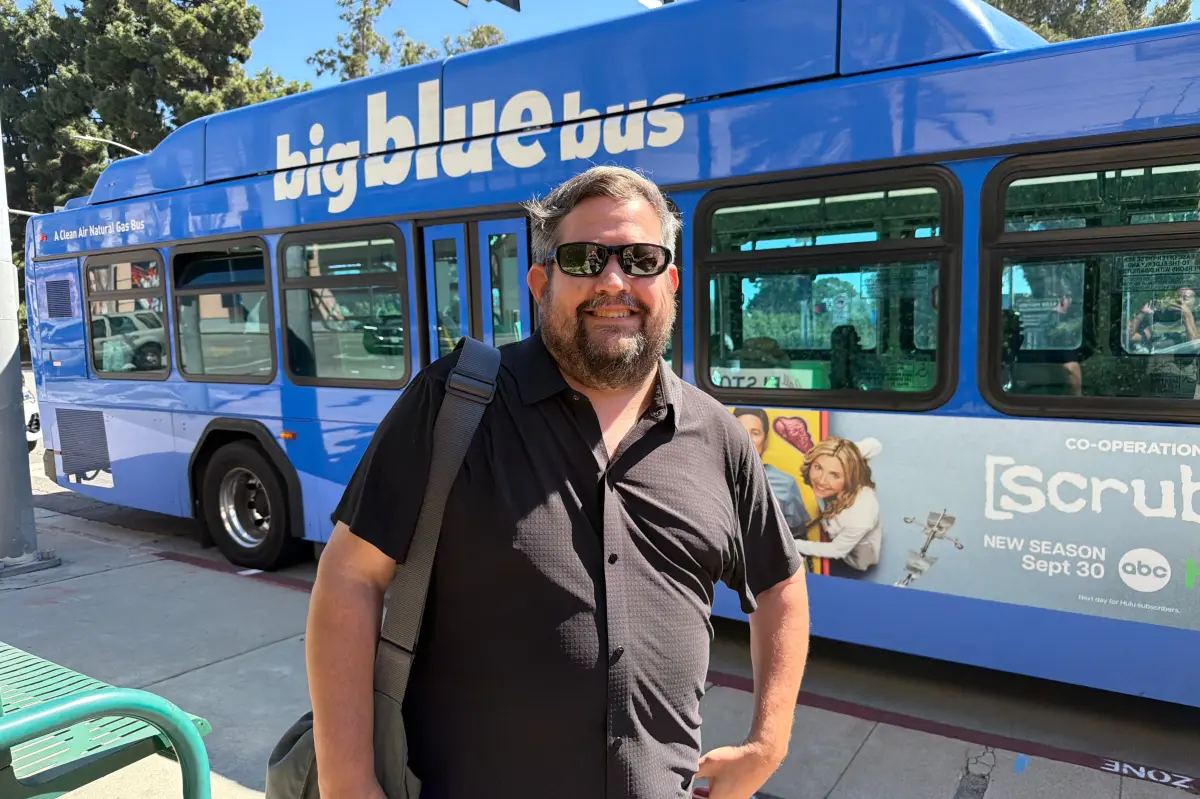
When I first arrived, my job paid a modest $30,000 a year, which in 2008 was barely enough to cover rent and ramen. Most of my work happened from my tiny Hollywood apartment, and the premieres I covered were often just a few blocks away, so I walked. For everything else, I discovered the transit system—buses and trains that cost $1.75 a ride, with daily caps that made even the longest excursions affordable. The LA Metro isn’t perfect; it’s not as sprawling as New York’s subway or London’s Tube, and it often leaves you waiting on a corner with the sun beating down. But it works. And when Uber and Lyft arrived in 2012 and 2013, my life got even easier. I could still take the train for my daily commute, but when I was stumbling out of a bar at 2 a.m., I could call a ride home without worrying about parking or DUIs. The buses fill the gaps the trains miss, and my commute to the newsroom—a 45-minute ride on the 20/720 down Wilshire, then a transfer to the Big Blue Bus—became a ritual. Yes, the smell can be interesting (somewhere between gym socks and bologna), and yes, there’s always someone blasting music from a Bluetooth speaker. But I’ve learned to tune it out, or better yet, plug in my own headphones and escape into a podcast.
Paragraph 4: The Hidden Joys of Transit
The biggest surprises came from the people. In almost nineteen years of riding LA Metro, I’ve never been physically accosted, never had a weapon drawn on me. I’ve seen a few unsettling things—like the time I saw a body covered with a sheet at Hollywood and Vine, or the man who projectile vomited across a train car with biblical intensity. But those moments are rare. For the most part, my fellow riders are just like me: people going to work, to see a friend, to catch a game at Dodger Stadium. I’ve had beautiful moments too. I’ve watched babies smile and wave from their mother’s laps. I’ve chatted with strangers about art museums and his favorite Dungeon Crawler Carl book (yes, I’m a crawler, and yes, we find each other). I once had a man ask me, completely earnestly, “Am I ugly, bro?” after he failed to impress a woman on the night bus. There’s a rawness to public transit that you can’t get from a driver’s seat—you see the city’s grit, its charm, its desperation, and its kindness. Every bus ride is a slice of unedited Los Angeles, and honestly, that view is worth more than any premium parking spot.
Paragraph 5: The Numbers Game
Let’s talk money, because that’s what really sells the car-free life. Owning a car in LA is shockingly expensive. The American Automobile Association says a new car costs upwards of $12,863 a year, but even used ones aren’t cheap. For an average commuter driving 8.4 miles each way, gas alone would eat about $970 annually at LA’s sky-high prices. Insurance? At least $1,853 a year for minimal coverage. Registration fees add up to $500. Parking at my apartment complex would run me $150 a month, a cool $1,800 a year—and that doesn’t count the $25 to park at the Academy Museum or the $45 at Dodger Stadium. Add maintenance, repairs, and the occasional parking ticket, and you’re looking at a five-figure bill or, at a minimum, $5,634 a year. Now here’s what I actually pay: a Metro TAP card loaded with $18 a week covers most of my rides, totaling $936 a year, plus about $260 for transfer fees. Then there’s my Achilles’ heel—Lyft. I took 97 rides this year, mostly late-night bar runs, totaling $2,683. Add it all up, and I’m spending about $3,879 a year to get around. That’s a savings of $1,755, even with my lazy rideshare habit. If I cut the Lyft, I’d save over $4,400 a year. I could buy a really nice electric bike. Or a Corvette—eventually.
Paragraph 6: Tips, Privilege, and the Bottom Line
Yeah, I know I’m speaking from a place of privilege. I’m an older white guy, and a woman on the train might have a completely different—and often scarier—experience. LA’s transit system isn’t for everyone, and I respect that. But for those willing to try, I have some hard-earned advice: avoid engaging with the loudmouths who need an audience, because they will latch onto you like a tractor beam. You don’t need a TAP card anymore—Metro accepts credit cards now. And for the love of all that is holy, bring your headphones. You are not the DJ, and we are not your audience; nobody wants to hear your playlist at full volume. Despite the quirks, though, I’ve made my peace with the system. It’s not always comfortable, but it’s real. You see the actual Los Angeles—the people who keep this city breathing—from an unpadded bus seat, not from the isolation of a climate-controlled SUV on the 405. I’m content to skip the traffic, save the money, and spend it on travel, beer, and the occasional Dodger game. If that makes me a transit evangelist, so be it. I’d rather be car-free and smiling than stuck in a parking garage with a dwindling bank account and a ticking temper.