


1. A City Wakes to the Sound of Gunfire
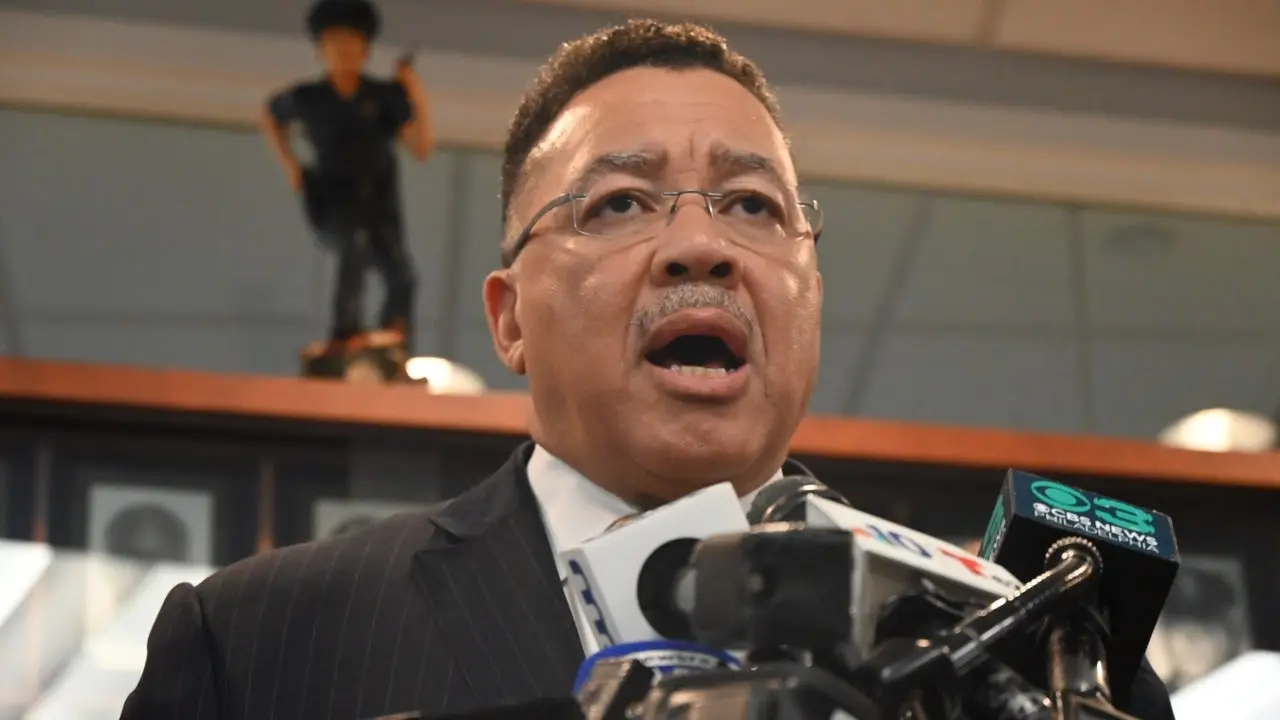
In the earliest hours of a Saturday morning, when most of Philadelphia was still wrapped in the quiet of sleep, two police officers answered a call that would change their lives and the lives of their families forever. The city, known for its grit and its unbreakable spirit, woke to news that two of its finest had been shot while doing a job that most of us could never imagine doing. The officers had been dispatched to a residential block in West Philadelphia after a report of a man with a gun on a porch. What seemed like a routine call for service quickly turned into a nightmare of ambush and violence. Police Commissioner Kevin Bethel stood before cameras, his voice heavy with emotion, and delivered the kind of update no police leader ever wants to give. One officer, a 40-year-old father of two, had been shot three times. The other, a 33-year-old father of five, had been shot twelve times. The numbers were staggering, almost too brutal to process. As the sun rose over the city, the families of these officers rushed to Penn Presbyterian Medical Center, their hearts pounding, their prayers desperate, hoping against hope that surgery would save the men they loved. The conditions of both officers remained unclear, and a city held its breath. This was not just a statistic or a headline; these were human beings with children who would be waiting for their fathers to come home. The news hit like a wave, and even Commissioner Bethel, a man accustomed to the harsh realities of police work, could not hide his anguish. He asked for prayers, he asked for support, and he made it clear that the men and women who wear the uniform run toward danger when everyone else runs away. In that moment, the shooting was more than an incident; it was a stark reminder of the cost of public safety, paid in blood by ordinary people doing extraordinary things.
2. The Call and the Ambush
The sequence of events leading to the shooting began just after midnight, when the radio crackled with a report of a man with a gun on a porch at 140 North 52nd Street. For police officers, such calls are common, yet always unpredictable. There is no such thing as a routine call in a city like Philadelphia, where firearms are all too easy to obtain and where a porch can become a stage for tragedy. The two officers responded, likely expecting to find a suspicious person, perhaps to calm a neighbor’s fears, perhaps to make an arrest. But as they approached the porch, they had no idea that they were walking into a trap. According to officials, the officers came under significant gunfire once they were on the porch. The suspect had reportedly run down an alley and opened fire on them, unleashing a hail of bullets that struck both officers before they could even take cover. The sheer volume of gunfire was shocking. One officer absorbed three bullets, the other twelve, a number that suggests the shooter was determined to kill. The ambush was swift, brutal, and cowardly. In the chaos that followed, additional officers and a SWAT team arrived at the scene. They found the original responding officers lying wounded on the porch, their blood pooling on the concrete, their lives hanging in the balance. The scene must have been harrowing, with sirens wailing, radios screaming, and officers fighting to save their brothers while still searching for the gunman. The suspect, still armed, fired at two more officers before the SWAT team managed to locate him hiding in a tree and take him into custody. The bravery displayed by the responding officers and the tactical team was extraordinary, but the damage had already been done. Two fathers were now fighting for their lives on operating tables, and their families were left to wait, pray, and wonder if they would ever see them again.
3. The Human Faces Behind the Badges
Behind every badge is a person, and behind every person is a family. The 40-year-old officer who was shot three times is a father of two, a man who likely kissed his children goodbye before starting his shift, promising to be home in the morning. The 33-year-old officer who was shot twelve times is a father of five, a man whose children range in age from toddlers to teenagers, all of whom now face the terrifying possibility that their father might not survive. These are not just numbers on a police report. These are men who have birthdays, favorite foods, inside jokes with their partners, and memories of Christmases and school plays and bedtime stories. They chose a profession that requires them to put their lives on the line for strangers, to run into gunfire while others flee, to make split-second decisions that can mean the difference between life and death. And on this Saturday morning, their choice came at an unimaginable cost. Their wives or partners, their parents, their siblings, and their children were left in a hospital waiting room, clutching each other, staring at the doors that might open with good news or devastating news. The human toll of this shooting extends far beyond the officers themselves. It reaches into the homes of seven children who may now grow up without their fathers. It reaches into the hearts of their extended families and their friends. It reaches into the ranks of the Philadelphia Police Department, where every officer feels the weight of this attack as if they themselves had been shot. Commissioner Bethel’s voice cracked as he spoke of his pride in the men and women who serve, and his words were a reminder that every time an officer is shot, an entire department bleeds. The road to recovery, if it comes, will be long and painful. There will be surgeries, rehabilitation, and the invisible scars of trauma that may never fully heal. But in this moment, all anyone could do was hold onto hope and pray for a miracle.
4. The Commissioner’s Words and the Weight of Duty
Commissioner Kevin Bethel did not hide his emotions at the news conference. He spoke with a rawness that cut through the usual bureaucratic language of official statements. “I am so damn proud of the men and women who serve in this department. Consistently, they go into danger, and they give their lives for this job,” he said. His words were not just a formality; they were a heartfelt tribute to the courage of his officers, and a plea to the public to understand what it means to serve. Bethel asked for prayers and support, acknowledging that the men and women in uniform need the community behind them, especially in moments like this. His words resonated because they reflected a truth that is often forgotten in a time of polarized debates about policing. Every day, officers leave their families and step into the unknown. They respond to calls about guns, drugs, domestic violence, and mental health crises. They encounter people at their worst moments, and they do so while carrying the weight of immense responsibility. The shooting of these two officers was a stark illustration of that reality. They were not involved in a controversial stop or a high-profile pursuit. They were simply answering a call about a man with a gun, trying to protect a neighborhood, and they were nearly killed for their efforts. The commissioner’s words also served as a reminder that the trauma of such events extends to the entire department. Officers who arrived at the scene saw their colleagues bleeding and broken. They had to secure a dangerous suspect while simultaneously providing aid. They will carry those images with them for the rest of their careers. Bethel’s pride in his department was evident, but so was his pain. He is not just a commissioner; he is a leader who feels the weight of every injury, every death, every family shattered by violence. His request for prayers was a humble acknowledgment that even the strongest leaders cannot shield their people from the dangers of the job.
5. The Suspect, the Weapons, and the Questions That Remain
As the investigation unfolded, more details emerged about the suspect and the weapons used in the attack. The suspect, whose name had not yet been released, was found with two handguns and a shotgun. Perhaps most chilling of all, one of the handguns belonged to one of the officers who had been shot. This detail suggests that the struggle was even more chaotic and desperate than initially described. In the midst of the gunfire, the suspect may have disarmed an officer, or the officer’s weapon may have been lost or knocked away during the ambush. Either way, the fact that the suspect was in possession of an officer’s firearm adds a layer of horror to an already horrific event. The suspect had reportedly fired at two additional officers before being located in a tree by the SWAT team. It is almost surreal to imagine a man who had just shot two police officers climbing into a tree in an attempt to evade capture. Perhaps he was trying to hide, perhaps he was trying to gain a vantage point, or perhaps he was simply panicking after realizing the enormity of what he had done. Fortunately, the SWAT team was able to take him into custody without further bloodshed. But the questions remain. Why did he open fire on the officers? What led him to that porch on that night? Was he motivated by a hatred of police, by mental illness, by a desire to avoid arrest, or by some other dark impulse? The investigation will seek to answer these questions, but the answers will not change the fact that two officers are lying in a hospital, fighting for their lives. The suspect now faces serious charges, likely including attempted murder of police officers, aggravated assault, and weapons offenses. He will have his day in court, but the damage he has done is already immense. The city of Philadelphia, already grappling with gun violence and public safety challenges, now has another painful story to add to its collective trauma. There is no good outcome from a night like this, only the hope that the injured officers will survive and recover, and that the justice system will hold the shooter accountable for his actions.
6. A Community United in Prayer and Resolve
In the aftermath of the shooting, Philadelphia stood at a crossroads. It would have been easy to give in to anger, to despair, or to the cynicism that often accompanies such tragedies. But instead, the community began to rally around the injured officers and their families. The hospital became a gathering point for family members, fellow officers, and community leaders, all united in prayer and support. Social media was flooded with messages of hope and solidarity, as ordinary citizens expressed their gratitude for the sacrifices made by police officers. The shooting was a reminder that, despite the divisions and disagreements that often dominate the public discourse, there are moments when a city comes together to support those who protect it. Commissioner Bethel’s call for prayers was echoed by many, and the families of the officers no doubt drew strength from the outpouring of love. The road ahead will be difficult. The officers face long recoveries, multiple surgeries, and the emotional and psychological toll of having been ambushed. Their families will need support for months and years to come. The department will need to process this trauma, and the entire city will need to reflect on the fragility of life and the courage of those who choose to serve. But in the midst of this darkness, there is also hope. Hope that the officers will pull through. Hope that their children will not have to grow up without them. Hope that the community’s support will make a difference. And hope that, in the end, the resilience of the human spirit will overcome even the most senseless acts of violence. The two officers who were shot on that porch in West Philadelphia represent the best of what a city can offer. They ran toward danger when others ran away. They put their lives on the line to protect strangers. They are fathers, husbands, sons, brothers, and friends. And as they lie in the hospital, surrounded by the prayers of a grateful city, we are reminded that heroism is not a word to be thrown around lightly. It is earned in moments like this, in the quiet courage of men and women who choose to serve, knowing full well that they may not come home. Tonight, a city waits and prays for two heroes, and for the families who love them.