

Paragraph 1
On a tense Thursday afternoon in the Bronx, a routine immigration enforcement operation spiraled into a shooting that has now landed in federal court, ignited protests, and reopened a fierce national debate about how the United States handles undocumented immigrants with criminal records. The central figure is Oscar Belgal, a 28-year-old Dominican national, who was shot by a U.S. Immigration and Customs Enforcement agent during an attempt to arrest him. Within days, a federal judge intervened to temporarily block his deportation, adding a dramatic legal layer to an already volatile situation. Belgal was not just an enforcement target; he was a father who had his five-year-old son in the car with him at the moment of the shooting. The child was unharmed, but the image of a small boy in the backseat during a hail of gunfire has haunted the public response. Federal authorities insist the agents acted lawfully, saying Belgal tried to drive away and accelerated toward officers who had blocked his vehicle. But the optics of an armed federal operation involving a child, a bullet left lodged in a man’s body, and the immediate political fallout have made this case a flashpoint. Protesters in the Bronx have already taken to the streets, and community advocates are demanding answers. Meanwhile, the legal system is moving quickly, with a judge in Manhattan issuing an order that, for now, prevents Belgal from being removed from the country. The case is no longer just a local law enforcement matter; it has become a national symbol of the collision between immigration policy, public safety, and the rights of even those with criminal histories.
Paragraph 2
The facts of the shooting, as presented by authorities, paint a picture of a fast-moving, dangerous confrontation. According to the Department of Homeland Security, ICE officers were conducting a targeted operation to arrest Belgal in the Bronx. They knew him well: he had a prior grand larceny conviction and previous arrests for assault, robbery, drug possession, and weapons possession. Federal authorities also alleged that he had ties to the Trinitarios street gang, a violent organization with roots in New York City. The operation began with officers surrounding Belgal’s vehicle, likely intending to take him into custody without incident. But things quickly went wrong. NYPD Commissioner Jessica Tisch told reporters that Belgal pulled his vehicle forward before at least one officer fired seven rounds, with one bullet striking him just below his left ear. Marcos Charles, a senior ICE official, offered a more detailed account at a Washington news conference alongside Homeland Security Secretary Markwayne Mullin. Charles said ICE officers used their vehicles to block Belgal as he attempted to drive away, but Belgal accelerated toward them. In that moment, the officers believed their lives, the lives of their partners, and the general public were in immediate danger. They fired, Charles explained, using their training to stop a threat. The officers did not know a child was inside the vehicle. But Charles was blunt: Belgal knew. He knew his son was in the backseat, and he still made the choice to try to evade law enforcement, putting the boy at risk. That distinction has become central to the federal government’s defense. For law enforcement, the shooting was a justified response to a dangerous suspect. For critics, the presence of a child makes the entire operation feel reckless and inhumane.
Paragraph 3
Within hours of the shooting, the legal battle began. Belgal survived and was treated at a local hospital, though his lawyers say a bullet remains inside his body. He has since been released from medical care, but he was not free. Instead, he found himself at the center of a federal court fight over his future. In a two-page order, U.S. District Judge Paul Oetken, an appointee of President Barack Obama, ruled that Belgal cannot be removed from the United States without a court order while his petition challenging his detention remains pending. The judge also barred federal authorities from transferring him to any facility outside the Southern or Eastern Districts of New York or the District of New Jersey without prior court approval. That order effectively froze the deportation process, at least for now. At a Friday court hearing, the defense application for a temporary restraining order was dismissed with prejudice, but only because federal prosecutors did not challenge Oetken’s order that Belgal not be deported. In other words, the government accepted the restriction, at least for the moment. The judge’s decision is a significant legal victory for Belgal and his attorneys, who argue that he should not be deported before his case is fully reviewed. It also signals that the judiciary is willing to step in and slow down immigration enforcement when questions about due process arise. For Belgal, the order means he will remain in the country, likely in custody, while his lawyers fight to keep him here. For the government, it is an obstacle in a case it wants to present as a clear-cut example of necessary enforcement against a dangerous criminal.
Paragraph 4
Outside the courthouse, the emotional and political temperature was high. Harold Solis, an immigration attorney with the nonprofit Make the Road New York, did not mince words. “Regardless of whether or not someone has a criminal history, it is not lawful and it is not OK to shoot a father in an afternoon with his son in the back seat,” Solis told reporters. “That is not how we resolve legal disputes in this country. We resolve them in buildings like these, in courtrooms.” His comments captured the outrage felt by many in the Bronx and beyond. The shooting has become a rallying cry for immigrant rights advocates who see it as another example of aggressive federal enforcement targeting vulnerable communities. Protests erupted in the Bronx, with demonstrators demanding answers and accountability. At the same time, Bronx District Attorney Darcel Clark struck a more measured tone, saying her office was working to establish the facts of the case and determine the next course of action. “Any shooting in the Bronx is a matter of grave concern that impacts community safety,” Clark said in a statement. “As District Attorney, it is my top priority to protect the well-being of everyone in the borough. We will continue to conduct a thorough investigation where our process is guided by the evidence and the law.” The dual responses reflect the complexity of the moment. On one side are those who feel the federal government acted recklessly and needlessly endangered a child. On the other are those who believe Belgal’s criminal history and alleged gang ties made him a legitimate enforcement target. The court system is now the arena where those competing views will be tested.
Paragraph 5
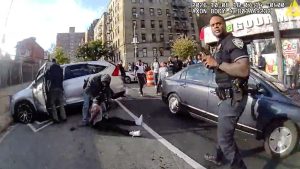
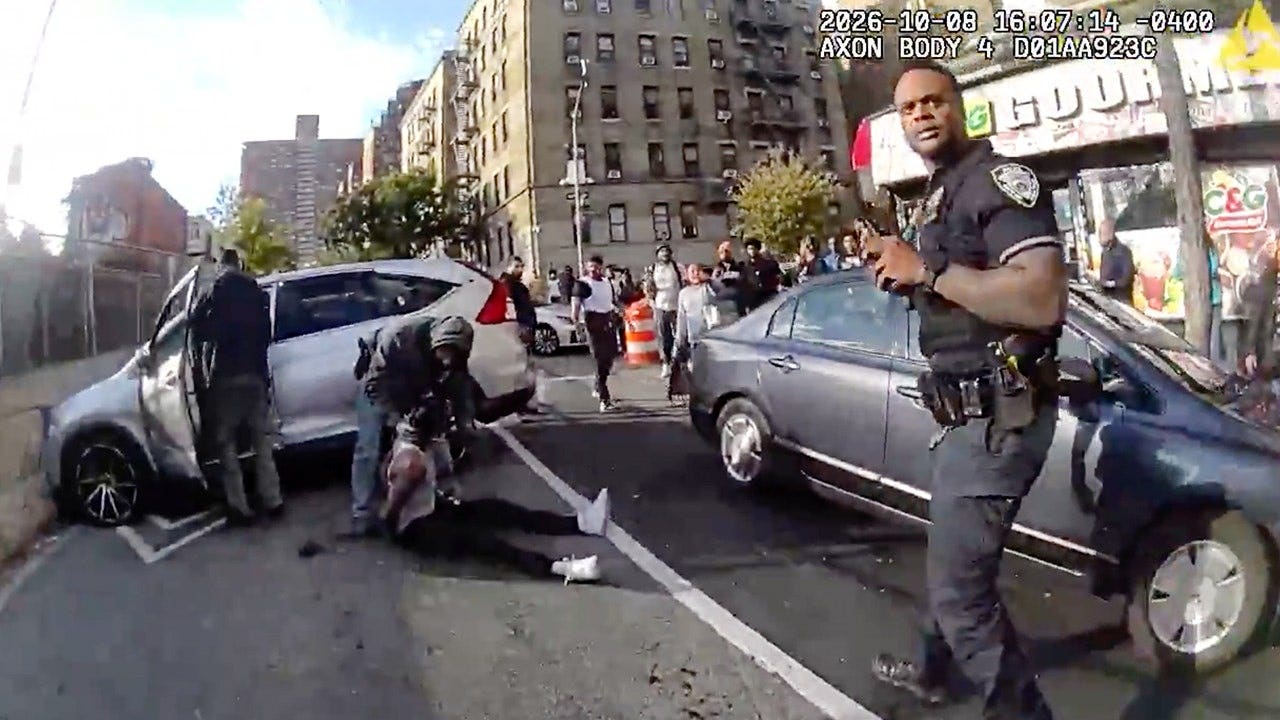
The release of video footage has only intensified the scrutiny. On Friday, the NYPD released bodycam footage showing officers arriving at the scene after the gunfire. The NYPD itself was not involved in the shooting, but its officers were among the first responders. The video shows Belgal sitting handcuffed on the ground as officers approach. In the background, a crowd can be heard voicing anger and dismay at what had just happened. The raw emotion in the audio is difficult to ignore; people are shouting, confused, and clearly shaken by the sight of a man bleeding on the pavement. Hours later, the NYPD released surveillance video taken from two vantage points. The muted video shows one angle of the seconds right before the shooting and another angle right after. At one vantage point, a parked car begins to back up as two people approach, one of whom is pointing a gun at the driver’s side window. The car then pulls away, and the other person pulls out a weapon. The second angle shows pedestrians ducking and running for cover as shots ring out. Later in the clip, someone appearing to be a law enforcement officer is seen holding a small child. The video does not provide a simple narrative. To some, it shows officers confronting a suspect who refused to comply and tried to escape. To others, it shows a heavily armed federal operation in a crowded neighborhood, with a child in the line of fire. The footage also raises questions about the sequence of events: Was the gun pointed at Belgal before he drove forward? Did he actually accelerate toward officers, or was he trying to flee? These are the kinds of details that will matter in court and in the court of public opinion.
Paragraph 6
At its core, this case is about more than one man’s immigration status or even one shooting. It is about the difficult, often painful choices that come with enforcing immigration laws in a country that is deeply divided over how to do so. Belgal is not a sympathetic figure on paper. He has a criminal record that includes serious charges, and federal authorities have linked him to a violent street gang. The government’s argument that he posed a danger to officers and the public is not without merit. But the circumstances of his arrest — the presence of his young son, the bullet still in his body, the judge’s decision to block deportation — complicate the story. They remind us that even people with criminal histories are still human beings, still fathers, still someone’s child. They also remind us that immigration enforcement is not a clean, abstract process. It happens in real neighborhoods, with real consequences, and sometimes it goes tragically wrong. The judge’s order gives Belgal a temporary reprieve, but it does not resolve the underlying questions. Will he ultimately be deported to the Dominican Republic? Will the ICE officers face any disciplinary action or criminal charges? Will the boy who sat in the backseat during the shooting grow up with the memory of that afternoon seared into his mind? None of these questions have easy answers. What is clear is that this case has become a symbol of a larger struggle over the balance between public safety, due process, and compassion. In the weeks and months ahead, as the legal proceedings continue and more evidence comes to light, the nation will be watching. For now, the shooter and the man who was shot remain locked in a standoff, not just on the streets of the Bronx, but in the hallways of justice, where the fate of one undocumented immigrant will help define the meaning of fairness in America.