


1. A Season of Triumph and Unspoken Sorrow
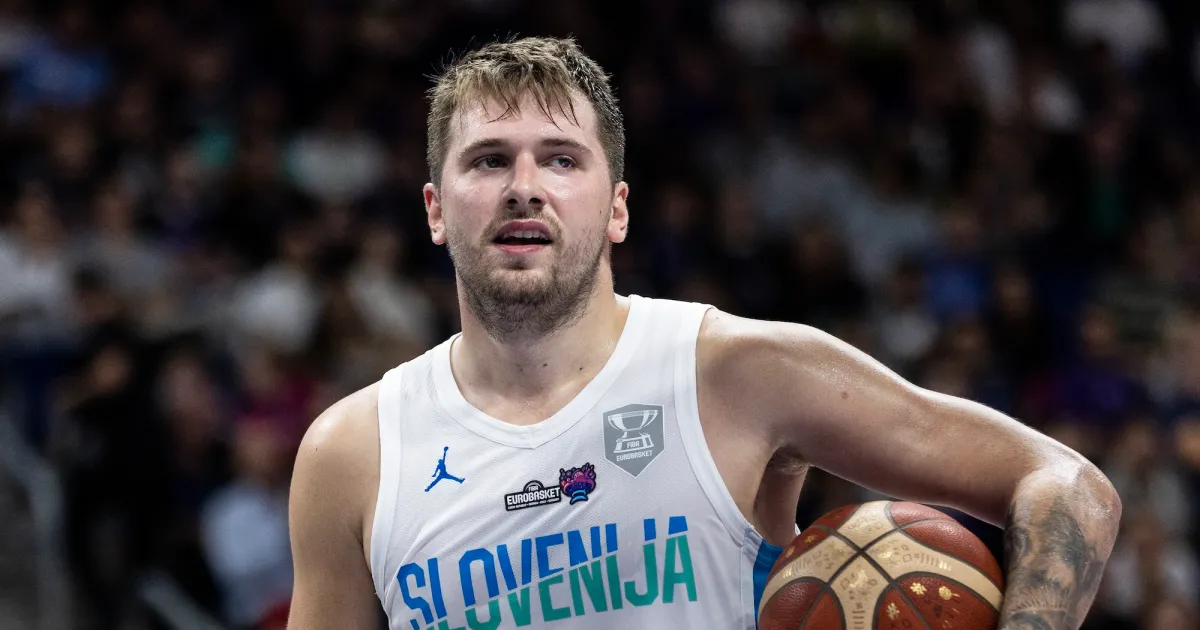
On the surface, Luka Dončić just completed one of the most remarkable statistical seasons of his already legendary career. The Los Angeles Lakers superstar filled box scores with breathtaking triple-doubles, hit impossible step-back threes, and carried his team through grueling playoff battles, reminding everyone why he is considered one of the most gifted basketball players on the planet. But numbers, no matter how gaudy, could not mask the quiet ache that followed him everywhere he went. While the world saw a smiling, competitive athlete doing what he loved, Dončić was carrying a heavy heart, one that was thousands of miles away in Slovenia with his two young daughters. In a candid interview with Sports Illustrated published on Thursday, October 8, the 27-year-old finally opened up about the emotional toll of a season spent mostly separated from his children amid a bitter custody battle with his ex-fiancée, Anamaria Goltes. “Obviously, I had a lot on my mind the last year,” Dončić admitted, his words carrying the weight of sleepless nights and missed moments. He spoke not as a superstar, but as a father who had been forced to live in a strange, painful limbo—celebrating professional victories while privately grieving the absence of the two little girls who meant more to him than any championship trophy ever could. The contrast was stark: on the court, he was invincible; off the court, he was vulnerable, exhausted, and heartbroken.
2. The Cruel Math of Five Days
The hardest part, Dončić explained, was the cruel arithmetic of his situation. Over the course of an entire NBA season, he was able to see his daughters—Gabriela, who just turned two, and Olivia, only ten months old—for a total of just five days. Five days out of nearly two hundred. Five days to watch them grow, to hear their first words, to hold them close. “It was pretty hard,” he said, his voice thick with emotion. “I didn’t see them almost the whole season. Yeah, I can’t go another season like that.” Those words are not the complaints of a spoiled athlete; they are the raw confession of a parent who has been asked to do the impossible: to pour his heart into his craft while his own heart is living in another country. Dončić described the experience as something close to unbearable, a constant low hum of anxiety and longing that no amount of practice or film study could silence. “You want to spend time with your kids every day,” he said. “So, last season was pretty hard. I saw them for five days in the whole season, which is impossible to do. But you know, I had to focus on basketball.” The phrase “I had to” is telling. It speaks to the brutal reality of professional sports, where millions of dollars and the expectations of an entire franchise rest on your shoulders, but also to the quiet desperation of a father who knows he is missing the most precious, irreplaceable moments of his children’s lives. He was not asking for sympathy; he was simply stating a truth that no parent should ever have to endure.
3. A Joyful Birth Shadowed by Conflict
The season’s emotional low point came in December, when Dončić rushed back to Slovenia to be present for the birth of his second daughter, Olivia. It should have been one of the happiest days of his life—a moment of pure, uncomplicated joy. Instead, it became another chapter in a growing nightmare. According to reports, an alleged argument between Dončić and Goltes broke out at the hospital, and police were called to the scene. The Lakers star reportedly returned to the United States later that same day, leaving behind his newborn daughter and her mother in the most painful way imaginable. What should have been a memory of holding his baby girl for the first time became a blur of tension, confusion, and heartbreak. The couple, who had been together for years and were once engaged, had split earlier in 2026, and their relationship had clearly deteriorated into a bitter legal war. By March, Goltes had filed a petition seeking child support and attorney fees from Dončić, a move that the guard claims he had no idea was coming until it happened. The legal documents turned a private family tragedy into a public spectacle, forcing Dončić to defend not only his rights as a father but also his character as a man. In a statement to ESPN, he tried to explain his side of the story, but the words sounded less like a press release and more like a cry from the heart. “I love my daughters more than anything and I’ve been doing everything I can for them to be with me in the U.S. during the season, but that hasn’t been possible, so I recently made the tough decision to end my engagement,” he said. “Everything I do is for my daughters’ happiness and I will always fight to be with them and give them the best life I can.”
4. A Father’s Public Plea
There is something deeply unsettling about watching a global superstar have to explain his family life in court documents and media statements. Dončić, who is usually so composed and playful in front of cameras, suddenly looked like a man who had been backed into a corner. His decision to end the engagement, he explained, was not about falling out of love with Goltes, but about the impossible situation that had been created. He wanted his daughters with him in the United States during the season; he wanted to be a present, active father; he wanted to read bedtime stories and make breakfast and take them to the park. But none of that was happening, and he felt powerless to change it. The custody battle became a war of attrition, with each side digging in and the children caught in the middle. For Dončić, the most frustrating part seemed to be the perception that he was somehow choosing basketball over his kids. Nothing could be further from the truth. He was not choosing the NBA over fatherhood; he was being forced to choose between his livelihood and his children, and no matter which way he turned, someone was going to accuse him of failing. In his interview, he did not lash out at Goltes or blame her publicly. Instead, he simply expressed his pain and his determination. He wanted to be clear: his daughters are not a footnote in his life; they are the entire story. Every dollar he earns, every game he plays, every decision he makes is filtered through the question of what is best for Gabriela and Olivia.
5. Choosing Presence Over Prestige
This summer, Dončić made a decision that spoke louder than any statement. He chose to spend the entire summer with his daughters in Slovenia, even though it meant skipping his commitment to the Slovenian national team. For a player of his caliber, representing his country is a point of pride, a chance to honor the place that shaped him. But this year, the pull of fatherhood was simply too strong. He had already missed too much, and he was not going to let another summer slip away. In a heartfelt Instagram post in May, he explained his reasoning to his fans and to his countrymen. “I love my daughters more than anything, and they will always come first in my life,” he wrote. “As I continue working toward joint custody of my daughters, I have been forced to make a difficult decision between traveling and playing for the Slovenian national team and being with my daughters this summer. Unfortunately, it has been made extremely difficult for me to see them over the past eight months.” The post was a rare glimpse into the soul of a man who usually lets his game do the talking. It was also a clear signal that he was no longer willing to accept the status quo. Just days after returning to the United States from that summer with his girls, Dončić filed a “Hague Convention” petition, a legal move designed to have his daughters brought from Slovenia to the United States. According to the U.S. State Department, such a petition “seeks to organize or secure effective exercise of rights of access to a child.” In plain language, it means Dončić is fighting to be more than a visiting father; he is fighting to be a daily presence in his daughters’ lives.
6. The Human Behind the Headlines
In the end, this story is not really about basketball, or even about a custody battle. It is about the universal struggle of a parent who loves his children and wants to be there for them, but who finds himself trapped in a system and a situation that seems designed to keep him at arm’s length. Luka Dončić is one of the most famous athletes in the world, with the resources to hire the best lawyers and the platform to share his side of the story. And yet, for all his fame and fortune, he cannot simply will his daughters to be with him. He cannot buy his way out of the heartache. He cannot fast-forward through the lonely nights in a luxury apartment that feels empty without the sound of little feet. He is learning, as so many parents do, that love is not enough to overcome every obstacle. It takes patience, sacrifice, and sometimes, the courage to make choices that others may not understand. As he prepares for another NBA season, Dončić carries with him the hope that this year will be different—that the legal system will see his commitment, that the distance will shrink, and that he will no longer have to count the days between visits. He has said it plainly: he cannot go another season like the last one. For the sake of his daughters, and for his own peace of mind, something has to change. And anyone who has ever held a child and had to let go knows exactly how he feels. The statistics will be forgotten; the memories will not. Luka Dončić is not just playing for a championship. He is playing for a chance to be a real father to his little girls, and that is the only victory that truly matters.